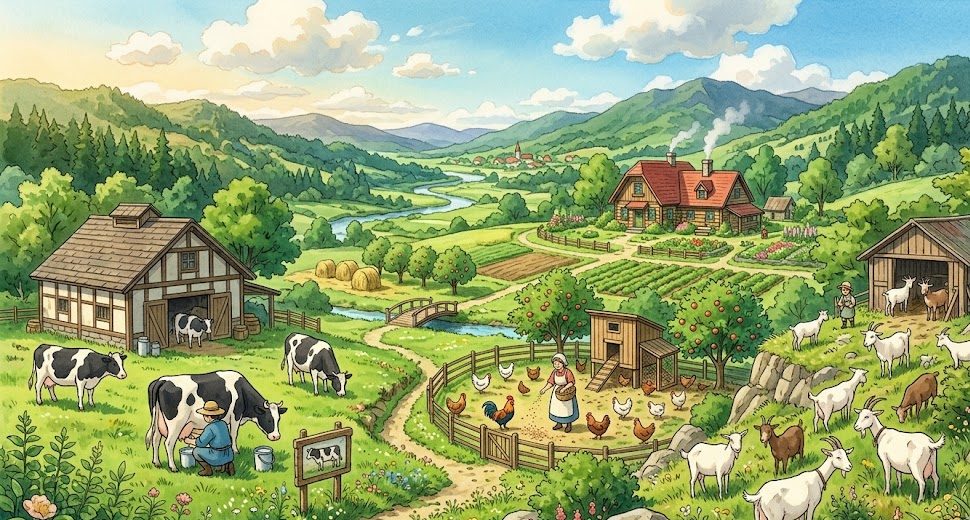
As we progress through 2026, the demand for high-quality protein—milk, meat, and eggs—is at an all-time high. For the modern agri-entrepreneur, the livestock sector offers a unique advantage: consistent cash flow. Unlike seasonal crops, livestock can provide daily or monthly income. However, moving from a “backyard” setup to a “profitable business” requires a shift toward data-driven management and strict biosecurity.
1. Dairy Farming: The “Daily Cash” Engine
Dairy farming is the backbone of the livestock industry. It is a long-term investment that provides a steady, daily income through milk sales.
A. Selecting the Right Breed
Your profit starts with the genetics of your herd.
- Cows: For high volume, Holstein Friesian (HF) or Jersey crosses are preferred. For high-fat content and resilience, indigenous breeds like Gir or Sahiwal are gaining massive premium-market traction.
- Buffaloes: The Murrah and Jaffrabadi breeds are the gold standard for high-fat milk, which is essential for ghee and paneer production.
B. Modern Feed Management
Feed accounts for 70% of dairy costs.
- TMR (Total Mixed Ration): Instead of random grazing, use a balanced mix of green fodder, dry fodder, and concentrates (grains/minerals).
- Silage: To maintain milk production during dry summers, fermenting green fodder (corn silage) ensures your cows get “spring-quality” nutrition year-round.
C. Profit Maximization Tip: Value Addition
Selling raw milk to middlemen offers the lowest margins. To maximize profit, process milk into Ghee, Paneer, or Organic Yogurt. “A2 Milk” from indigenous cows can often be sold at a 50%–100% premium in urban centers.
2. Poultry Farming: The High-Speed Turnover
Poultry is favored for its rapid growth cycles and high feed-to-meat conversion ratio.
A. Choosing Your Path: Broilers vs. Layers
- Broilers (Meat): These birds are ready for market in just 35–42 days. It is a high-volume, quick-turnover business.
- Layers (Eggs): These birds start laying at 18–20 weeks and provide a steady stream of eggs for over a year.
B. The “Desi” & “Kadaknath” Opportunity
There is a massive trend in 2026 toward Free-Range or Desi Poultry.
- Kadaknath: This black-meat chicken is famous for its medicinal properties. While it grows slower than a broiler, its meat sells for 3x to 4x the price.
- Backyard Integration: Using “Ghibli-style” clean, aesthetic farm designs for free-range poultry can attract eco-conscious buyers and high-end restaurants.
C. Bio-Security: The Profit Guard
A single viral outbreak (like Bird Flu) can wipe out an entire flock.
- Strict Access: Limit entry to the poultry shed.
- Sanitization: Use footbaths and regular disinfection of equipment.
- Automation: Use automated feeding and watering systems to reduce human contact and labor costs.
3. Goat Farming: The “ATM” of the Livestock World
Goat farming is often called the “Poor Man’s Cow,” but in modern business, it is a high-margin “Small Ruminant” enterprise. Goats are resilient, require less space, and have a very high prolificacy (they often give birth to twins or triplets).
A. Commercial Meat Breeds
- Boer: The world’s premier meat goat, known for rapid weight gain.
- Sirohi & Barbari: Excellent for stall-fed (intensive) farming; they are hardy and adapt well to various climates.
B. The Stall-Fed Model (Intensive Farming)
Moving away from open grazing to Stall-Feeding allows you to:
- Monitor exact nutrition.
- Prevent the spread of parasites from the ground.
- Collect manure easily (which is a high-quality organic fertilizer).
C. Profit Maximization: Goat Milk & Festivals
- Goat Milk: Increasingly prescribed for its digestibility and help with conditions like Dengue. It can be sold at a premium.
- Religious Festivals: Timing your “finishing” phase so your goats are at peak weight during major festivals can lead to a 2x price surge per animal.
4. The Synergy: Integrated Livestock Farming
The most profitable farms don’t just do one thing; they create a circle.
- Manure as Gold: Poultry and goat manure are incredibly rich in nitrogen. This can be used to grow the fodder for your dairy cows, or sold as premium organic compost.
- Waste to Energy: For large dairy setups, a Biogas Plant can convert cow dung into free cooking gas and electricity for the farm, drastically cutting operational costs.
5. Technology in Livestock Management
To manage a professional-scale operation, you must use digital tools:
- RFID Tags: Track the health, vaccination schedule, and milk yield of each individual animal on your smartphone.
- Smart Sensors: Monitor shed temperature and humidity. For poultry and dairy, heat stress is a major “silent killer” of productivity.
- Online Marketing: Build a brand. Use social media to show your “Farm-to-Fork” transparency. Customers in 2026 pay more when they see the animals are treated well and fed naturally.
6. Financial Planning & Risk Management
- Insurance: Always insure your high-value livestock. One accident or lightning strike shouldn’t end your business.
- Vaccination Calendar: Never skip a vaccine. Prevention is 10x cheaper than treating a sick animal.
- Scaling: Don’t start with 100 cows. Start with 5, master the management and the local market, and use the profit to scale.
7. Conclusion
The livestock business in 2026 is no longer a side-hustle; it is a sophisticated industry. Dairy gives you daily stability, Poultry gives you rapid growth and turnover, and Goat Farming acts as your high-margin “savings account.”
By focusing on superior genetics, scientific feeding, and direct-to-consumer branding, you can build a livestock empire that is both sustainable and highly profitable. The key is to treat your animals as your primary stakeholders—their health is directly linked to your wealth.
Key Takeaways:
- Dairy: Focus on value-added products like Ghee/Paneer.
- Poultry: Prioritize biosecurity and explore high-value “Desi” breeds.
- Goat: Adopt the stall-fed model for better growth control and hygiene.
- General: Use technology to track health and automate labor-intensive tasks.