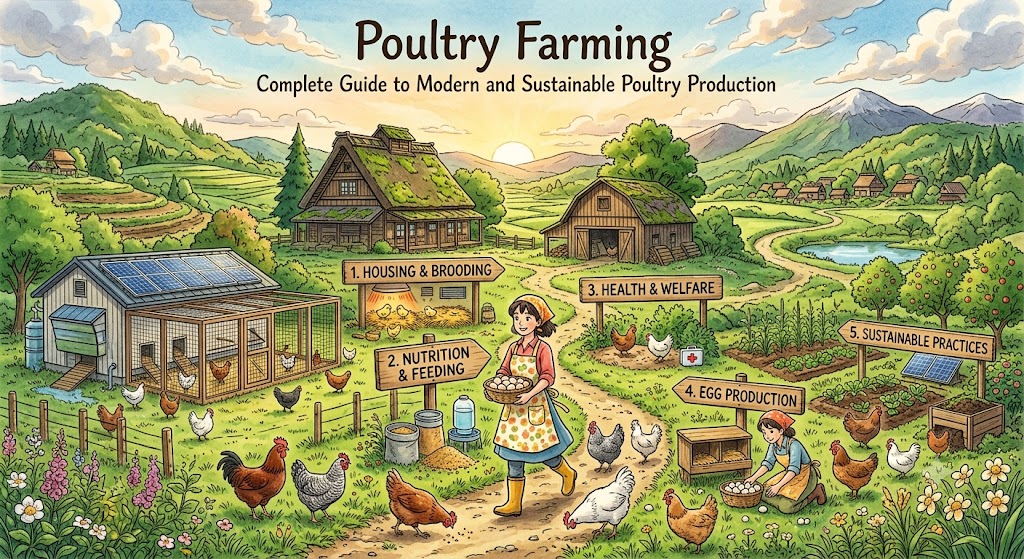
Introduction
Poultry farming is one of the fastest-growing sectors of modern agriculture, providing a reliable source of meat, eggs, and income for millions of farmers worldwide. As the global demand for affordable, high-quality protein continues to increase, poultry farming has become an essential part of food production and rural economic development.
Poultry farming involves raising domesticated birds such as chickens, ducks, turkeys, quails, and geese for commercial or household purposes. Modern poultry farms use advanced housing systems, balanced nutrition, disease prevention programs, and smart technologies to improve bird health and maximize productivity.
Unlike many other agricultural businesses, poultry farming offers relatively quick returns on investment because broiler chickens reach market weight within a few weeks, while layer hens produce eggs consistently throughout their laying period. With proper planning and efficient management, poultry farming can become a highly profitable and sustainable agricultural enterprise.
What is Poultry Farming?
Poultry farming is the practice of breeding and raising birds for the production of meat, eggs, feathers, and other poultry products. Farmers manage every stage of bird development, including feeding, housing, healthcare, breeding, and environmental conditions.
Common poultry birds include:
- Chickens
- Ducks
- Turkeys
- Quails
- Geese
- Guinea fowl
Among these, chickens are the most widely raised due to their high demand for both meat and eggs.
Importance of Poultry Farming
Poultry farming contributes significantly to global agriculture and food security.
Its importance includes:
- Produces affordable protein
- Generates year-round income
- Creates rural employment
- Supports food security
- Encourages agricultural entrepreneurship
- Provides organic manure
- Supplies raw materials for food industries
Because poultry products are consumed daily in many countries, farmers often enjoy stable market demand throughout the year.
Types of Poultry Farming
Different poultry farms specialize in different production goals.
Broiler Farming
Broiler farming focuses on raising chickens for meat production.
Characteristics include:
- Fast growth
- Short production cycle
- High market demand
- Efficient feed conversion
Broilers usually reach market weight within 5 to 7 weeks under proper management.
Layer Farming
Layer farming is designed for egg production.
Layer hens begin laying eggs at around 18 to 20 weeks of age and continue producing for many months.
Proper nutrition and lighting are essential for maintaining consistent egg production.
Backyard Poultry Farming
Small-scale backyard poultry provides:
- Fresh eggs
- Meat
- Family income
- Household food security
This system requires relatively low investment and is suitable for rural communities.
Organic Poultry Farming
Organic poultry farms raise birds using natural feed, outdoor access, and environmentally friendly management practices.
Organic products often receive premium prices in specialized markets.
Choosing the Right Poultry Breed
Selecting suitable breeds is essential for farm success.
Popular broiler breeds include:
- Cobb
- Ross
- Hubbard
Popular layer breeds include:
- White Leghorn
- Rhode Island Red
- ISA Brown
- Hy-Line Brown
Farmers should select breeds that perform well under local environmental conditions.
Poultry Housing
Good housing protects birds from disease, predators, and harsh weather.
An efficient poultry house should provide:
- Proper ventilation
- Comfortable temperature
- Dry flooring
- Clean drinking water
- Adequate lighting
- Sufficient space
- Biosecurity measures
Well-designed housing improves bird welfare and productivity.
Nutrition and Feeding
Balanced nutrition is critical for healthy growth and egg production.
A quality poultry diet includes:
- Protein
- Carbohydrates
- Vitamins
- Minerals
- Healthy fats
- Clean water
Different life stages require different feed formulations to meet changing nutritional needs.
Poultry Health Management
Preventive healthcare helps maintain healthy flocks and reduces financial losses.
Essential practices include:
- Vaccination programs
- Disease monitoring
- Clean housing
- Proper sanitation
- Biosecurity measures
- Regular veterinary consultation
Early disease detection significantly improves survival rates.
Technology in Modern Poultry Farming
Technology has transformed poultry farming into a highly efficient industry.
Artificial Intelligence (AI)
AI analyzes bird behavior, feed consumption, and environmental conditions to improve productivity.
AI supports:
- Growth monitoring
- Disease prediction
- Feed optimization
- Production analysis
Internet of Things (IoT)
Smart sensors monitor:
- Temperature
- Humidity
- Air quality
- Feed levels
- Water availability
Automatic alerts help farmers respond quickly to environmental changes.
Automated Feeding Systems
Automatic feeders distribute feed evenly while reducing labor and minimizing feed waste.
Climate Control Systems
Modern poultry houses use automated systems to regulate:
- Temperature
- Ventilation
- Humidity
- Lighting
Maintaining optimal conditions improves bird comfort and performance.
Benefits of Poultry Farming
Quick Financial Returns
Broiler production cycles are relatively short, allowing faster income generation.
High Consumer Demand
Chicken meat and eggs remain among the most widely consumed protein sources worldwide.
Employment Opportunities
The poultry industry creates jobs in farming, hatcheries, feed manufacturing, processing, transportation, and retail.
Efficient Land Use
Poultry farming requires less land than many other livestock enterprises.
Organic Fertilizer
Poultry manure is rich in nutrients and can improve soil fertility when properly composted.
Farm Diversification
Poultry farming integrates well with crop farming and other agricultural activities.
Sustainable Poultry Farming Practices
Modern poultry farming emphasizes environmental sustainability.
Recommended practices include:
- Efficient feed management
- Water conservation
- Responsible waste disposal
- Renewable energy adoption
- Organic manure recycling
- Improved bird welfare
- Disease prevention through biosecurity
These practices reduce environmental impact while improving long-term profitability.
Challenges in Poultry Farming
Although poultry farming offers many advantages, farmers also face several challenges.
Disease Outbreaks
Highly contagious diseases can spread rapidly if biosecurity is weak.
Feed Costs
Feed often accounts for the largest share of production expenses.
Climate Stress
Extreme temperatures can reduce growth rates and egg production.
Market Price Fluctuations
Changes in supply and demand may affect profitability.
Skilled Farm Management
Successful poultry farming requires careful monitoring and good management practices.
Tips for Successful Poultry Farming
Farmers can improve production by following these practical recommendations:
- Purchase healthy chicks from certified hatcheries.
- Maintain clean and hygienic housing.
- Provide balanced nutrition at every growth stage.
- Ensure constant access to clean drinking water.
- Follow vaccination schedules carefully.
- Monitor birds daily for signs of illness.
- Maintain proper ventilation and temperature.
- Keep accurate production and financial records.
- Practice strict biosecurity measures.
- Stay updated on modern poultry farming technologies.
Future of Poultry Farming
The poultry industry continues to evolve with advancements in Artificial Intelligence, robotics, precision livestock farming, automated feeding systems, and data-driven management. Smart poultry farms now use sensors and software to monitor bird health, optimize feed efficiency, and improve environmental conditions in real time.
Future developments are expected to include AI-powered disease detection, renewable energy-powered poultry houses, robotic egg collection, automated waste management, and climate-smart farming practices. These innovations will increase productivity while supporting animal welfare and environmental sustainability.
Poultry Farming and Rural Development
Poultry farming plays a major role in improving rural livelihoods. It creates employment opportunities, supports small-scale entrepreneurs, empowers women in agriculture, and strengthens local food systems. Many farming families use income from poultry to invest in education, healthcare, and better agricultural infrastructure.
By integrating poultry farming with crop production, composting, and renewable energy systems, farmers can build resilient and sustainable agricultural enterprises that benefit both their communities and the environment.
Conclusion
Poultry farming has become one of the most profitable and essential sectors of modern agriculture. By producing nutritious meat and eggs, it supports food security, generates employment, and contributes significantly to rural economic development. Modern technologies, improved breeds, balanced nutrition, and strong biosecurity measures have transformed poultry farming into an efficient and sustainable business.
Although challenges such as disease management, feed costs, and climate conditions require careful attention, the future of poultry farming remains highly promising. With continued innovation and responsible management, poultry farming will continue to play a vital role in meeting global food demand while creating economic opportunities for farmers around the world.