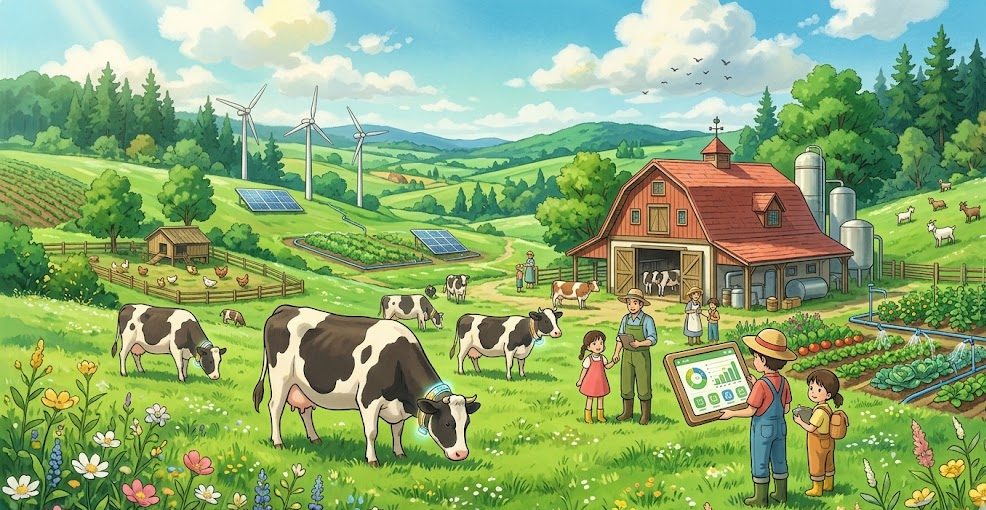
The landscape of livestock management is undergoing a digital revolution. As global demand for high-quality protein and dairy products rises, traditional manual farming methods are increasingly being replaced by Smart Animal Husbandry. By integrating IoT sensors, data analytics, and precision nutrition, modern farmers can transform their operations into highly efficient, data-driven enterprises that prioritize animal welfare while significantly increasing profitability.
For modern agricultural entrepreneurs, adopting a “Smart” approach is no longer just about modernization—it is about risk mitigation, consistent production, and scaling operations in an increasingly competitive market.
The Digital Shift in Livestock Management
At its core, Smart Animal Husbandry relies on the ability to monitor individual animals in real-time. By utilizing wearable technology, ear tags, and connected barn infrastructure, farmers can transition from “herd-level” management to “individual-level” precision.
Precision Dairy Farming
The dairy industry has seen the most dramatic shift toward automation. Robotic milking systems (RMS) have revolutionized how farms operate. These systems allow cows to choose when they want to be milked, leading to reduced stress and increased milk yield. Coupled with automated health monitoring systems that track rumination time, activity levels, and somatic cell counts, dairy farmers can identify potential health issues—like mastitis or lameness—days before clinical symptoms appear.
Automated Health Monitoring
Health is the primary driver of farm profitability. When an animal becomes ill, production drops and medical costs rise. Smart monitoring systems use sensors to track:
- Body Temperature: Early detection of heat stress or fever.
- Feeding Behavior: Identifying subtle shifts that indicate digestive issues or metabolic disorders.
- Locomotion and Activity: Detecting early signs of lameness or estrus (heat cycles), ensuring higher conception rates in breeding programs.
Optimizing Nutrition and Diverse Farming Solutions
Sustainable animal husbandry requires a balanced approach to feeding and waste management. Smart systems allow for “precision feeding,” which ensures every animal receives a ration tailored to its specific growth stage, weight, and milk production level.
Precision Feeding for Maximum Efficiency
Overfeeding is a significant waste of financial resources, while underfeeding limits growth potential. Automated feeding stations (AFS) dispense precise nutrient blends based on an animal’s unique RFID profile. This not only optimizes cost-efficiency but also reduces the environmental footprint by minimizing nutrient runoff—a critical component of sustainable, long-term farming.
Integrating Diverse Farming Practices
Smart husbandry isn’t limited to a single species or product. Many successful agricultural ventures are now diversifying by integrating livestock with other sectors:
- Silvopasture Systems: Combining forestry with livestock grazing improves soil health and carbon sequestration while providing animals with shade, which reduces heat stress.
- Manure-to-Energy Cycles: Large-scale farms are increasingly utilizing anaerobic digesters to convert livestock manure into biogas. This provides a renewable energy source for the farm and high-quality organic fertilizer for crop production, creating a closed-loop, circular economy.
- Integrated Fish and Livestock: Similar to aquaponics, some modern setups integrate water management systems where livestock waste is treated and utilized to nourish aquaculture ponds, diversifying revenue streams.
Seasonal Adaptation and Barn Management
Smart barns are designed to be environment-agnostic. Regardless of whether it is the peak of summer or the depths of winter, technology ensures the living environment remains within the “thermoneutral zone”—the temperature range where an animal is most comfortable and efficient.
- Summer Resilience: Automated misting systems, high-capacity circulation fans, and smart venting react instantly to humidity and temperature spikes to prevent heat-induced production slumps.
- Winter Efficiency: Smart heaters and insulated enclosures, managed by climate-control software, prevent energy waste while keeping livestock warm and healthy.
By automating these environments, farmers can eliminate the manual labor traditionally required to adjust barn conditions, allowing them to focus on high-level strategic planning and business growth.
Data-Driven Decision Making
The biggest advantage of smart husbandry is the transition from intuition-based decisions to evidence-based management. Every sensor on the farm generates data points that can be analyzed to forecast trends:
| Data Source | Insights Provided | Business Impact |
|---|---|---|
| Activity Trackers | Heat detection & fertility rates | Increased calf/offspring production rates |
| Milk Analyzers | Composition & protein percentages | Higher market pricing for premium quality |
| Feeding Sensors | Feed Conversion Ratio (FCR) | Reduced operational costs & waste |
| Environmental IoT | Air quality & pathogen risk | Lower veterinary bills & mortality rates |
By reviewing these metrics on a monthly or quarterly basis, farm managers can pinpoint exactly which aspects of their operation are underperforming and make data-backed adjustments.
The Future of Sustainable Livestock Farming
The path forward for livestock farming is defined by the balance between technological innovation and ethical care. Consumers are increasingly demanding transparency and sustainability, and smart technology is the most effective tool to provide it.
Modern systems allow farmers to keep digital health records for every animal, providing full traceability that is highly valued in today’s premium markets. Moreover, by reducing the environmental impact through precise waste management and energy recycling, smart farms are aligning themselves with global ESG (Environmental, Social, and Governance) standards, which can open doors to better financing and higher-end supply chain partnerships.
Key Takeaways for the Modern Farmer
- Start Small: Focus on one critical area—such as health monitoring or automated feeding—before scaling to a fully integrated digital system.
- Prioritize Interoperability: Ensure the hardware and software you purchase can communicate with each other to avoid “data silos.”
- Invest in Connectivity: A robust, high-speed network across the entire farm is the backbone of any smart system; without it, sensors and automation cannot reach their full potential.
Smart Animal Husbandry is no longer a futuristic concept; it is the current standard for successful commercial farming. By leveraging data to improve animal health, diversifying revenue streams through integrated systems, and optimizing nutrition through automation, agricultural entrepreneurs can ensure their operations remain profitable, resilient, and ready for the challenges of tomorrow.
What aspect of smart farming are you currently looking to implement or upgrade in your operations?