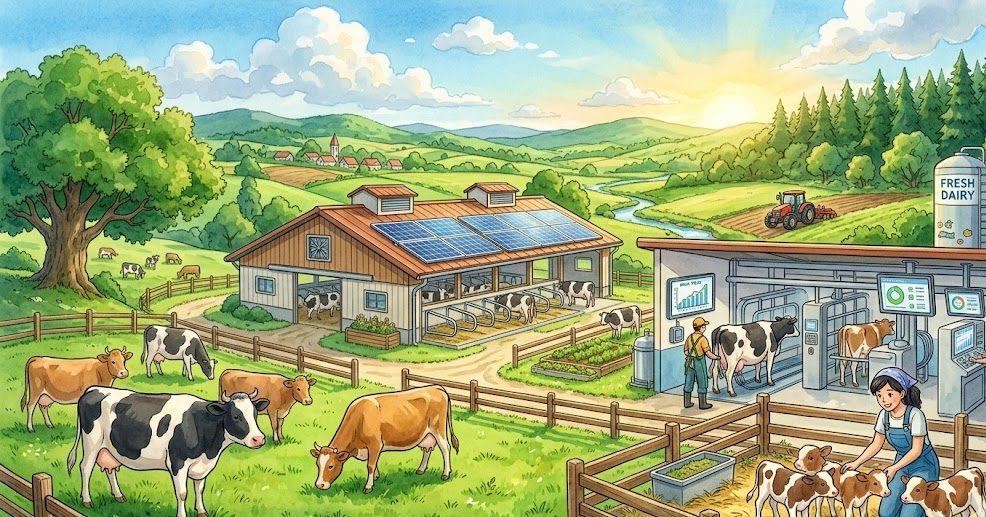
In 2026, dairy farming is no longer just about “keeping cows”—it is about precision livestock farming. With rising fodder costs and fluctuating milk prices, profitability now depends on three pillars: Genetic potential, Nutritional efficiency, and Digital monitoring. A modern dairy farm operates like a factory where the “machinery” is living, breathing, and requires elite care to produce high-quality output.
2. Breed Selection and Genetic Advancement
The foundation of a profitable farm is the cow’s genetic ability to convert feed into milk.
- High-Yielding Breeds: Depending on your climate, the choice between Holstein-Friesian (HF), Jersey, or indigenous breeds (like Gir or Sahiwal) is critical. In 2026, many farmers are moving toward Crossbreeding to combine the high volume of HFs with the heat tolerance and disease resistance of local breeds.
- Sexed Semen Technology: To maximize profitability, modern farms use sexed semen for Artificial Insemination (AI). This ensures a 90% chance of female calves, eliminating the cost of raising unproductive male calves and allowing for faster herd expansion.
- Genomic Testing: Elite farms now test the DNA of calves at birth to predict their future milk production, fertility, and longevity, allowing farmers to keep only the best performers.
3. Smart Housing and Infrastructure
A stressed cow will never produce her maximum potential. Modern housing focuses on “Cow Comfort.”
The “Comfort” Standards:
- Ventilation: Use high-volume, low-speed (HVLS) fans and misting systems. If the temperature exceeds 25°C, cows experience heat stress, leading to a 15–20% drop in milk yield.
- Bedding: Transition to rubber mats or deep-sand bedding. This prevents “Bumblefoot” and joint injuries, which are leading causes of premature culling.
- Loose Housing: Move away from tie-stalls. Allowing cows to move freely, socialize, and access water 24/7 significantly boosts oxytocin levels, the hormone responsible for milk let-down.
4. Precision Nutrition: The TMR Approach
Feeding is 60–70% of the total operational cost. In 2026, the gold standard is Total Mixed Ration (TMR).
- The TMR Concept: Instead of giving green fodder and concentrates separately, they are weighed and mixed into a single “salad.” This prevents the cow from “sorting” her food and ensures every bite has the perfect balance of fiber, protein, and minerals.
- Bypass Protein and Fat: To push high-yielders (30+ liters/day), modern diets include bypass fats that provide concentrated energy without upsetting the rumen’s pH.
- Hydroponic Green Fodder: For farms with limited land, growing hydroponic maize or barley fodder provides highly digestible, pesticide-free green feed year-round, regardless of the season.
5. Health Management and Disease Prevention
In a modern dairy, the goal is Prevention, not Cure. A sick cow costs twice: once in medical bills and once in lost milk production.
| Disease | Prevention Strategy | 2026 Tech Tool |
|---|---|---|
| Mastitis | Post-milking teat dipping & dry-cow therapy. | Conductivity sensors in milking machines. |
| Foot Rot | Regular hoof trimming & copper sulfate foot baths. | AI-powered gait analysis cameras. |
| FMD / HS | Strict vaccination schedules (bi-annual). | Digital health record apps. |
Export to Sheets
- The “Golden Hour”: Ensuring newborn calves receive 4 liters of high-quality colostrum within the first 2 hours of life is the single most important factor for their lifelong productivity.
6. Implementing “Internet of Cows” (IoT)
Technology in 2026 has made the “unspoken” needs of cattle visible through data.
- Neck Collars & Ear Tags: These sensors monitor “rumination time.” If a cow stops chewing her cud for more than a few hours, the farmer receives an alert on their smartphone—often 24 hours before any physical symptoms of illness appear.
- Heat Detection: Automated systems detect the exact window for insemination by tracking increased physical activity, leading to a much higher conception rate.
- Automated Milking Systems (AMS): Robotic milkers allow cows to be milked when they feel the pressure, not when the farmer is ready. This can increase total daily yield by 10–15%.
7. Waste Management and Secondary Income
A profitable farm views manure as an asset, not waste.
- Biogas Plants: Converting dung into biogas can power the farm’s cooling systems and milk chillers, drastically reducing electricity bills.
- Vermicompost: Processing slurry into organic fertilizer adds a high-margin secondary revenue stream.
- Carbon Credits: In 2026, large-scale dairy farms are beginning to earn credits for reducing methane emissions through improved feed additives and efficient manure management.
8. Milk Quality and Value Addition
Selling raw milk to a middleman is the least profitable way to run a dairy.
- Cold Chain Integrity: Investing in a Bulk Milk Chiller (BMC) immediately after milking prevents bacterial growth, allowing you to demand a “Premium Quality” price from processors.
- Value Addition: Processing milk into Ghee, Paneer, or Yogurt at the farm level can increase the profit margin per liter by 40–100%.
- A2 Milk Branding: If your herd consists of indigenous breeds (like Gir), marketing the milk as “A2” targets health-conscious consumers willing to pay a luxury price.
9. Financial Planning and Scaling
Modern dairy farming requires heavy initial Capex (Capital Expenditure).
- Dry Period Management: A cow must be “dried off” 60 days before calving. Managing these non-productive animals efficiently is the difference between a profit and a loss.
- Culling Policy: Be ruthless. A cow that doesn’t conceive after three attempts or has chronic mastitis is a “money pit.” Replace her with a high-pedigree heifer.
- Record Keeping: Tracking the “Cost per Liter” daily is essential. If your cost of production is higher than the market price, you need to audit your feed wastage immediately.
10. Conclusion: The Path to Sustainability
Profitable milk production in 2026 is a game of margins. By focusing on animal comfort, genetic superiority, and digital monitoring, you reduce the “cost of chaos.” The future belongs to the dairy entrepreneur who treats their farm not just as a lifestyle, but as a high-tech biological enterprise.
Key Performance Indicators (KPIs) for 2026:
- Calving Interval: Aim for one calf every 13–14 months.
- Average Yield: Target a minimum of 15–20 liters per cow (herd average).
- Somatic Cell Count (SCC): Keep it low to ensure milk is “Export Grade.”
- Age at First Calving: Target 24–28 months to reduce rearing costs.
By mastering these metrics, your dairy farm will remain resilient and highly profitable in the modern agricultural landscape.