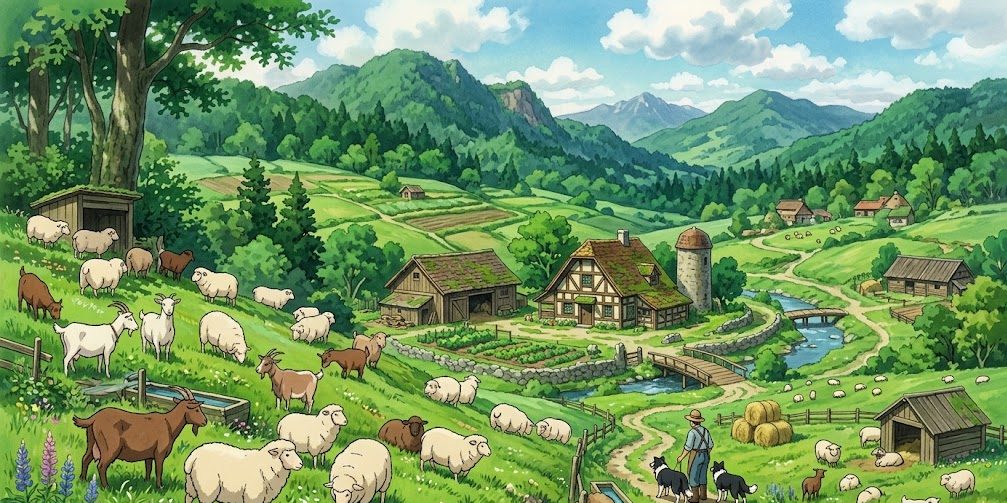
Livestock farming has long been a cornerstone of rural economies, but as the global demand for ethical and sustainable products rises, Sheep and Goat farming has emerged as a premier opportunity for the modern agropreneur. These small ruminants are often referred to as “living banks” for farmers because they are highly liquid assets that provide multiple revenue streams: meat, wool, milk, and manure.
However, moving from a subsistence model to a profitable, sustainable commercial enterprise requires more than just a grazing field. It requires a strategic approach to breed selection, nutrition, and health management. This guide outlines the blueprint for building a resilient sheep and goat operation that maximizes yield while respecting the environment.
1. Why Sheep and Goat Farming? The Economic Advantage
Small ruminants offer several distinct advantages over larger livestock like cattle:
- Low Initial Investment: Buying a starter herd of goats or sheep is significantly cheaper than purchasing cows.
- Faster Turnover: Goats and sheep have shorter gestation periods and often produce multiple offspring (twins or triplets), allowing your herd to grow exponentially in a short time.
- Climatic Resilience: These animals are incredibly hardy. They can thrive in arid, semi-arid, and mountainous regions where other forms of agriculture struggle.
- Dual-Purpose Revenue: Sheep provide both high-quality meat (mutton/lamb) and wool, while goats offer meat (chevon), fiber (mohair/cashmere), and highly nutritious milk.
2. Selecting the Right Breed for Your Goal
Success begins with genetics. You must choose a breed that aligns with your primary market: meat, wool, or a dual-purpose strategy.
Meat-Focused Breeds:
- Boer Goats: Originating from South Africa, these are the gold standard for meat production due to their rapid growth rates and excellent carcass quality.
- Dorper Sheep: A meat-focused sheep breed that is “hair” based rather than “wool” based, meaning they don’t require shearing and put all their energy into muscle growth.
Wool and Fiber Breeds:
- Merino Sheep: Famous for producing the finest wool in the world. They require specific temperate climates to maintain the quality of their fleece.
- Angora Goats: Raised specifically for Mohair, a high-value fiber used in luxury textiles.
3. Sustainable Nutrition: The Pasture-Plus Model
Feed is the largest variable cost in livestock farming. A sustainable farmer focuses on Rotational Grazing to keep costs low and soil health high.
- Rotational Grazing: Divide your land into “paddocks.” Move the animals to a fresh paddock every few days. This prevents overgrazing, allows the grass to regrow, and naturally breaks the life cycle of internal parasites.
- Silage and Hay: During the dry season or winter, natural grazing may be insufficient. Prepare high-protein silage (fermented green fodder) or hay (dried grass) in advance to ensure the herd maintains its weight.
- Mineral Supplements: Small ruminants require specific minerals, particularly Selenium, Copper (for goats), and Iodine. Providing mineral blocks in the barn prevents metabolic diseases and ensures high reproductive success.
4. Health Management and Disease Prevention
In sheep and goat farming, “An ounce of prevention is worth a pound of cure.” Because these animals are prey species, they often hide signs of illness until it is too late.
- Vaccination Protocol: Ensure a strict schedule for Enterotoxemia (Pulpy Kidney), Peste des Petits Ruminants (PPR), and Foot and Mouth Disease (FMD).
- Parasite Control (The FAMACHA System): Instead of deworming the whole herd (which leads to drug resistance), use the FAMACHA system to check the eye membranes of individual animals. Only treat those showing signs of anemia.
- Hoof Care: Damp conditions can lead to “Foot Rot.” Keep housing dry and perform regular hoof trimming to prevent lameness.
5. Maximizing Wool Quality and Meat Yield
If you are focused on wool, the “harvest” begins months before shearing.
- Wool Protection: Keep sheep away from burrs, thorns, and dusty areas in the months leading up to shearing. Contamination in the wool significantly drops its market value.
- The Finishing Phase: For meat animals, the last 30 to 60 days before sale are critical. Providing a “concentrate” feed (a mix of grains and protein cakes) during this period improves the fat-to-meat ratio, fetching a higher price at the butcher.
6. The Circular Economy: Utilizing Waste
A truly sustainable farm views “waste” as a product. Sheep and goat manure is highly prized in organic farming because it is “cool”—meaning it doesn’t burn plants like raw chicken manure can.
- Pelletized Fertilizer: You can collect, dry, and bag goat/sheep manure to sell to home gardeners and organic nurseries. This can often cover the cost of your herd’s vaccinations for the entire year.
7. Strategic Planning: The Sustainability Checklist
| Action Item | Frequency | Benefit |
|---|---|---|
| Paddock Rotation | Every 3–5 Days | Breaks parasite cycles; improves soil |
| Health Check | Daily | Early detection of respiratory or digestive issues |
| Shearing | 1–2 Times per Year | Prevents heat stress and generates wool revenue |
| Weight Tracking | Monthly | Identifies underperforming animals for culling |
| Record Keeping | Continuous | Essential for tracking lineage and profitability |
Export to Sheets
8. Conclusion: Building a Resilient Future
Sheep and goat farming is a journey of precision and observation. It is an industry where low-tech tradition meets high-tech management. By focusing on sustainable grazing, proactive health measures, and a waste-to-wealth mindset, you can build an enterprise that is not only profitable but also ecologically restorative.
Whether you are producing fine Merino wool for the global fashion industry or high-quality meat for local markets, the key to doubling your return is efficiency. Treat your herd with respect, manage your land with care, and the “living bank” will provide dividends for years to come.
Focus on the flock, and the farm will follow.