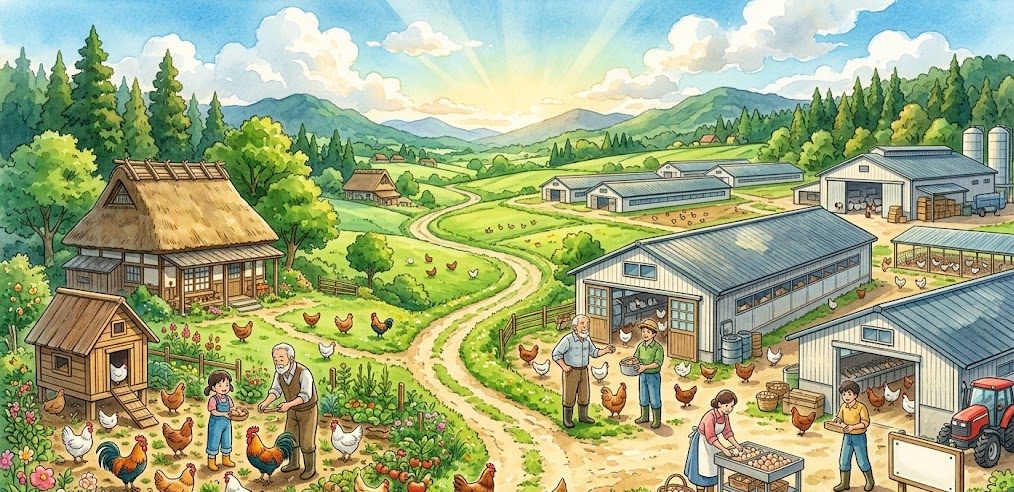
The poultry industry remains one of the most resilient and profitable sectors within global agriculture. Whether you are starting with a few dozen birds in your backyard or aiming to manage a flock of thousands, the business of poultry farming offers a unique combination of quick turnover and high demand. Eggs and chicken meat are primary protein sources worldwide, making the market both stable and expansive.
However, moving from a hobbyist “small-scale” setup to a “commercial” enterprise requires more than just more birds. It demands a shift in mindset toward professional management, biosecurity, and financial planning. This guide provides a roadmap for scaling your poultry business effectively and profitably.
1. Understanding the Two Pillars: Layers vs. Broilers
The first step in scaling is deciding on your niche. While some farmers do both, commercial success usually comes from specialization.
Broilers (Meat Production)
Broilers are birds raised specifically for meat.
- The Advantage: Speed. They are typically ready for market in 6 to 8 weeks.
- The Challenge: High initial growth costs and sensitive health requirements during the first two weeks.
Layers (Egg Production)
Layers are raised to produce eggs.
- The Advantage: Consistent daily cash flow once the birds start laying (around 18–20 weeks).
- The Challenge: High upfront costs for feed and housing before they begin producing revenue.
2. Infrastructure: Housing for Growth
In a small-scale setup, a simple coop might suffice. For commercial scaling, you must invest in Climate-Controlled Housing.
- Deep Litter System: Common for small to medium farms where birds roam on a floor covered in sawdust or rice husks. It is cost-effective but requires frequent cleaning to prevent ammonia buildup.
- Battery Cage System: Often used in large-scale layer farming. It maximizes space and makes egg collection easier, though it faces increasing scrutiny regarding animal welfare.
- Automatic Feeding & Watering: As you scale, manual feeding becomes a bottleneck. Automated lines ensure every bird has equal access to nutrition, reducing “runting” (where smaller birds are bullied away from food).
3. The Secret to Profit: Nutrition and Feed Management
In poultry farming, feed accounts for 70% of total production costs. If you don’t manage feed, you don’t manage profit.
- Phase Feeding: Commercial success requires feeding the right nutrients at the right time (Starter, Grower, and Finisher/Layer mash).
- Feed Conversion Ratio (FCR): This is the holy grail of poultry metrics. It measures how many kilograms of feed are required to produce one kilogram of meat. A lower FCR means higher profits.
- Self-Milling: Once you scale beyond 2,000 birds, it often becomes cheaper to buy a grinding machine and mix your own feed using maize, soya, and concentrates rather than buying branded bags.
4. Biosecurity: Protecting Your Investment
In a large-scale farm, a single disease outbreak can wipe out your entire investment in days. Biosecurity is your “insurance policy.”
- Access Control: Limit who enters the poultry house. Use footbaths with disinfectant at every entrance.
- Vaccination Schedule: Strictly follow a local veterinary-approved schedule for New Castle Disease, Gumboro, and Fowl Pox.
- All-In/All-Out Policy: For broilers, bring in a batch, grow them, sell them all, and then thoroughly disinfect the house for two weeks before the next batch arrives. This breaks the disease cycle.
5. Scaling Strategy: How to Grow Without Crashing
Scaling too fast is the #1 reason poultry farms fail. Follow these steps for sustainable growth:
Phase 1: The Pilot (50–200 birds)
Focus on learning bird behavior and local market demand. Build your “brand” with local neighbors and small shops.
Phase 2: The Semi-Commercial (500–1,000 birds)
Invest in better housing and a reliable water supply. Start looking for “B2B” clients like local restaurants or small supermarkets.
Phase 3: Fully Commercial (2,000+ birds)
At this stage, you must implement automation, hire dedicated staff, and perhaps explore value-addition (like dressing the chicken yourself or branding your egg cartons).
6. Marketing and Sales: Finding Your “Big” Buyers
A commercial farm cannot rely on walk-in customers. You need a “Marketing Mix”:
- Contract Farming: Partner with large food processors who provide the chicks and feed while you provide the labor and housing for a guaranteed price.
- Wholesale to Hotels: Secure weekly contracts for eggs or meat.
- Digital Presence: Even a poultry farm needs a Google My Business profile. Local restaurants use Google to find suppliers near them.
7. Poultry Farming Business Comparison Table
| Feature | Small Scale (Backyard) | Commercial Scale |
|---|---|---|
| Bird Count | 20 – 100 | 2,000 – 50,000+ |
| Feeding | Manual / Scraps | Automated / Specialized Feed |
| Labor | Family members | Professional Staff |
| Health | Basic Care | Strict Vaccination & Vet Audits |
| Profit Margin | Moderate | High (due to Economies of Scale) |
| Risk Level | Low | High (requires high biosecurity) |
Export to Sheets
8. Financial Planning and ROI
Poultry is a high-volume, low-margin business. You make money on the quantity of birds sold.
- Cash Flow: Broilers offer quick cash every 2 months. Layers require a 5-month “investment period” before the cash starts flowing for 12–18 months.
- Waste as Revenue: Don’t throw away the poultry litter. It is a high-quality organic fertilizer. Selling poultry manure to local vegetable farmers can cover your electricity or water bills.
9. Conclusion: The Path to Success
Poultry farming is a rewarding journey that blends biology with business. Transitioning from small-scale to commercial is a marathon, not a sprint. It requires attention to detail, a commitment to bird welfare, and a sharp eye on the numbers.
As you scale, remember that technology and data are your best friends. Use farm management apps to track mortality rates, feed consumption, and sales. By combining traditional farming wisdom with modern management techniques, you can build a poultry empire that provides both food security and financial freedom.
The market for protein is only growing. Are you ready to fill the cages?