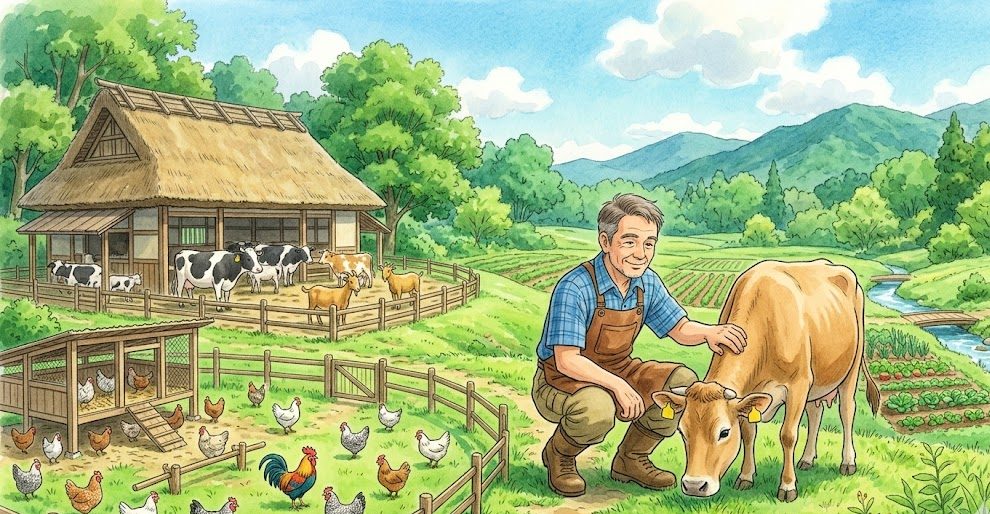
Animal husbandry has evolved from a traditional livelihood into a precision-based, technology-driven industry. As the global demand for high-quality protein rises, farmers who integrate modern scientific practices with traditional care are seeing significantly higher profit margins. Whether you are managing a small-scale family unit or scaling a commercial operation, success in dairy, poultry, and goat farming depends on efficiency, biosecurity, and data-backed decision-making.
This handbook explores the core strategies for maximizing yield and animal health across the three most profitable sectors of modern animal husbandry.
1. Dairy Farming: Beyond Traditional Methods
Modern dairy farming is no longer just about the number of cows; it is about the “Liters per Lactation” (LPL) and the quality of the milk produced. To be competitive, farmers must treat their dairy unit as a high-tech factory.
- Genetic Selection: Investing in high-yield, disease-resistant breeds is the most critical financial decision a farmer can make. Use data tracking to monitor each animal’s health and milk output individually.
- Precision Nutrition: Ruminants require a precise balance of fiber, protein, and minerals. Utilizing Total Mixed Ration (TMR) ensures every bite is nutritionally complete, preventing metabolic disorders and maximizing butterfat content.
- Mastitis Management: This is the greatest enemy of dairy profit. Implement strict milking hygiene, use effective teat dips, and ensure bedding remains dry and clean. A single case of mastitis can reduce yield by 20% or more, making prevention significantly cheaper than the cure.
2. Poultry Farming: Mastering the Bio-Cycle
Poultry is a high-turnover, high-intensity business. With narrow profit margins, the key to success lies in the Feed Conversion Ratio (FCR)—how much feed is converted into bird weight.
- Biosecurity is the Foundation: A single disease outbreak can devastate an entire flock. Implement an “all-in, all-out” system where you sanitize the entire coop between batches. Access to the coop should be strictly limited to trained personnel.
- Climate Control: Birds are highly sensitive to temperature. Modern poultry houses use automated ventilation and cooling systems to maintain a constant, stress-free environment. Stress is the leading cause of poor growth rates and lowered immunity.
- Advanced Feed Additives: Incorporating probiotics into the feed can improve gut health, allowing the birds to absorb more nutrients. Lowering your FCR by even 0.1% can lead to substantial annual savings.
3. Goat Farming: The Small Ruminant Advantage
Goats are often called the “poor man’s cow,” but in reality, they are a goldmine for the intelligent farmer. They are hardy, efficient foragers that require less space than cattle.
- Housing for Health: Goats are prone to respiratory and foot issues in damp environments. Invest in elevated, slatted-floor housing. This allows waste to fall through, keeping the animals dry and drastically reducing the risk of parasites and foot rot.
- Rotational Grazing: Goats are browsers, not just grazers. To prevent overgrazing and the buildup of internal parasites (like stomach worms), divide your pasture into segments. Move the goats to fresh segments every 7–10 days, allowing the previous plot to “rest” and kill off parasite larvae through natural sun exposure.
- Market Diversification: Don’t limit yourself to selling live goats. Explore value-added products like goat milk soap, artisanal cheese, or high-grade organic fertilizer (goat manure is one of the most nutrient-dense fertilizers available).
4. The Integrated Advantage: Closing the Loop
The hallmark of a truly modern, sustainable farm is integration. By linking your dairy, poultry, and goat units, you turn waste into profit.
- Nutrient Cycling: Poultry manure is rich in nitrogen and serves as an excellent fertilizer for the fodder crops grown for your dairy cows and goats.
- Co-Grazing Efficiency: Cattle and goats have different grazing preferences; cattle prefer grasses, while goats enjoy shrubs and weeds. Raising them in a managed rotation cleans your pasture effectively without needing chemical herbicides.
- Unified Digital Management: Use farm management software to track vaccination schedules, feed stocks, and market sales across all units. Understanding your true “Cost per Unit” for every animal is the only way to maximize net profit.
5. Welfare as a Marketing Asset
Modern consumers are increasingly conscious of ethical farming. High-welfare practices are no longer just “nice to have”—they are a powerful marketing tool.
- Preventive Healthcare: A strict vaccination calendar and regular deworming are more cost-effective than treating sick animals.
- Stress Reduction: A stressed animal produces less, gains weight slower, and is more prone to illness. Providing ample clean water, comfortable space-per-animal ratios, and a quiet environment directly impacts your bottom line.
Conclusion: Building a Resilient Future
Successful animal husbandry is a marathon that requires daily observation, meticulous record-keeping, and an unwavering commitment to health standards. By focusing on precision feeding, biosecurity, and integrated resource management, you build a farm that is resilient to market price shocks and climate volatility.
Your farm is an ecosystem. When you provide your animals with the environment they need to thrive, they will provide the consistent productivity that ensures your long-term success.