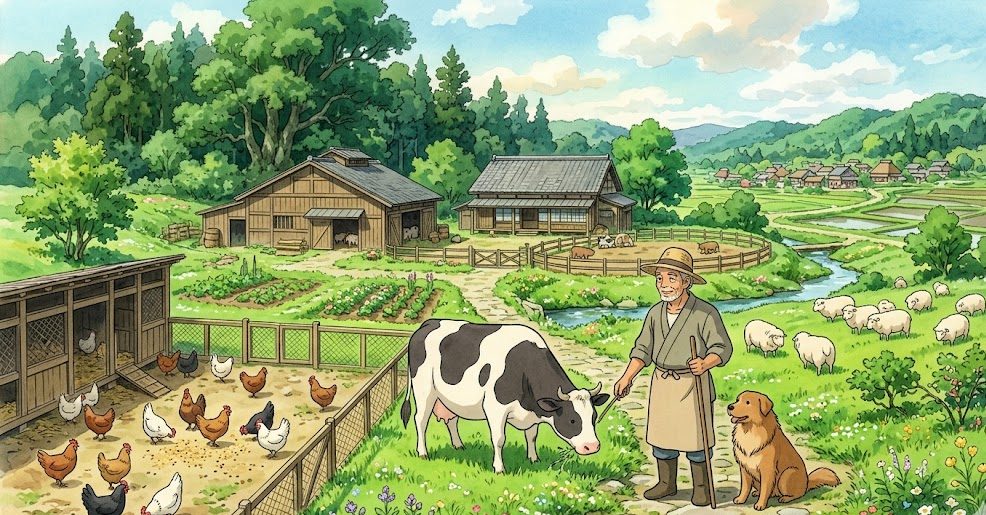
Livestock farming stands as a fundamental pillar of the global agricultural economy, providing a reliable pathway to profitability for those who approach it with professional rigor and strategic planning. Whether your focus is on dairy, poultry, or sheep production, success is anchored in three primary pillars: superior animal health, efficient feed management, and data-driven operational oversight.
This comprehensive guide outlines the essential strategies required to build a resilient, high-yield livestock enterprise.
1. Dairy Farming: Prioritizing Quality and Consistency
Dairy production is a high-volume, high-stakes business model where profitability is intrinsically linked to the health of your herd and the quality of their milk yield.
Herd Health and Nutrition
- Balanced Feed Rations: A cow’s milk output is directly proportional to its nutritional intake, making the provision of a precise balance of proteins, fiber, and energy essential for maintaining production levels.
- Hygiene and Disease Prevention: Maintaining a strictly sterile milking environment and conducting daily health inspections are the most effective methods to prevent profit-draining conditions like mastitis.
Streamlining Dairy Operations
- Operational Automation: Integrating automated milking systems and wearable herd-monitoring technology allows farmers to track real-time animal health and milk quality, significantly reducing labor costs and human error.
- Record-Driven Breeding: Meticulously tracking individual cow performance is vital, as it allows you to identify top producers and optimize your breeding program to enhance the herd’s genetics over time.
2. Poultry Production: Speed and Efficiency
Poultry farming, whether for egg or meat production, is defined by rapid turnover cycles. Because birds consume feed daily, operational efficiency is the primary driver of your profit margins.
Environmental Control
- Climate Management: Poultry are highly sensitive to their surroundings, requiring proper ventilation to maintain fresh air and prevent the rapid spread of respiratory diseases in crowded housing.
- Strict Biosecurity: Because poultry flocks are vulnerable to outbreaks, implementing rigorous protocols—such as controlling pest access, sanitizing footwear, and limiting visitors—is your first and most important line of defense.
Precision Feed Management
- Feed-to-Gain Ratio: Consistently monitoring the ratio between feed consumption and weight gain or egg output is critical, as minor adjustments in feed composition can lead to substantial cost savings at scale.
- Water Quality Maintenance: Clean, fresh water is often an overlooked element of bird health; therefore, watering lines must be sanitized regularly to prevent the buildup of harmful biofilms.
3. Sheep Production: Grazing and Growth
Sheep farming offers a versatile, low-maintenance option for farmers, particularly because these animals are highly efficient at grazing on marginal lands that may not be suitable for other types of agriculture.
Rotational Grazing Techniques
- Managed Paddock Rotation: Instead of continuous grazing, moving sheep through a series of smaller, managed paddocks allows the grass in resting areas to recover and effectively breaks the life cycle of common intestinal parasites.
- Forage Quality: The quality of the final product—whether wool or meat—is a direct reflection of the forage quality, which is best maintained through consistent rotation that ensures the flock always has access to fresh, nutrient-dense growth.
Flock Management Protocols
- Strategic Selective Breeding: Success in sheep production involves focusing on the specific traits most valued by your target market, such as rapid growth rates for meat or premium fiber quality for wool.
- Preventative Parasite Control: Since parasites represent the single largest threat to a flock’s productivity, a robust health program incorporating regular screenings and targeted deworming is essential for success.
4. Scaling Your Livestock Business for Long-Term Profit
Scaling a livestock operation is not merely about increasing headcounts; it is about scaling your internal efficiency and management capability.
- Centralized Digital Data: Maintaining a comprehensive digital log of all farm activities—including mortality rates, feed consumption, birth rates, and market pricing—is your most valuable asset when making informed expansion decisions.
- Closed-Loop Diversification: Many of the most successful farms integrate livestock with other agricultural practices, such as using animal manure as high-quality fertilizer for crops, which creates a closed-loop system that drastically lowers input costs.
- Direct-to-Consumer Marketing: Bypassing traditional middlemen by selling your products directly to local restaurants, butchers, or consumers allows you to capture a much larger portion of the retail price.