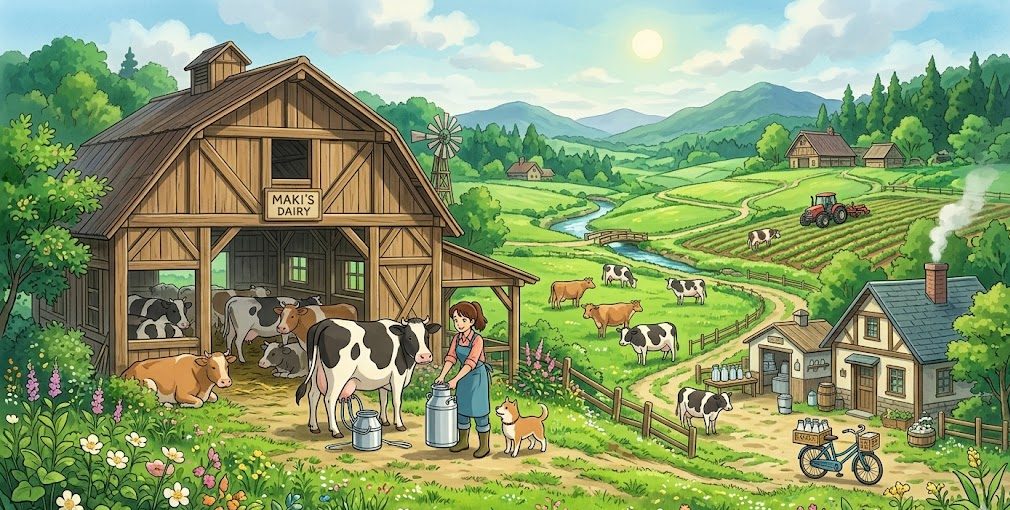
Dairy farming is often considered the “evergreen” sector of agriculture. Unlike seasonal crops, milk is a daily commodity with a consistent market demand that remains steady regardless of economic fluctuations. However, transitioning from a small backyard shed to a profitable, commercial milk production unit requires more than just buying cows; it requires a robust business plan, technical precision, and efficient management.
If you are looking to scale your agricultural portfolio, dairy farming offers a high-revenue potential and a quick daily cash flow. Here is a comprehensive guide to building a profitable dairy business from the ground up.
1. Executive Summary: Defining Your Model
Before investing capital, you must decide on the scale and nature of your operation.
- Small-Scale (2-5 Cows): Ideal for beginners or those integrated with traditional farming.
- Commercial (20-100 Cows): Requires mechanization, dedicated labor, and direct-to-retail or processing links.
- Specialty Dairy: Focusing on high-value products like A2 milk, organic milk, or farm-fresh ghee.
Pro-Tip: Start small to understand the “pulse” of the animals and the market, then use your profits to scale the herd size.
2. Choosing the Right Breed: The Foundation of Profit
Your choice of breed will determine your yield, feed requirements, and climate resilience. You essentially have two paths: Quantity or Quality.
High-Yielding Crossbreds/Exotics
- Holstein Friesian (HF): Known for massive milk volume but requires high-quality feed and a cool environment.
- Jersey: Produces milk with higher fat content and is more heat-tolerant than HF.
Indigenous High-Yielders
- Gir, Sahiwal, or Red Sindhi: These breeds are famous for A2 milk, which is currently seeing a massive surge in market price. They are highly resistant to local diseases and can thrive in tropical climates.
- Murrah Buffaloes: If your local market prefers high-fat milk for cream and ghee, Murrah buffaloes are the gold standard for milk solids.
3. Infrastructure: Designing for Comfort
In dairy farming, Animal Comfort = Milk Yield. A stressed cow will never reach its genetic potential.
The Modern Shed Design
- Ventilation: High ceilings and open sides to allow for constant airflow.
- Flooring: Use non-slip rubber mats. Hard concrete causes lameness, which is a major “profit killer” in dairy.
- Feeding Space: Every animal should have at least 2 to 2.5 feet of manger space to prevent competition for food.
- Waste Management: A sloped floor for easy cleaning and a dedicated system to collect dung for vermicompost or biogas.
4. Nutrition and Feed Management
Feed accounts for 60% to 70% of the total operational cost in dairy farming. If you don’t manage feed, you won’t manage profit.
The Total Mixed Ration (TMR) Approach
Instead of feeding components separately, a TMR system mixes green fodder, dry fodder, and concentrates into a single meal. This ensures the cow gets a balanced bite every time.
- Green Fodder: High-protein crops like Alfalfa, Napier grass, or Maize.
- Dry Fodder: Wheat straw or paddy straw for essential fiber.
- Concentrates: Grains and oilcakes to provide the energy needed for high milk production.
- Mineral Mixtures: Essential for reproductive health and preventing “milk fever.”
5. Health and Veterinary Care
A single disease outbreak can wipe out your entire investment. Your business plan must include a strict biosecurity and vaccination schedule.
- Vaccinations: Regular shots for FMD (Foot and Mouth Disease), HS, and BQ.
- De-worming: Essential every 3–4 months to ensure the nutrients go to milk production, not parasites.
- Heat Detection: Profitable dairy depends on a “Calf every year” rule. Missing a heat cycle means feeding an animal for an extra 21 days with zero milk return.
6. Scaling with Technology: The “Smart” Dairy
Modern dairy units are increasingly utilizing tech to boost productivity.
- Automatic Milking Machines: Faster, more hygienic, and reduces the need for manual labor. It also prevents mastitis (udder infection) caused by improper hand milking.
- Milk Chillers: If you are scaling, you need a Bulk Milk Cooler (BMC) to bring milk temperature down to 4°C immediately. This stops bacterial growth and ensures premium quality.
- Digital Records: Use simple apps to track each cow’s milk yield, vaccination dates, and breeding history.
7. Revenue Streams and Financials
A profitable dairy unit doesn’t just sell milk; it maximizes every byproduct.
| Revenue Source | Description | Profit Potential |
| Milk Sales | Primary revenue; daily cash flow. | High |
| Calf Sales | Selling male calves or high-quality heifers. | Medium |
| Manure/Dung | Sold as organic fertilizer or processed into Vermicompost. | High (Low cost) |
| Ghee/Butter | Value-added products increase margins by 30-50%. | Very High |
Initial Investment Breakdown (Sample)
- Cows/Buffaloes: 50%
- Shed Construction: 25%
- Equipment (Milking/Chilling): 15%
- Initial Working Capital (Feed/Labour): 10%
8. Marketing Strategy: Reaching the Consumer
To maximize profit, you want to move away from being a “commodity seller” to a “brand.”
- Direct-to-Home (DTH): Using a subscription model (App or WhatsApp) to deliver fresh milk directly to consumers. This allows you to keep the 30% margin usually taken by middlemen.
- B2B Supply: Partnering with local cafes, sweet shops, or organic food stores.
- Transparency: Invite customers to the farm. In the modern era, “knowing your farmer” is a massive selling point that justifies a premium price.
9. Common Pitfalls to Avoid
- Purchasing “Bad” Animals: Never buy animals based on a seller’s word. Always check the milking yourself for at least three consecutive sessions.
- Neglecting Dry Period Care: A cow needs a 60-day “vacation” before calving. If you don’t feed her well during this time, her next lactation will be poor.
- Inconsistent Feeding Times: Cows are creatures of habit. Changing feeding or milking times by even an hour can drop yields.
Final Thoughts: The Long-Term Vision
Dairy farming is a marathon, not a sprint. It requires 365 days of dedication, as the animals do not take holidays. However, for the entrepreneur who is willing to combine animal husbandry with modern business practices, it is one of the most stable and rewarding agricultural businesses.
By focusing on breed quality, high-tech infrastructure, and value-added products, you can build a dairy unit that isn’t just a farm, but a highly efficient milk-producing factory.
“Take care of the cow, and the cow will take care of you.”