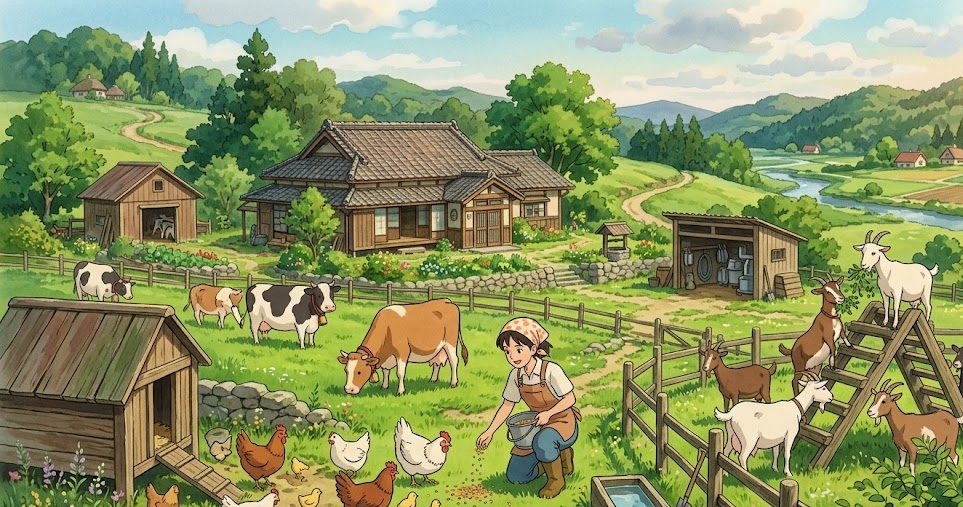
Mixed livestock farming—the practice of raising multiple types of animals on a single farm—is one of the most resilient and profitable ways to enter the agricultural industry. Unlike monoculture (raising just one type of animal), a mixed farm creates a diversified income stream and a biological “safety net.” If the market price for milk drops, your poultry sales can keep the business afloat.
However, managing different species requires a deep understanding of their unique needs and how they can coexist. This guide provides a comprehensive roadmap for mastering a mixed farm focused on Dairy, Poultry, and Goats.
1. The Benefits of the “Mixed” Approach
Before diving into the “how,” it is essential to understand the “why.” A mixed livestock farm offers several ecological and financial advantages:
- Diversified Income: You have daily cash flow from eggs and milk, plus long-term profits from meat and kids/calves.
- Waste Recycling: Poultry litter and goat manure are world-class fertilizers for the pastures that feed your dairy cows.
- Space Efficiency: Different animals graze differently. While cows eat tall grass, goats prefer shrubs and weeds, and chickens help control pests in the field.
2. Dairy Management: The Anchor of Your Farm
Dairy farming is often the financial backbone of a livestock enterprise because it provides a consistent, daily product.
A. Choosing the Right Breed
Start with breeds suited to your local climate and your specific goals.
- For High Volume: Holsteins are the world leaders in milk production but require high-quality feed.
- For Quality/Fat Content: Jerseys or Guernseys produce creamier milk, which is better for butter and cheese.
B. Nutrition and Health
A dairy cow is a high-performance machine. To keep her producing, you must prioritize:
- Quality Forage: High-protein silage, green fodder, and hay should make up the bulk of the diet.
- Water: A single cow can drink up to 100–150 liters of water a day. Ensure 24/7 access to clean, cool water.
- Routine Care: Regular deworming and vaccinations for Foot and Mouth Disease (FMD) are non-negotiable.
3. Poultry Management: The Fast-Track to Cash Flow
Poultry is the easiest way to generate quick revenue while your dairy and goat operations are scaling up.
A. Layers vs. Broilers
- Layers (Egg Production): Requires a 5-month initial investment before the first egg, but provides daily income for up to two years.
- Broilers (Meat Production): Rapid turnover. You can go from chick to market-ready bird in just 6–8 weeks.
B. Housing and Biosecurity
The biggest threat to poultry is disease.
- Ventilation: Proper airflow is critical to prevent ammonia buildup from droppings.
- Biosecurity: Limit visitor access to the coop and use footbaths at the entrance to prevent the spread of avian flu or Newcastle disease.
- Integrated Tip: Consider “Pastured Poultry.” Moving your chickens in mobile coops (Chicken Tractors) across the cow pastures allows them to eat larvae and insects, which sanitizes the field for the cows.
4. Goat Management: The “Smart” Multiplier
Goats are often called the “poor man’s cow,” but in a mixed farm, they are a high-margin asset. They are hardy, prolific breeders, and their milk is increasingly popular for its health benefits.
A. Selecting Your Purpose
- Meat (Boer Goats): Known for rapid growth and high-quality muscle.
- Dairy (Saanen or Alpine): Excellent for producing milk that can be sold fresh or turned into premium goat cheese.
- Dual-Purpose (Nubian): Good for both meat and high-butterfat milk.
B. The “Escape Artist” Challenge
The number one rule of goat farming: Invest in your fencing. Goats are incredibly intelligent and agile. Use high-quality chain-link or electric fencing to keep them from wandering into your vegetable patches or neighbor’s property.
5. Managing the Synergy: How to Integrate Species
A mixed farm is a puzzle. If you put the pieces together correctly, the farm almost manages itself.
- Rotational Grazing: Follow the “Cattle -> Goat -> Poultry” sequence. Cows eat the tall grass, goats clean up the woody weeds the cows left behind, and chickens follow to pick through the manure, spreading it and eating fly larvae.
- Shared Infrastructure: You can often use the same storage for feed and the same water sources, provided they are cleaned regularly to prevent cross-species contamination.
- Waste Management: Create a central composting hub. Mix dairy manure (nitrogen-rich) with poultry litter and goat droppings. This “Black Gold” can be sold or used to grow high-yield fodder for all your animals.
6. Financial Planning and Scaling
Starting all three at once can be overwhelming. Here is a suggested timeline:
| Phase | Focus | Goal |
| Month 1-3 | Poultry (Broilers) | Generate quick cash and learn the rhythm of the farm. |
| Month 4-8 | Goats | Start with 5-10 females (does). They breed quickly and are easy to handle. |
| Month 12+ | Dairy | Introduce 1-2 high-quality cows once you have mastered fodder management. |
7. Overcoming Challenges in Mixed Farming
- Disease Cross-Over: While most diseases are species-specific, some parasites can affect both goats and cows. Work with a vet to create a “Farm Health Plan.”
- Labor Intensity: Managing three types of animals means three different feeding and cleaning schedules. Automation is your friend. Install automatic waterers and use “Deep Litter” systems in coops to save time.
- Feed Costs: Feed is your biggest expense. To be profitable, try to grow at least 50% of your own fodder (Maize, Napier Grass, or Lucerne).
8. Conclusion: The Future of Sustainable Livestock
Starting a mixed livestock farm is a marathon, not a sprint. It requires patience, keen observation, and a willingness to get your hands dirty. By combining the steady income of dairy, the fast turnover of poultry, and the resilience of goats, you are building a business that can withstand market fluctuations and environmental changes.
The Golden Rule: Start small, focus on the health of your animals, and let the biology of the farm work for you. Within a few years, your integrated farm won’t just be a collection of animals—it will be a thriving, self-sustaining ecosystem.