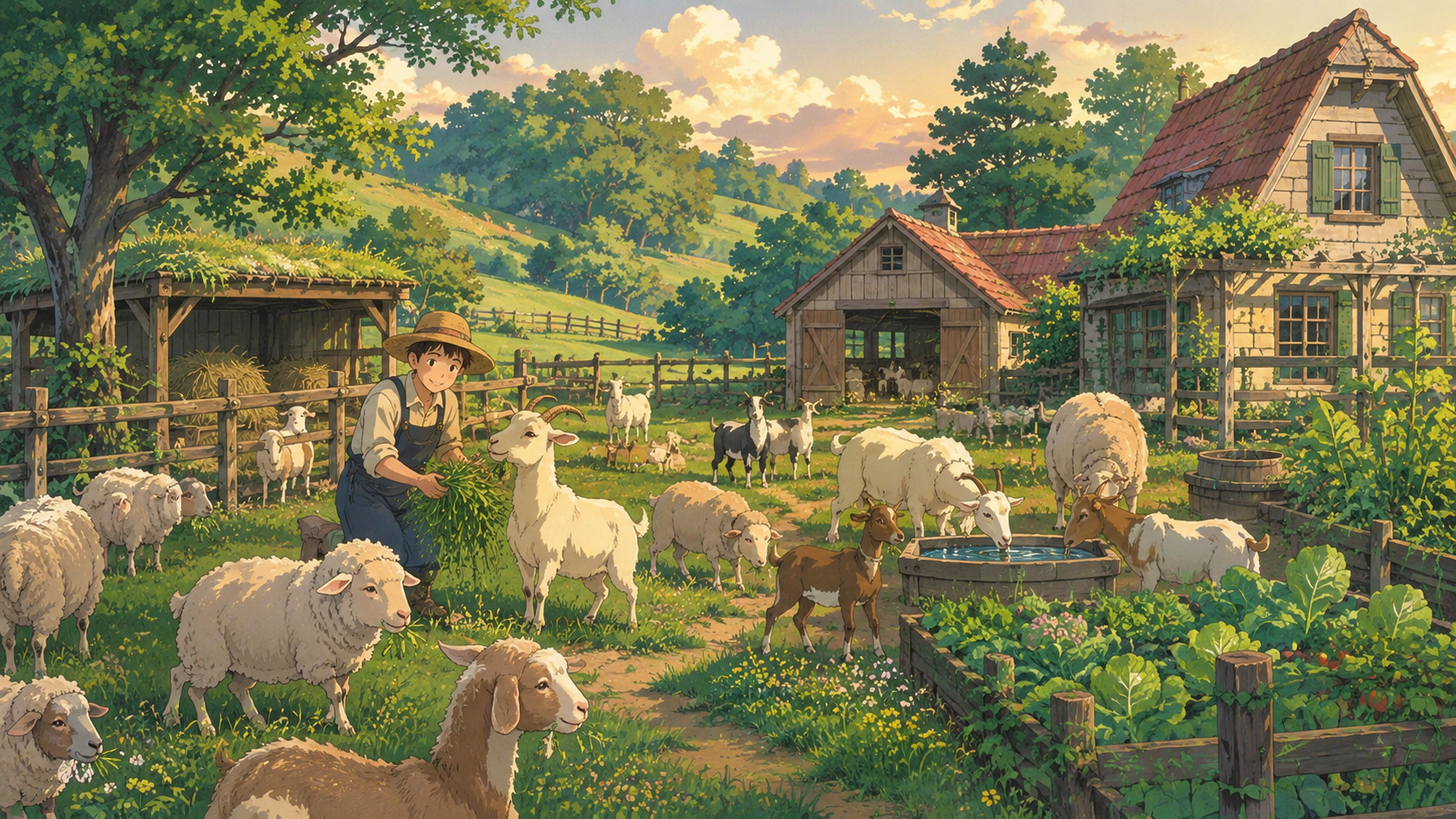
Have you ever looked at an overgrown patch of land and wondered how to turn it into a steady, reliable income? Many people assume that profitable livestock farming requires massive acreage, heavy machinery, and expensive cattle. However, some of the most consistent farming returns come in much smaller packages.
Sheep and goats are nature’s perfect foragers. They are incredibly efficient at converting rough brush, weeds, and simple grass into high-value meat, milk, and fiber. For the modern farmer looking to build a resilient business, raising small ruminants offers a clear path to sustainable income without the overwhelming overhead costs of larger livestock.
Whether you are looking to start a small homestead operation or scale up a commercial farm, managing sheep and goats requires specific knowledge. They are not simply “miniature cows.” This guide will walk you through exactly what you need to know to build a healthy flock and a profitable farming business.
Why Choose Sheep and Goats?
The primary advantage of sheep and goats is their size and adaptability. Because they are smaller, they require less land per animal. You can comfortably raise a small flock on a few acres that would barely support a single cow. Furthermore, they are light on the land, meaning they do not compact the soil and cause severe erosion like heavier livestock often do.
Another massive benefit is their reproduction rate. A healthy, well-fed ewe (female sheep) or doe (female goat) will often give birth to twins, and sometimes even triplets. This rapid breeding cycle allows you to multiply your flock size quickly, giving you a faster return on your initial investment. Finally, they offer multiple income streams. You can sell them for meat, harvest their milk for artisan cheeses, or shear them for wool and fiber.
Step-by-Step Guide to Starting Your Farm
Success with small livestock depends heavily on your initial setup. Follow these foundational steps to ensure your farm starts on the right track.
Step 1: Choose the Right Breed for Your Goal Do not buy an animal just because it looks nice. Decide your end goal first. If you want to sell meat, look for heavy, fast-growing breeds like Boer goats or Dorper sheep. If your market demands dairy, focus on Nubian or Alpine goats. Always buy breeds that are known to thrive in your specific local climate.
Step 2: Build Secure, Predator-Proof Fencing Goats are notorious escape artists, and sheep are highly vulnerable to local predators like stray dogs or coyotes. Standard barbed wire will not work. You must invest in heavy-duty woven wire fencing, often combined with a hot electric wire at the top and bottom. Good fencing is expensive, but losing half your flock to predators is far more costly.
Step 3: Construct a Dry, Draft-Free Shelter Sheep and goats are incredibly tough when it comes to cold weather, but they cannot handle staying wet. Their shelter does not need to be a heated, expensive barn. A simple three-sided shed that blocks the prevailing winter winds and keeps the rain off their backs is perfectly fine. The most important factor is keeping the bedding dry to prevent respiratory infections.
Step 4: Establish a Feeding and Mineral Program While they will eat pasture grass, sheep and goats also require loose minerals designed specifically for their species. Never feed sheep a mineral mix designed for goats or cattle, as the high copper levels can be toxic to sheep. Ensure they have access to clean, fresh water at all times, as a dehydrated animal will quickly stop eating and lose weight.
Practical Tips You Can Apply
- Understand the eating habits: Sheep are grazers; they prefer to eat short grass near the ground. Goats are browsers; they prefer to eat leaves, weeds, and brush at head height. Knowing this helps you manage your pastures effectively.
- Practice rotational grazing: Never let your animals eat a pasture down to the bare dirt. Divide your land into smaller paddocks and move the flock every few days. This allows the grass to regrow and drastically reduces the number of internal parasites your animals ingest.
- Keep detailed records: Treat your farm like a business. Track which animals birth twins, which ones constantly get sick, and how fast their babies grow. Cull (sell) the underperforming animals and only keep the best for breeding next year.
- Learn basic hoof care: Sheep and goat hooves grow continuously, just like human fingernails. You must trim their hooves every few months to prevent painful foot rot and permanent joint damage.
Real-Life Example: The Brush-Clearing Blueprint
Consider the story of a farmer who inherited ten acres of rough, heavily overgrown land. Instead of spending thousands of dollars on tractor fuel and chemical herbicides to clear the thick brush, he bought a starter herd of twenty Boer-cross goats.
He set up temporary electric fencing and moved the goats through the dense brush week by week. Goats naturally prefer to eat woody plants, poison ivy, and thorny bushes over plain grass. Over the course of a single summer, the goats completely cleared the underbrush, allowing sunlight to reach the soil so natural pasture grass could grow.
By the end of the year, not only had he saved a massive amount of money on land clearing, but his goats had also multiplied. He sold the healthy, brush-fed male offspring at the autumn meat market for a handsome profit. He turned a major farm expense (weed control) into a highly profitable, sustainable income stream.
Common Mistakes to Avoid
Even eager beginners can stumble if they ignore the basic biology of these animals. Avoid these frequent traps.
Overcrowding the Pasture Putting too many animals on too little land is the fastest way to ruin your farm. Overcrowding destroys the grass roots, turns your field into a mud pit, and causes disease to spread like wildfire. Always stock your land conservatively.
Ignoring Parasite Management Internal worms are the number one killer of sheep and goats worldwide. Many beginners wait until an animal is severely anemic and weak before treating them. Work with a local veterinarian to establish a proper deworming schedule and use rotational grazing to keep worm loads naturally low.
Buying “Bargain” Animals at Auctions Livestock auctions are often where experienced farmers dump their problem animals. That “cheap” sheep you bought might have a chronic disease that will instantly infect your entire healthy flock. Always try to buy your starter animals directly from a reputable, clean farm, even if it costs a little more upfront.
Conclusion
Farming sheep and goats is a deeply rewarding venture that connects you directly to the land. It provides a highly sustainable way to produce food and generate a reliable income. By respecting the animals’ natural habits, investing in strong fencing, and managing your pastures wisely, you can build a resilient agricultural business.
Start small. Buy a few high-quality animals, learn their daily rhythms, and master the basics of hoof trimming and pasture rotation. As your experience grows, your flock will naturally multiply, and your small farm will steadily transform into a profitable, long-term success.
Frequently Asked Questions (FAQ)
1. Can I raise sheep and goats together in the same pasture? Yes, they often make excellent pasture companions because they do not compete for the exact same food. The sheep will graze the lower grasses, while the goats will eat the taller weeds and brush. However, you must be careful with their mineral supplements, as sheep cannot process the copper that goats require.
2. How much land do I need to start? A general rule of thumb is that one acre of good quality pasture can support about six to eight sheep or goats. However, this varies wildly depending on your local rainfall and soil quality. In dry, arid regions, you will need significantly more land to support the same number of animals.
3. Do I need a livestock guardian dog? If you live in an area with a high population of coyotes, stray dogs, or mountain lions, a livestock guardian dog (like a Great Pyrenees) is highly recommended. Sheep and goats have almost no natural defenses against predators, and a good dog is often the most effective protection available.
4. How long does it take for them to reach market weight? If you are raising meat breeds on good pasture with proper nutrition, a lamb or a kid (baby goat) can usually reach a healthy market weight in about six to eight months.
5. Are goats harder to keep fenced in than sheep? Absolutely. Goats are naturally curious, agile, and love to climb. If there is a weak spot in your fence, a goat will find it and exploit it. Sheep are generally more docile and respectful of simple fences, making them slightly easier for absolute beginners to contain.