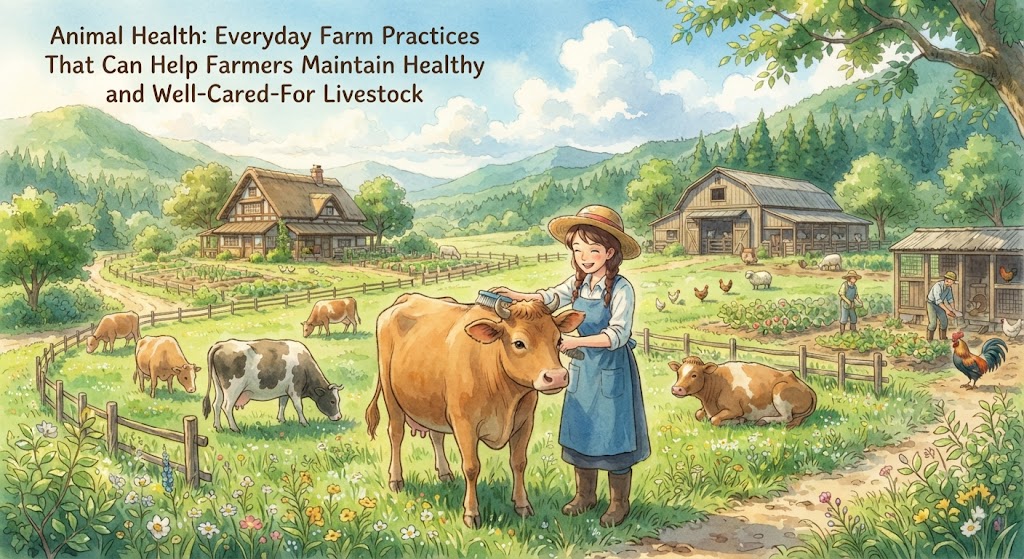
When I brought my first small herd of cattle and goats onto the property a decade ago, I made the classic rookie mistake of treating animal husbandry like an extension of crop farming. I figured as long as they had a fence to keep them in, grass to eat, and a trough of water, they would pretty much take care of themselves.
Nature quickly proved me wrong.
During my second winter, a minor parasite issue that I completely missed during my weekly chores snowballed into a major health crisis for one of my prime calves. By the time I noticed the animal looking sluggish, the infection had taken root, resulting in expensive vet bills and heartbreaking stress.
That was the day I learned a fundamental truth of livestock management: Animals don’t tell you when they are sick until they are already dying.
As prey animals, their instinct is to hide weakness at all costs so they don’t look vulnerable to predators. If you wait until a cow or goat looks visibly sick while standing in the pasture, you are already weeks behind the curve.
Keeping livestock healthy isn’t about scrambling to treat sick animals; it is about building a proactive, daily routine focused on prevention, nutrition, and low-stress handling. Here is my battle-tested playbook for maintaining a thriving, resilient herd year-round.
1. The 5-Minute Morning Observation (Reading the Herd)
The most valuable tool in your livestock management kit isn’t a syringe, a stethoscope, or a heavy-duty squeeze chute. It is your eyes and five minutes of quiet observation every single morning before you feed them.
When you throw feed into a trough, every healthy animal should come running with bright eyes, alert ears, and eager body language.
What to Look For (The Red Flags):
- The Laggard: If one animal is lagging behind, standing by itself in the corner with its head down and ears drooping, something is wrong. That is your cue to drop everything and investigate immediately.
- The Rumination Check: Cattle and goats are ruminants; they spend hours lying down quietly chewing their cud. If an animal is standing or lying down without moving its jaw, or if its left flank (rumen) looks distended and bloated, it is experiencing a digestive emergency.
- Gait and Posture: Watch how they walk. A slight limp or a curved, “roached” back indicates hoof rot, joint pain, or internal discomfort.
The Veteran’s Rule: A healthy animal is curious, clean-eyed, and reactive. The moment an animal stops caring about what you are doing, disease or pain has already set in.
2. Adaptive Multi-Paddock Grazing: The Natural Medicine
The single best thing you can do for your livestock’s health has nothing to do with medicine—it has to do with how you move them across the land.
For generations, farmers practiced “set-stocking,” turning animals out into one massive pasture for months at a time. This is a disaster for animal health.
- The Parasite Trap: When animals graze the same pasture continuously, they eat grass down to the dirt. More importantly, they ingest parasite larvae that crawl up the grass blades from their own manure. They get reinfected over and over again, leading to severe worm loads, anemia, and poor growth.
- The Mud and Hoof Rot Problem: Constant traffic in a single paddock turns the soil into a muddy wasteland, destroying hoof health.
The Proactive Fix: We switched entirely to Adaptive Multi-Paddock (AMP) Grazing using portable electric fencing.
- The Rotation: We move our herd to a fresh patch of grass every single day (sometimes twice a day).
- Breaking the Lifecycle: By the time the animals return to that original paddock 30 or 45 days later, the parasite larvae have hatched without a host and died in the sun. We drastically reduce internal parasite loads without constantly pumping our animals full of chemical dewormers.
- Hoof Health: Short-duration grazing means the soil stays covered in grass and root structure, keeping hooves clean, dry, and free of foot rot.
3. Nutrition Beyond Grass: Mineral Balance
Relying solely on “whatever grass is growing in the pasture” is a recipe for silent nutritional deficiencies. Depending on your region, your local soil might be completely missing crucial trace minerals like selenium, copper, or zinc.
A mineral-deficient animal won’t drop dead overnight, but its immune system will crash. It will have poor reproductive rates, dull hair, and low resistance to parasites.
The Practical Protocol:
- Free-Choice Loose Minerals: We keep heavy-duty mineral feeders out in the pastures 24/7, stocked with high-quality, region-specific loose minerals (never cheap salt blocks, which don’t provide the right trace elements).
- Targeted Supplementation: During winter or times of drought when the grass loses its nutritional value, we supplement with high-protein alfalfa or targeted energy feeds, ensuring the rumen microbes have everything they need to keep the animal warm and growing.
4. Low-Stress Stockmanship (The Profit Multiplier)
How you physically handle your livestock directly impacts your bottom line. If you run your cattle with shouting, cracking whips, and aggressive dogs, you create a rush of adrenaline and cortisol in the animal’s bloodstream.
- The Cost of Stress: Stressed animals have weaker immune systems, lower feed conversion rates, and produce lower-quality meat. Furthermore, an adrenaline-pumping handling session can cause a cow to abort a calf.
- The Calm Approach: Master low-stress stockmanship. Understand the animal’s “flight zone” (the perimeter of personal space that causes them to move away). By working gently at the edge of their flight zone, you can move an entire herd across a gate or into a sorting chute in total silence.
The Animal Health & Resource Integration Dashboard
To truly understand how animal health connects to your broader farm management—including pasture rotation, feed costs, and disease prevention—use this interactive planning tool to model different livestock scenarios
The Final Rule: Prevention is Cheaper Than Cure
Ten years in the livestock business taught me that emergency veterinary care will destroy your profit margins faster than almost anything else on the farm.
When you prioritize daily observation, rotate your pastures to break parasite cycles, provide targeted trace minerals, and handle your herd with calm precision, the day-to-day emergencies virtually disappear. Take care of the ecosystem beneath their hooves, and your animals will reward you with steady, stress-free growth.