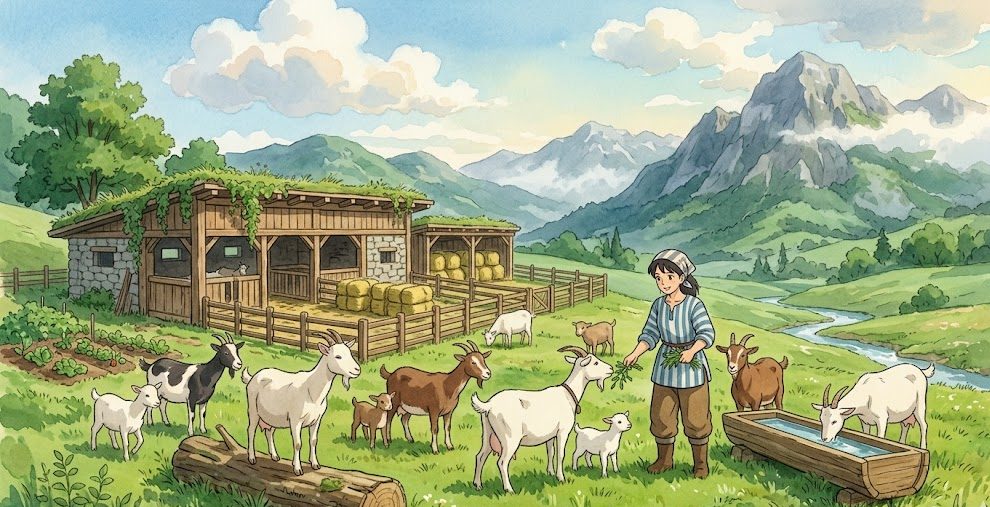
While traditional cattle and dairy farming often dominate conversations about livestock investment, an undercurrent of modern agricultural entrepreneurs is quietly turning toward a far more versatile, resilient, and highly profitable animal: the humble goat.
Commercial goat farming, often referred to as caprine agriculture, is rapidly expanding globally. Driven by a surging demand for lean red meat, easily digestible dairy products, premium cheeses, and high-end textiles like cashmere and mohair, goats are no longer just backyard hobby animals. They are the foundation of highly lucrative, sustainable agricultural businesses.
For the small-scale landowner or seasoned farmer looking to diversify, goats offer a unique set of competitive advantages. They require significantly less land than cattle, possess an incredibly high reproductive rate, adapt effortlessly to harsh climates, and utilize diverse vegetation that other livestock refuse to eat.
However, moving from a casual herd to a highly profitable, commercial-scale operation requires structural planning, meticulous health management, and a deep understanding of livestock economics. This comprehensive guide will take you through the best practices of commercial goat farming, helping you minimize mortality rates and maximize your bottom line.
Phase 1: Selecting Your Core Production Niche and Breeds
Before building fences or buying stock, you must decide exactly what product your farm will focus on. Trying to raise a single herd for meat, milk, and fiber all at once rarely works at a commercial level. True profitability lies in specialization.
1. Meat Production (Chevon)
The global market for goat meat—commonly known as chevon—is remarkably robust and largely under-supplied. Meat goats are generally hardier and less labor-intensive than dairy breeds because they do not require daily, time-sensitive milking routines.
The elite commercial meat breeds include:
- Boer: Originally from South Africa, the Boer goat is the undisputed heavyweight champion of the meat industry. They possess exceptional growth rates, deep muscular bodies, and high dressing percentages.
- Kalahari Red: Known for their distinct rich red coats, these goats are highly resilient to intense heat and solar radiation, making them perfect for arid climates.
2. Dairy Production
Goat milk is highly sought after by health-conscious consumers and boutique cheesemakers due to its lower allergen profile and smaller fat globules compared to cow’s milk.
The top commercial dairy breeds include:
- Saanen: Often called the “Holsteins of the goat world,” Saanens are high-volume milk producers with calm temperaments.
- Alpine: Highly adaptable, heavy milkers that perform exceptionally well in cooler climates.
- Nubian (Anglo-Nubian): Easily recognized by their long, floppy ears, Nubians produce milk with an exceptionally high butterfat content, making them the favorite breed for artisanal cheese and soap production.
3. Fiber Production
If you are interested in luxury textile markets, fiber farming involves harvesting premium coats.
- Angora: Produces mohair, a silky, high-value fiber known for its durability and sheen.
- Cashmere: Not a specific breed, but rather a type of goat that produces a highly prized, ultra-soft winter undercoat.
Phase 2: Designing a Secure Housing and Fencing Infrastructure
Goats are notoriously clever, agile, and physically active animals. A poorly planned infrastructure will lead to constant escapes, high predator losses, and rapid disease outbreaks.
1. Escape-Proof Fencing
There is an old farming proverb: “If a fence can’t hold water, it can’t hold a goat.” Goats prefer to graze with their heads down, but they will actively climb, lean on, or crawl under standard wire fences.
For commercial operations, avoid cheap barbed wire, which can cause severe skin and udder lacerations. Instead, invest in a woven wire mesh fence (often called goat net fencing) at least 4 feet high, featuring small 4×4-inch openings to prevent the animals from sticking their heads through and getting trapped. Pair this with a single strand of high-tensile electric wire running along the top and bottom of the fence to deter both escaping goats and incoming predators like wild dogs or coyotes.
2. Ventilation-Focused Housing Setup
Goats do not need elaborate, heated barns; however, they absolutely require clean, dry, and draft-free shelter to protect them from cold winds, heavy rain, and scorching summer sun.
The primary threat inside a goat shed is moisture and stale air. Goats excrete significant amounts of ammonia in their urine. If a shelter is poorly ventilated, ammonia gas pools at ground level, severely burning the respiratory linings of young kids and leading to fatal outbreaks of bacterial pneumonia.
Build your shelters with elevated roofs, open eastern or southern exposures to invite in natural morning sunlight, and slotted floors or heavily bedded deep-litter systems using clean straw or wood shavings to absorb excess moisture.
Phase 3: Optimizing Nutrition and Pasture Management
Feed represents roughly 60% of the ongoing operational costs in commercial livestock management. To maintain a profitable business, you must optimize how your animals consume nutrients.
1. Browsers vs. Grazers
A common mistake beginners make is treating goats exactly like sheep or cattle. Cattle are grazers; they eat short grass close to the ground. Goats are natural browsers.
     [ Trees / High Shrubs ] <-- Goats prefer eating up here!
         o   o   o   o
        /|\ /|\ /|\ /|\
    ========================= <-- Ground Level
     ~~~~~ ~~~~~ ~~~~~ ~~~~~ <-- Sheep/Cattle graze down here
Goats prefer to eat with their heads upright, seeking out woody weeds, deep-rooted brush, tree leaves, and thorny briars. Utilizing a silvopasture system—where goats are allowed to forage in lightly wooded areas or orchards—not only keeps them incredibly healthy but also cuts your commercial feed costs significantly.
2. Rotational Grazing
To prevent your pastures from turning into barren, eroded dirt lots, implement a strict rotational grazing schedule. Divide your land into smaller paddocks using temporary electric netting. Move your herd to a fresh paddock every 4 to 7 days, allowing the grazed sections to completely rest and regrow for at least 30 days before letting the animals return.
Pro Tip: Moving your herd frequently breaks the life cycle of dangerous internal parasites (such as the barber’s pole worm). Most parasite larvae crawl up the first two inches of wet grass blades. By keeping your goats browsing on taller forage and shifting them to fresh land regularly, you eliminate the need for constant, expensive chemical dewormers.
3. Essential Mineral Supplementation
No matter how rich your pasture looks, goats require free-choice access to loose, specialized goat minerals 365 days a year. They have an exceptionally high requirement for copper. Avoid multi-species livestock mineral blocks, as the copper levels inside them are often kept dangerously low to prevent sheep toxicity, leaving your goats severely deficient.
Phase 4: Preventative Healthcare and Biosecurity
In a high-density commercial livestock operation, disease can spread like wildfire. A dead goat is a zero-profit asset, making a preventative health schedule your ultimate financial safeguard.
1. Strict Biosecurity Protocols
The easiest way to introduce disease into your clean herd is by bringing in infected animals from outside auctions. When purchasing new breeding stock, always buy from closed, reputable, disease-tested farms. Quarantine all incoming animals in an isolated pen completely away from your main herd for at least 30 days to observe them for signs of contagious conditions like foot rot, soremouth, or caseous lymphadenitis (CL).
2. The Core Management Calendar
To keep herd health tracking simple, maintain an organized seasonal calendar:
- Hoof Trimming: Inspect and trim goat hooves every 6 to 8 weeks to prevent lameness and foot rot infections caused by muddy ground.
- FAMACHA Scoring: Instead of blindly dosing your herd with dewormers—which creates chemical-resistant superworms—use the FAMACHA system. Check the inside color of the goat’s lower eyelid. A bright pink or red color indicates a healthy animal; a pale white color indicates severe anemia caused by internal parasites, letting you know exactly which individual goat needs targeted treatment.
- Vaccinations: Keep your herd strictly up to date on CD&T vaccines, which protect them against tetanus and enterotoxemia (overeating disease).
Commercial Goat Farming Economics Matrix
| Production Phase | Cost Driver | Profit Optimization Strategy | Expected Turnaround Time |
|---|---|---|---|
| Breeding Stock | Upfront Doe/Buck Purchase | Invest in high-quality registered bucks to rapidly improve herd genetics. | Initial Investment Phase |
| Meat Production | Kid Creep Feed, Pasture Care | Time your kiddings so market-ready kids reach target weight right before major holiday festivals. | 5 to 7 Months Post-Birth |
| Dairy Production | Milking Machinery, Sanitation | Process raw milk into high-margin artisanal cheeses, yogurts, or custom skincare soaps. | Daily Ongoing Output |
Frequently Asked Questions (FAQs)
Q1: Can I start a profitable commercial goat farm on just 2 to 3 acres of land?
Yes, absolutely. While traditional extensive farming requires significant acreage, you can utilize an intensive cut-and-carry system (zero-grazing) on small plots. In this setup, goats are housed in a clean indoor facility, and high-quality forage, hay, and agricultural green waste are harvested and brought directly to them daily. On 2 acres of well-managed land, you can easily maintain a breeding herd of 15 to 20 does under an intensive system.
Q2: What is the ideal ratio of bucks (male goats) to does (female goats) for breeding?
For a commercial breeding program, the standard recommended ratio is 1 mature buck for every 30 to 40 breeding does. Keeping too many bucks increases feed costs and causes unnecessary fighting, while keeping too few can lead to unbred does and a delayed kidding season.
Q3: How do I handle the seasonal nature of goat meat and milk demand?
The secret to maximum profit is market timing. Goat meat prices spike dramatically during specific cultural and religious holidays throughout the year. Track these dates in advance and manage your breeding cycles so your kids reach their ideal market weight (typically 25 to 35 kg) exactly two weeks before peak holiday demand.
Q4: Why is a buck’s scent so strong, and will it affect dairy production?
During the breeding season, mature bucks produce a potent musk pheromone to attract does. If you run a commercial dairy farm, you must house your breeding bucks completely separate from your milking does. If a buck hangs around the milking parlor, his strong scent can physically absorb into the fresh milk, giving it an unpleasant, musky flavor that reduces its retail value.
Conclusion
Commercial goat farming is a highly lucrative agricultural enterprise that rewards structural organization, smart pasture management, and a commitment to animal welfare. By selecting the correct elite breed for your specific market, constructing escape-proof and breezy housing, leveraging the natural browsing instincts of the herd through rotational grazing, and maintaining a strict preventative healthcare schedule, you build an efficient, self-sustaining revenue engine.
Start with a manageable herd size, focus heavily on high-quality breeding genetics, master your local market dynamics, and watch your caprine enterprise grow into a highly prosperous agricultural success story!