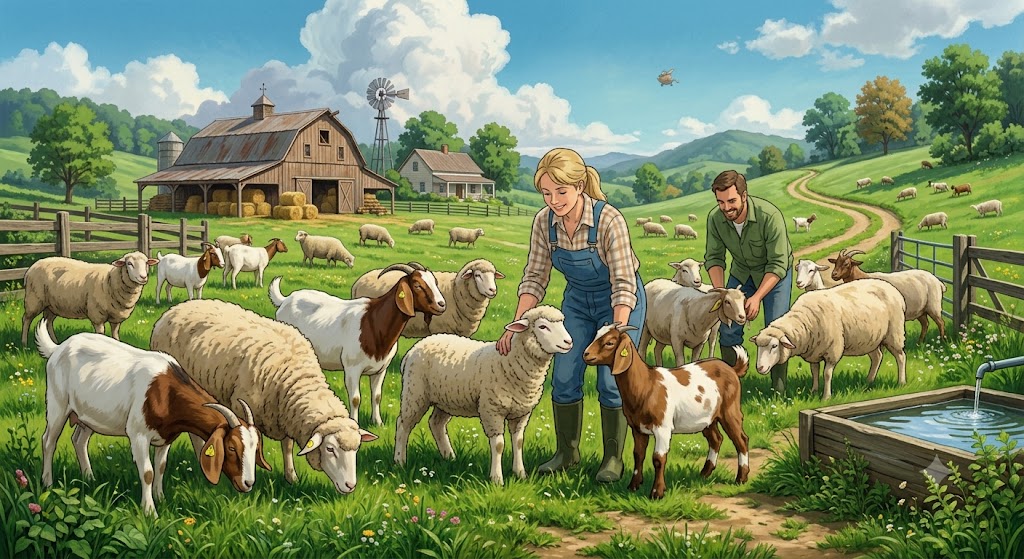
Sheep and goat farming can be a profitable livestock business for small farmers, commercial producers, and rural families. These animals require less space and lower starting investment than many larger livestock species, and they can provide multiple sources of income through meat, milk, wool, fibre, breeding animals, and manure.
However, successful sheep and goat farming requires more than purchasing animals and allowing them to graze. Farmers must select suitable breeds, provide balanced nutrition, maintain clean housing, prevent diseases, manage breeding, and plan marketing carefully.
Healthy animals grow faster, reproduce more successfully, and produce better-quality products. This guide explains the key steps needed to build a productive and profitable sheep or goat farming operation.
Understanding Sheep and Goat Farming
Sheep and goats are small ruminants. Their digestive systems allow them to use grass, leaves, crop residues, shrubs, and other fibrous feeds efficiently.
Although they are often managed together, sheep and goats have different feeding behaviours.
Sheep generally prefer grasses and low-growing plants. Goats are natural browsers and often prefer leaves, bushes, weeds, and tree branches.
Farmers should understand these differences when planning grazing land, fencing, feed, and housing.
Sheep and goats may be raised under three main systems:
- Extensive farming with open grazing
- Semi-intensive farming with grazing and supplementary feed
- Intensive farming with controlled housing and feeding
The best system depends on available land, labour, climate, market demand, and financial capacity.
Choose the Right Breed
Breed selection is one of the most important decisions in livestock farming. Animals should be suitable for the local climate, production goal, disease conditions, and feed availability.
Sheep breeds
Sheep may be raised for:
- Meat
- Wool
- Milk
- Breeding stock
- Dual-purpose production
Meat breeds are usually selected for faster growth and good body development. Wool breeds produce valuable fibre, while dairy breeds are chosen for milk production.
Goat breeds
Goats may be raised for:
- Meat
- Milk
- Fibre
- Breeding
- Mixed production
Some goat breeds are known for high milk yield, while others grow quickly and produce good-quality meat.
Local breeds are often more resistant to regional diseases, heat, cold, and poor-quality feed. Improved or exotic breeds may produce more but may also require better housing, nutrition, and healthcare.
Farmers should purchase animals from reliable breeders and inspect them before buying.
Select Healthy Animals
Healthy starting stock is essential for long-term farm success.
A healthy sheep or goat should have:
- Bright and clear eyes
- Smooth or healthy-looking coat
- Strong legs
- Normal breathing
- Good appetite
- Active behaviour
- Clean nose and mouth
- Firm body condition
- No diarrhoea
- No visible wounds or swelling
Avoid animals that appear weak, excessively thin, lame, inactive, or constantly coughing.
Breeding females should have a healthy udder and normal reproductive history. Breeding males should have strong legs, good body structure, and properly developed reproductive organs.
New animals should be kept separately for a short quarantine period before joining the main herd or flock.
Build Safe and Comfortable Housing
Good housing protects animals from rain, extreme temperatures, predators, parasites, and disease.
The shelter should be dry, well-ventilated, easy to clean, and free from sharp objects.
Important housing features include:
- Raised or well-drained flooring
- Strong fencing
- Good air circulation
- Protection from cold winds
- Shade during hot weather
- Separate feeding and watering areas
- Space for pregnant and sick animals
- Secure doors and gates
Overcrowding should be avoided because it increases stress, respiratory problems, injuries, and disease transmission.
Bedding materials such as straw, dry grass, wood shavings, or other locally suitable materials can help keep animals comfortable. Wet bedding should be removed quickly.
Goats are skilled climbers and escape artists, so fencing must be strong and high enough to prevent them from leaving.
Provide Balanced Nutrition
Proper feeding directly affects growth, reproduction, immunity, milk production, and profitability.
Sheep and goats require:
- Energy
- Protein
- Fibre
- Minerals
- Vitamins
- Clean water
The main diet may include pasture, hay, silage, crop residues, tree leaves, and commercial feed.
Growing animals, pregnant females, lactating animals, and breeding males may need additional concentrates or protein-rich feed.
Feed changes should be introduced gradually. Sudden dietary changes can cause digestive problems, including bloating and acidosis.
Animals should always have access to clean drinking water. Water containers should be cleaned regularly to prevent contamination.
Mineral blocks or loose mineral mixtures may be provided according to local veterinary recommendations. Sheep are more sensitive to certain minerals, especially excessive copper, so sheep and goats should not automatically receive the same mineral supplements.
Manage Grazing Land Properly
Good pasture management can reduce feed costs and improve animal health.
Continuous grazing in one area may damage vegetation, expose soil, and increase parasite problems. Rotational grazing is often a better method.
In rotational grazing, land is divided into separate sections. Animals graze one section while the others recover.
This system can:
- Improve pasture growth
- Reduce overgrazing
- Lower parasite exposure
- Improve feed availability
- Protect soil from erosion
- Support better animal performance
Farmers should avoid allowing animals to graze very close to the ground because parasite larvae are often concentrated near the soil surface.
Poisonous plants should be identified and removed from grazing areas.
Prevent Common Diseases
Disease prevention is usually less expensive than treatment.
A good health programme should include vaccination, parasite control, hoof care, clean housing, proper feeding, and regular observation.
Common health problems may include:
- Internal worms
- External parasites
- Pneumonia
- Foot rot
- Diarrhoea
- Bloat
- Mastitis
- Reproductive infections
- Nutritional deficiencies
Farmers should observe animals every day.
Warning signs may include:
- Loss of appetite
- Isolation from the group
- Weight loss
- Coughing
- Nasal discharge
- Diarrhoea
- Swollen joints
- Lameness
- Unusual breathing
- Reduced milk production
Sick animals should be separated and examined by a qualified veterinarian or livestock specialist.
Medicines should not be given without proper diagnosis and dosage instructions.
Control Internal and External Parasites
Parasites are a major cause of poor growth and livestock losses.
Internal worms can cause anaemia, weakness, diarrhoea, weight loss, and death. External parasites such as ticks, lice, and mites can damage skin and spread diseases.
Parasite control may include:
- Rotational grazing
- Avoiding overcrowding
- Keeping housing dry
- Regular manure removal
- Veterinary testing
- Targeted deworming
- Cleaning equipment
- Treating infected animals
Frequent and unnecessary deworming can lead to drug resistance. Farmers should follow professional advice and use the correct product for the identified parasite.
Practise Proper Hoof Care
Overgrown or damaged hooves can cause pain, poor movement, reduced feeding, and lower breeding performance.
Hooves should be checked regularly and trimmed when needed.
Wet and dirty conditions increase the risk of foot rot. Housing floors, paths, and feeding areas should remain as dry as possible.
Animals showing lameness should be examined quickly. Delayed treatment may allow infections to become more serious.
Plan Breeding Carefully
Controlled breeding helps farmers improve animal quality and manage births more efficiently.
Breeding animals should be healthy, mature, and in suitable body condition. Very thin or overweight animals may experience reproductive problems.
Farmers should avoid breeding animals that are closely related because inbreeding may increase genetic weaknesses.
A breeding plan should record:
- Female identification
- Male identification
- Mating date
- Expected birth date
- Number of offspring
- Birth weight
- Health problems
- Growth performance
Pregnant females need good-quality feed, clean water, comfortable housing, and regular monitoring.
Special attention is needed during the final stage of pregnancy because nutritional demands increase.
Manage Lambing and Kidding
Lambing refers to sheep giving birth, while kidding refers to goats giving birth.
A clean, quiet, and dry area should be prepared before delivery.
After birth, the farmer should ensure that:
- The newborn is breathing normally
- The nose and mouth are clear
- The mother accepts the newborn
- The newborn receives colostrum quickly
- The navel is cleaned appropriately
- The animal remains warm and dry
Colostrum is the first milk produced by the mother. It provides essential energy and antibodies that protect newborns from disease.
Weak newborns, difficult births, or rejected offspring may require immediate assistance.
Care for Young Animals
Young sheep and goats are vulnerable to cold, diarrhoea, pneumonia, starvation, and predators.
They should receive adequate milk, clean bedding, good ventilation, and protection from extreme weather.
As they grow, they may be introduced gradually to:
- Clean water
- Soft hay
- Starter feed
- Safe grazing areas
- Mineral supplements
Farmers should monitor growth and separate weak animals if stronger ones prevent them from feeding properly.
Identification tags or records make it easier to track performance.
Maintain Cleanliness and Biosecurity
Biosecurity means preventing diseases from entering or spreading through the farm.
Useful practices include:
- Quarantining new animals
- Restricting unnecessary visitors
- Cleaning footwear and equipment
- Separating sick animals
- Disposing of dead animals safely
- Controlling rodents
- Cleaning feed and water containers
- Avoiding shared equipment between farms
Transport vehicles should also be cleaned when possible.
Farmers should avoid buying animals from unknown or unreliable sources.
Keep Detailed Farm Records
Accurate records help farmers calculate costs, monitor animal health, and improve management decisions.
Useful records include:
- Number of animals
- Breed and age
- Purchase cost
- Feed expenses
- Vaccination dates
- Medical treatments
- Breeding records
- Birth details
- Mortality
- Weight gain
- Milk production
- Sales income
Without proper records, farmers may not know which animals are productive and which ones are increasing costs.
Poor-performing animals can be identified and removed from the breeding programme.
Develop a Marketing Plan
Farmers should identify their target market before expanding production.
Potential products include:
- Live animals
- Meat
- Milk
- Cheese
- Wool
- Fibre
- Breeding stock
- Manure
Possible buyers may include local consumers, traders, butchers, restaurants, dairy processors, wool buyers, and livestock markets.
Demand may increase during festivals, weddings, and seasonal events. Farmers should plan breeding and finishing schedules according to expected market demand.
Direct selling may offer higher prices, but it requires transport, customer service, hygiene, and reliable supply.
Common Sheep and Goat Farming Mistakes
Farmers should avoid these common problems:
- Buying unhealthy animals
- Choosing unsuitable breeds
- Overcrowding housing
- Feeding poor-quality diets
- Ignoring mineral requirements
- Allowing uncontrolled breeding
- Failing to quarantine new animals
- Overgrazing pasture
- Ignoring lameness
- Treating diseases without diagnosis
- Keeping incomplete records
- Expanding too quickly
Starting with a manageable number of animals allows farmers to gain experience and control costs.
Conclusion
Sheep and goat farming can provide reliable income when animals are managed carefully. Success depends on selecting suitable breeds, providing balanced feed, maintaining clean housing, controlling parasites, planning breeding, and monitoring animal health every day.
Farmers should focus on prevention rather than waiting for serious disease or production losses. Proper records, pasture management, newborn care, and marketing plans can significantly improve profitability.
A successful livestock farm is not measured only by the number of animals it owns. It is measured by healthy growth, low mortality, strong reproduction, efficient feeding, and consistent market returns.
Frequently Asked Questions
1. Are sheep and goats suitable for beginner farmers?
Yes. They can be suitable for beginners because they require less land and investment than larger livestock, but farmers still need proper training and daily management.
2. Can sheep and goats be raised together?
They can sometimes be raised together, but their feeding behaviour, mineral needs, fencing requirements, and disease risks must be managed separately.
3. What is the best feed for sheep and goats?
Good-quality pasture, hay, crop residues, clean water, minerals, and suitable supplementary feed can provide a balanced diet.
4. How can farmers reduce parasite problems?
Rotational grazing, clean housing, veterinary testing, proper stocking density, and targeted deworming can reduce parasite pressure.
5. Is sheep and goat farming profitable?
It can be profitable when farmers control feed and healthcare costs, maintain low mortality, produce healthy animals, and sell through reliable markets.