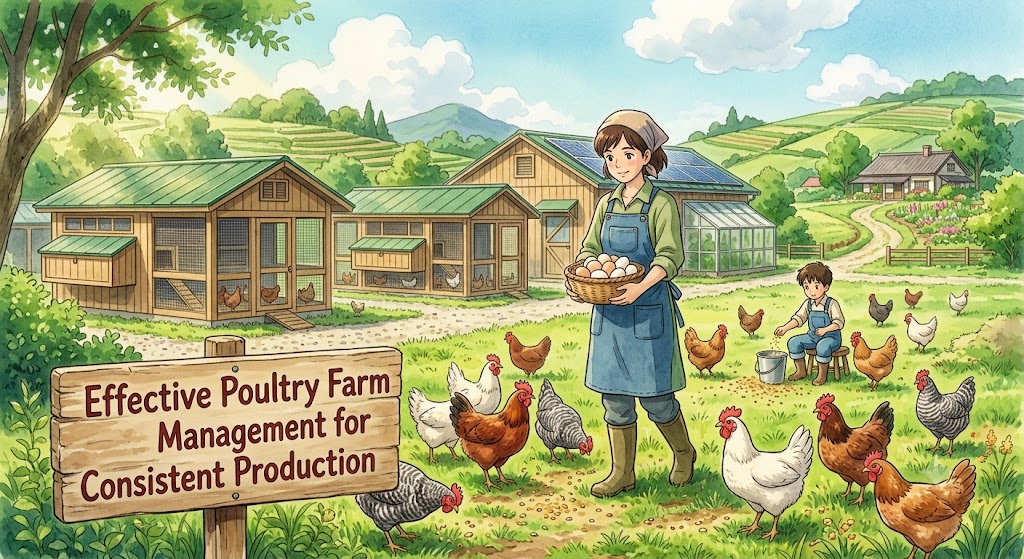
Poultry farming is one of the most important sectors of modern agriculture, providing a reliable source of meat and eggs to millions of consumers worldwide. Whether operating a broiler farm, layer farm, or integrated poultry enterprise, consistent production depends on effective management practices that promote bird health, maximize productivity, and maintain profitability.
Successful poultry farming involves much more than providing feed and housing. Farmers must carefully manage nutrition, biosecurity, environmental conditions, disease prevention, flock monitoring, and operational efficiency. Small improvements in management can significantly influence growth rates, feed conversion, egg production, and overall farm performance.
This guide explores the essential poultry management practices that help ensure consistent production and long-term success in poultry farming.
Understanding Poultry Farm Management
Poultry farm management involves organizing and controlling all activities related to bird production.
Key objectives include:
- Maintaining bird health
- Maximizing growth and productivity
- Reducing mortality
- Improving feed efficiency
- Ensuring product quality
- Increasing profitability
Effective management creates a stable environment where birds can perform at their full genetic potential.
Consistency in daily operations is often the foundation of successful poultry production.
Importance of Proper Poultry Housing
Housing plays a critical role in poultry performance.
A well-designed poultry house should provide:
- Adequate ventilation
- Temperature control
- Proper lighting
- Sufficient space
- Protection from predators and harsh weather
Good housing helps reduce stress, prevent disease, and support healthy growth.
Comfortable birds are generally more productive and efficient.
Maintain Optimal Temperature Conditions
Temperature management is particularly important during the early stages of bird development.
Extreme temperatures can cause:
- Reduced feed intake
- Poor growth rates
- Increased mortality
- Lower productivity
Farmers should monitor housing temperatures regularly and make adjustments as needed.
Proper environmental control supports consistent flock performance.
Ensure Adequate Ventilation
Ventilation helps maintain air quality within poultry houses.
Benefits include:
- Removal of excess moisture
- Reduction of harmful gases
- Improved oxygen availability
- Better temperature regulation
Poor ventilation can increase disease risks and negatively affect bird health.
Fresh air is essential for maintaining productive poultry flocks.
Provide Balanced Nutrition
Nutrition is one of the largest factors influencing poultry productivity.
Birds require balanced levels of:
- Energy
- Protein
- Vitamins
- Minerals
- Essential amino acids
Proper nutrition supports:
- Faster growth
- Better feed conversion
- Strong egg production
- Improved immunity
Feeding programs should be tailored to the age and purpose of the flock.
Supply Continuous Access to Clean Water
Water is essential for all poultry production systems.
Benefits of adequate water access include:
- Improved feed consumption
- Better growth rates
- Enhanced egg production
- Reduced stress
Clean water should always be available.
Water quality is equally important, as contaminated supplies can contribute to disease outbreaks.
Implement Strong Biosecurity Programs
Biosecurity is one of the most effective tools for disease prevention.
Important measures include:
- Restricting visitor access
- Disinfecting equipment
- Controlling vehicle movement
- Maintaining clean facilities
Strong biosecurity reduces the risk of introducing harmful pathogens onto the farm.
Disease prevention is generally more economical than treatment.
Develop a Preventive Health Program
Healthy birds are more productive and profitable.
Preventive health programs may include:
- Vaccination schedules
- Routine inspections
- Parasite management
- Disease monitoring
Benefits include:
- Lower mortality rates
- Improved flock performance
- Reduced treatment costs
Preventive management supports long-term production consistency.
Monitor Flock Health Daily
Regular observation helps identify problems early.
Farmers should monitor:
- Feed consumption
- Water intake
- Activity levels
- Feather condition
- Signs of illness
Early detection allows prompt intervention and helps prevent larger issues.
Daily monitoring is a fundamental part of effective poultry management.
Maintain Proper Stocking Density
Overcrowding can negatively affect bird performance.
Problems may include:
- Increased stress
- Poor air quality
- Greater disease transmission
- Reduced growth rates
Providing adequate space supports bird welfare and productivity.
Balanced stocking density contributes to healthier flocks.
Manage Lighting Effectively
Lighting influences both growth and egg production.
Proper lighting programs help regulate:
- Feeding behavior
- Activity levels
- Reproductive performance
Layer operations often use carefully controlled lighting schedules to maintain consistent egg production.
Effective lighting management supports overall flock performance.
Keep Facilities Clean and Sanitary
Clean environments reduce disease risks and improve bird welfare.
Important sanitation practices include:
- Regular litter management
- Equipment cleaning
- Facility disinfection
- Waste removal
Good sanitation helps maintain healthier flocks and more stable production.
Clean farms often experience fewer disease-related disruptions.
Focus on Litter Management
Proper litter management contributes to both health and productivity.
Benefits include:
- Reduced moisture levels
- Improved air quality
- Lower disease pressure
Excessively wet litter can contribute to:
- Respiratory issues
- Foot problems
- Increased pathogen growth
Maintaining dry litter supports healthier poultry houses.
Reduce Stress Factors
Stress negatively affects poultry performance.
Common stressors include:
- Temperature extremes
- Poor handling
- Overcrowding
- Sudden environmental changes
Consequences may include:
- Reduced growth
- Lower egg production
- Increased disease susceptibility
Minimizing stress helps birds achieve their production potential.
Improve Feed Efficiency
Feed often represents the largest operating expense in poultry production.
Strategies for improving feed efficiency include:
- Balanced diets
- Proper feeder management
- High-quality feed ingredients
- Consistent feeding schedules
Efficient feed utilization improves profitability and production performance.
Small improvements in feed conversion can significantly affect financial results.
Maintain Accurate Farm Records
Record keeping helps farmers evaluate performance and identify opportunities for improvement.
Important records include:
- Feed consumption
- Mortality rates
- Growth performance
- Egg production
- Vaccination schedules
Accurate data supports informed management decisions.
Good records are essential for long-term business planning.
Train Farm Workers Properly
Employees play a major role in flock performance.
Training should focus on:
- Bird handling
- Biosecurity procedures
- Disease recognition
- Equipment operation
Knowledgeable workers help maintain consistent management standards.
Well-trained staff contribute directly to production efficiency.
Utilize Technology for Better Management
Modern technologies can improve poultry farm operations.
Examples include:
- Automated feeding systems
- Environmental monitoring equipment
- Digital record-keeping software
- Water management systems
Benefits include:
- Improved accuracy
- Greater efficiency
- Better decision-making
Technology helps support more consistent production outcomes.
Plan for Emergency Situations
Unexpected events can disrupt poultry operations.
Emergency planning should address:
- Disease outbreaks
- Power failures
- Water shortages
- Extreme weather
Prepared farms are better able to protect production and minimize losses.
Risk management contributes to business stability.
Economic Benefits of Effective Poultry Management
Strong management practices often result in:
- Higher production levels
- Better feed efficiency
- Reduced mortality
- Improved product quality
- Greater profitability
Consistent production helps maintain customer confidence and market opportunities.
Efficient operations generally achieve stronger financial performance.
Building a Successful Poultry Management Program
An effective management strategy may include:
- Quality housing
- Balanced nutrition
- Clean water access
- Biosecurity measures
- Preventive health programs
- Accurate record keeping
- Continuous monitoring
Combining these elements creates a foundation for long-term success.
Conclusion
Effective poultry farm management is essential for achieving consistent production, maintaining bird health, and improving profitability. By focusing on housing quality, nutrition, biosecurity, disease prevention, environmental control, and operational efficiency, farmers can create productive poultry systems capable of delivering reliable results throughout the year.
As the poultry industry continues to evolve, farms that prioritize strong management practices will be better positioned to meet market demands, control production costs, and achieve sustainable long-term growth. Consistent attention to detail remains one of the most valuable tools for building a successful poultry enterprise.