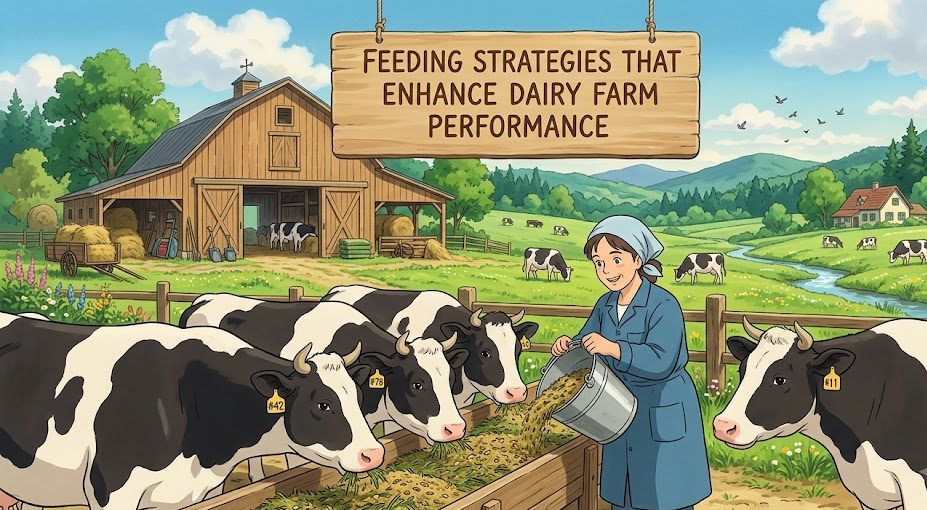
Nutrition is one of the most important factors influencing dairy farm productivity and profitability. The quality and balance of a dairy cow’s diet directly affect milk production, milk quality, reproductive performance, animal health, and overall farm efficiency. Since feed costs often represent the largest expense in dairy operations, developing effective feeding strategies is essential for maximizing returns while maintaining healthy and productive animals.
Successful dairy farms do not simply focus on providing large quantities of feed. Instead, they aim to deliver balanced nutrition that meets the specific needs of cows at different stages of production. Proper feeding management helps improve feed efficiency, support animal welfare, reduce health problems, and increase long-term profitability.
This guide explores practical feeding strategies that can enhance dairy farm performance and contribute to sustainable dairy production.
Understanding the Importance of Dairy Nutrition
Milk production depends heavily on the nutrients cows receive through their diets.
Proper nutrition supports:
- Milk yield
- Milk quality
- Reproductive efficiency
- Immune function
- Growth and development
- Overall health
When nutritional requirements are not met, dairy cows may experience reduced productivity, health problems, and lower profitability.
Balanced feeding programs help cows reach their production potential while maintaining good health.
The Relationship Between Feed and Farm Profitability
Feed commonly accounts for a significant portion of dairy production expenses.
Efficient feeding programs help farmers:
- Improve milk output
- Reduce feed waste
- Enhance feed conversion efficiency
- Lower production costs
Even small improvements in feed management can generate meaningful financial benefits over time.
Optimizing nutrition is often one of the most effective ways to improve dairy farm performance.
Provide High-Quality Forages
Forages form the foundation of most dairy feeding programs.
Common forage sources include:
- Silage
- Hay
- Fresh pasture
- Legume crops
High-quality forages provide:
- Fiber
- Energy
- Essential nutrients
Benefits include:
- Improved rumen health
- Better feed efficiency
- Enhanced milk production
Investing in forage quality often produces strong returns throughout the production cycle.
Balance Energy Requirements
Energy is one of the most critical nutrients for dairy cows.
Energy supports:
- Milk production
- Body maintenance
- Reproductive performance
Energy sources may include:
- Corn silage
- Grains
- High-quality forages
Insufficient energy intake can reduce milk production and negatively affect cow health.
Balanced energy nutrition helps maintain strong production performance.
Ensure Adequate Protein Intake
Protein is essential for growth, milk synthesis, and overall metabolic function.
Common protein sources include:
- Soybean meal
- Canola meal
- Legumes
- Protein concentrates
Benefits of proper protein nutrition include:
- Improved milk production
- Better reproductive performance
- Enhanced growth
Protein levels should be carefully balanced to avoid unnecessary feed costs.
Maintain Effective Fiber Levels
Fiber plays a vital role in rumen function and digestive health.
Benefits include:
- Improved rumination
- Better digestion
- Reduced digestive disorders
Sources of fiber include:
- Hay
- Silage
- Pasture
- Crop residues
Maintaining appropriate fiber levels supports healthy and productive cows.
Provide Essential Vitamins and Minerals
Micronutrients support numerous physiological functions.
Important nutrients include:
- Calcium
- Phosphorus
- Magnesium
- Zinc
- Selenium
- Vitamins A, D, and E
Proper supplementation helps support:
- Bone health
- Immune function
- Reproductive performance
Nutrient deficiencies can significantly reduce dairy farm productivity.
Supply Continuous Access to Clean Water
Water is often the most overlooked nutrient in dairy production.
Milk contains a high percentage of water, making hydration essential.
Benefits of adequate water access include:
- Improved feed intake
- Higher milk production
- Better animal health
Clean water should always be readily available to all dairy animals.
Water quality is just as important as water quantity.
Utilize Total Mixed Ration Systems
Many successful dairy farms use Total Mixed Ration (TMR) feeding systems.
TMR combines all dietary components into a balanced mixture.
Benefits include:
- Consistent nutrient intake
- Reduced feed sorting
- Improved rumen stability
- Enhanced production performance
Well-formulated TMR programs help optimize feed utilization.
Adjust Feeding Programs by Production Stage
Nutritional needs vary throughout a cow’s lifecycle.
Different groups may include:
- Calves
- Heifers
- Dry cows
- Fresh cows
- High-producing cows
Tailoring diets to specific production stages improves efficiency and animal performance.
Targeted nutrition helps maximize productivity while controlling costs.
Manage Transition Cow Nutrition Carefully
The transition period surrounding calving is one of the most critical stages in dairy production.
Proper nutrition during this period supports:
- Smooth calving
- Strong milk production
- Reduced metabolic disorders
Effective transition feeding programs help prevent costly health issues.
Successful transition management contributes significantly to overall herd performance.
Improve Feed Efficiency
Feed efficiency measures how effectively cows convert feed into milk.
Strategies for improving efficiency include:
- Balanced diets
- High-quality ingredients
- Proper feeding schedules
- Regular ration evaluation
Improved feed efficiency helps reduce production costs while maintaining productivity.
Efficient cows contribute more profit to the operation.
Monitor Body Condition Scores
Body condition scoring helps assess nutritional status.
Benefits include:
- Improved feeding decisions
- Better reproductive management
- Enhanced health monitoring
Maintaining appropriate body condition supports both productivity and longevity.
Regular evaluations help identify potential nutritional problems early.
Minimize Feed Waste
Reducing feed losses improves profitability.
Common strategies include:
- Proper storage
- Feed bunk management
- Accurate ration preparation
- Equipment maintenance
Feed that is wasted contributes directly to unnecessary expenses.
Efficient feed management helps maximize returns on feed investments.
Utilize Feed Testing Programs
Nutrient content can vary significantly between feed sources.
Feed testing helps determine:
- Protein levels
- Energy content
- Fiber concentrations
- Mineral availability
Accurate information supports better ration formulation and improved feeding efficiency.
Data-driven feeding programs produce more consistent results.
Incorporate Technology Into Feeding Management
Modern technologies can improve nutritional management.
Examples include:
- Automated feeding systems
- Feed management software
- Precision nutrition tools
Benefits include:
- Greater accuracy
- Improved consistency
- Enhanced record keeping
Technology supports more efficient dairy operations.
Support Rumen Health
The rumen plays a central role in dairy cow productivity.
Healthy rumen function contributes to:
- Efficient digestion
- Improved nutrient utilization
- Higher milk production
Good rumen management involves:
- Balanced diets
- Consistent feeding schedules
- Adequate fiber intake
Maintaining rumen health supports long-term production success.
Evaluate Feeding Programs Regularly
Feeding strategies should be reviewed continuously.
Farmers should monitor:
- Milk production
- Feed efficiency
- Animal health
- Reproductive performance
Regular evaluation helps identify opportunities for improvement.
Adjustments based on performance data support ongoing productivity gains.
Building a Successful Dairy Feeding Program
An effective feeding strategy typically includes:
- High-quality forage production
- Balanced nutrient management
- Adequate water access
- Stage-specific nutrition
- Feed efficiency monitoring
- Technology integration
- Continuous evaluation
Combining these elements creates a strong foundation for dairy farm success.
Economic Benefits of Effective Feeding Strategies
Well-designed feeding programs often result in:
- Higher milk yields
- Better milk quality
- Reduced health costs
- Improved reproductive performance
- Greater profitability
Nutrition remains one of the most influential factors affecting dairy farm financial performance.
Conclusion
Feeding strategies play a critical role in enhancing dairy farm performance. By providing balanced nutrition, maintaining forage quality, supporting rumen health, reducing feed waste, and adapting feeding programs to the needs of different animal groups, dairy producers can improve productivity while controlling costs.
As dairy farming continues to become more competitive, effective nutritional management will remain one of the most valuable tools for achieving long-term success. Farmers who invest in high-quality feeding programs are building healthier herds, stronger production systems, and more profitable dairy businesses for the future.