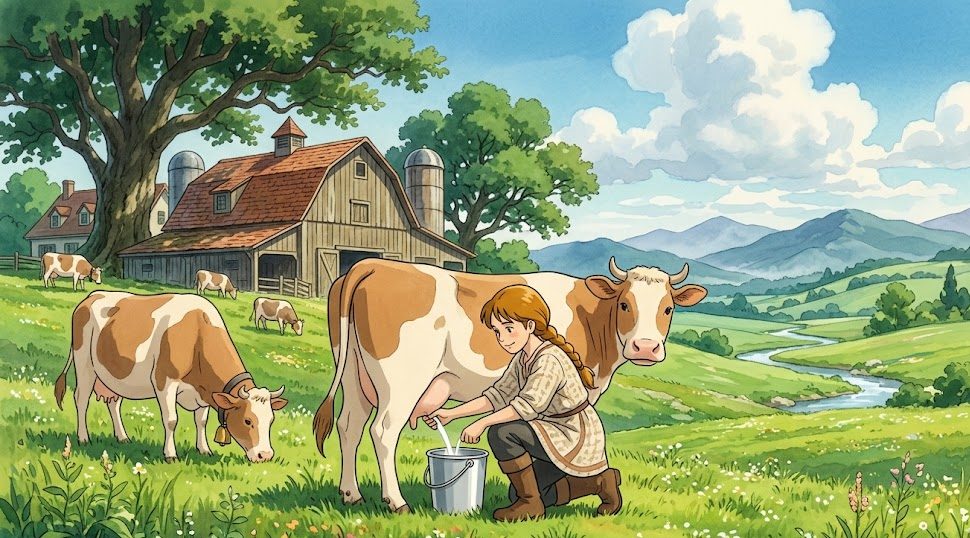
There is a quiet, steady rhythm to a dairy farm in the early hours of the morning. Long before the rest of the world wakes up, the day has already begun in the barn. It is a demanding business that requires dedication, physical effort, and a deep understanding of animal behavior. However, for those who are willing to put in the work, dairy farming is an incredibly rewarding livelihood.
Many beginners enter the dairy industry believing that milk production is a simple equation of feeding a cow and extracting milk. The reality is far more complex. A dairy cow is a sensitive biological system. Her milk yield is directly tied to her physical health, her mental comfort, and the exact routine you establish for her. Let us explore the core principles and practical steps required to build a healthy herd and maximize your daily milk production.
The Foundation of a Healthy Dairy Herd
Successful dairy farming always starts from the ground up. You cannot force a cow to produce more milk simply by milking her longer or pushing her harder. High production is the natural result of excellent animal husbandry.
The rumen, which is the largest stomach compartment of a cow, acts like a massive fermentation vat. It requires a delicate balance of fibers, proteins, and carbohydrates to function correctly. If the rumen is healthy, the cow extracts maximum nutrition from her feed, which translates directly into high-quality milk. Furthermore, cows are highly sensitive to their environment. Stress from heat, mud, or poor handling immediately triggers a drop in milk volume. To succeed, you must manage your farm as a holistic ecosystem where the cow’s comfort is your primary focus.
Practical Tips for Maximizing Milk Yield
Improving your milk production does not always require massive financial investments. Often, the biggest gains come from refining your daily management practices. Here are proven ways to naturally boost your herd’s performance.
1. Provide Unlimited Access to Clean Water Milk is approximately eighty-seven percent water. If a cow is slightly dehydrated, her milk production will crash long before she shows physical signs of thirst. A single high-producing cow can easily drink up to fifty gallons of water a day. Ensure that water troughs are scrubbed clean weekly. If you would not drink from the trough, your cows should not have to either.
2. Focus on High-Quality Forage Grain provides quick energy, but high-quality forage—like leafy alfalfa, properly fermented silage, and rich pasture grass—is the true engine of milk production. Forage keeps the rumen active and healthy. Always test your soil and manage your pastures carefully to ensure your grasses are packed with nutrients before you cut or graze them.
3. Invest in Cow Comfort A cow makes the most milk when she is lying down chewing her cud. If your barn floors are hard, wet, or uncomfortable, cows will spend too much time standing. This drains their energy and lowers milk yields. Provide deep, dry bedding using sand, straw, or sawdust. Ensure your barn has excellent ventilation to pull out ammonia smells and keep the air fresh.
4. Maintain a Strict Schedule Cows are absolute creatures of habit. They prefer to eat, rest, and be milked at the exact same times every single day. Even a delay of thirty minutes in your milking schedule can cause stress and temporarily reduce their yield. Set a strict daily routine and stick to it regardless of weekends or holidays.
A Real-Life Example: The Comfort First Approach
Consider the experience of a new dairy farmer who purchased a small herd of high-quality Holstein cows. Despite feeding them the most expensive, premium grain mix available on the market, his daily milk yields were consistently twenty percent lower than the industry average. Frustrated, he brought in an experienced local veterinarian to assess his feed program.
The vet barely looked at the feed. Instead, she pointed to the barn ceiling and the resting stalls. The barn had poor airflow, making it hot and stuffy, and the resting mats were thin and worn out. The cows were spending extra hours standing up to try and cool off.
The farmer immediately changed his approach. He installed large circulation fans to move the air and replaced the thin mats with a thick layer of deep, clean sand. Within three weeks, without changing a single ounce of feed, his herd’s milk production skyrocketed. The cows were finally comfortable enough to lie down, cool off, and let their bodies focus entirely on making milk.
Step-by-Step Guide: Establishing a Daily Milking Routine
The way you handle your cows in the parlor is just as important as what you feed them. A calm, clean, and consistent milking routine prevents mastitis (udder infection) and ensures the cow “lets down” all her milk.
Step 1: Calm Gathering. Move the cows from their pasture or resting area to the milking parlor slowly and quietly. Never shout, run, or use sticks. Adrenaline blocks the hormones responsible for milk release.
Step 2: Pre-Milking Hygiene. Once the cow is in the stall, use a clean, disposable towel to wipe away loose dirt from the udder. Dip each teat in an approved pre-milking sanitizing solution and leave it on for exactly thirty seconds to kill bacteria.
Step 3: Strip and Dry. Gently squeeze one or two squirts of milk from each teat into a strip cup. This checks for signs of infection and stimulates the udder. Afterward, dry the teats completely with a fresh towel.
Step 4: Attach the Milker. Within one minute of the initial stimulation, attach the milking machine. Ensure the unit sits squarely on the udder without twisting. Monitor the milk flow closely.
Step 5: Post-Milking Care. As soon as the milk flow stops, shut off the vacuum and gently remove the unit. Immediately dip the teats in a post-milking iodine barrier. This seals the teat canal and protects the cow from bacteria when she returns to the barn.
Step 6: Feed Immediately. Always have fresh feed waiting for the cows when they exit the parlor. You want them to stand and eat for at least forty-five minutes after milking. This gives their teat canals enough time to physically close before they lie down in the dirt.
Common Mistakes to Avoid
Dairy farming requires precision. Avoid these common traps that easily undermine a beginner’s hard work and investment.
- Making Sudden Feed Changes: Never change a cow’s diet overnight. The bacteria in her rumen need time to adapt to new ingredients. If you switch feeds too quickly, her digestive system will stall, leading to sickness and a massive drop in milk. Always blend new feed into the old feed gradually over a week.
- Ignoring Hoof Health: A lame cow is a miserable cow, and she will not produce milk. Because they carry so much weight, hoof problems develop quickly on wet or rough concrete. Schedule regular hoof trimming and keep alleyways scraped clean of manure.
- Overcrowding the Barn: Trying to squeeze too many cows into a small space creates intense competition for food and resting spots. The younger, shyer cows will be bullied away from the feed bunks and will rapidly lose weight and production. Always ensure there is at least one resting stall and plenty of feeding space for every single cow.
Conclusion
Building a successful dairy farm is a marathon, not a sprint. It requires a deep commitment to the welfare of your animals and a willingness to pay attention to the smallest details of their daily lives. By focusing on providing excellent nutrition, maintaining a low-stress environment, and establishing a flawless milking routine, you set up a foundation that practically guarantees better milk production.
Remember that your herd will always tell you how well you are doing. If you are observant, you will see the results of good management in their shiny coats, their calm demeanor, and ultimately, in the rising levels of the bulk milk tank. Stay patient, keep your facilities clean, and never stop learning from the land and the animals.
Frequently Asked Questions (FAQs)
Q: What is the best cow breed for a beginner dairy farmer? A: Holstein cows are famous for producing the highest volume of milk, making them the most popular commercial choice. However, Jersey cows are much smaller, easier to handle, and produce milk with a significantly higher butterfat content, making them excellent for beginners focusing on artisanal cheese or butter.
Q: How often should I milk my herd? A: The standard practice is to milk cows twice a day, usually twelve hours apart (for example, at 5:00 AM and 5:00 PM). Some highly intensive commercial farms milk three times a day for higher yields, but twice a day is the most manageable schedule for beginners.
Q: Why does milk production suddenly drop in the summer? A: Heat stress is the primary cause. Cows prefer cooler weather. When the temperature rises above seventy-five degrees Fahrenheit (twenty-four degrees Celsius) along with high humidity, cows eat less and use their energy to pant and cool down instead of producing milk.
Q: How long does a cow produce milk after giving birth? A: A cow’s milk production cycle, known as her lactation period, typically lasts for about ten months (roughly 305 days) after she has a calf. After this period, she is “dried off” and given a two-month resting break before she gives birth again and starts a new cycle.
Q: Can I feed my dairy cows only grass? A: Yes, this is known as a 100% grass-fed dairy system. While it is highly sustainable and produces excellent milk, grass-fed cows generally produce a lower total volume of milk compared to cows that receive supplemental energy grains in their diet.