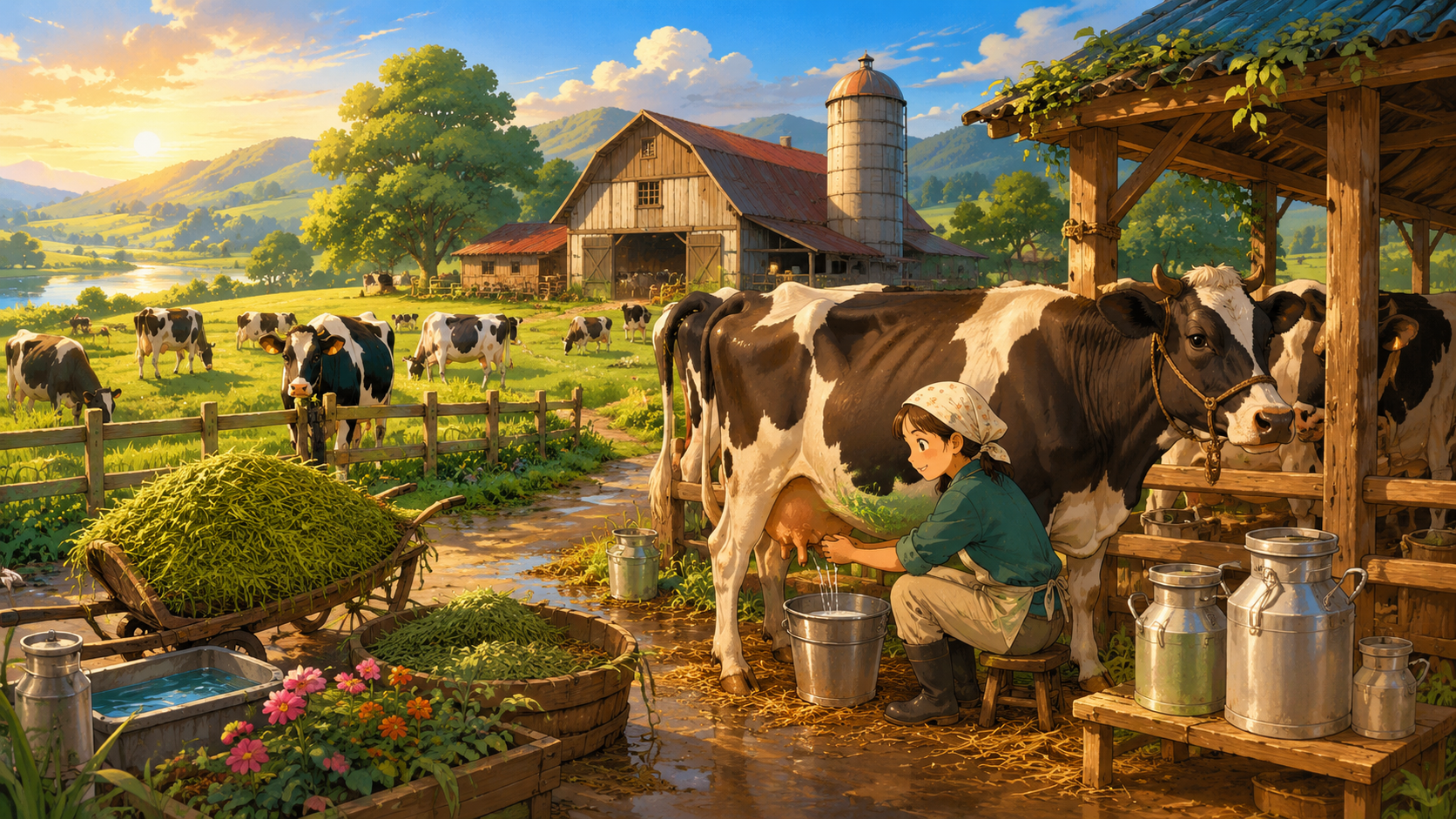
Many people look at dairy farming and see a very simple business model: buy a few cows, feed them, and sell the daily milk. However, anyone who has actually managed a herd will tell you that the reality is far more complex. Dairy farming is a delicate, demanding balance of animal biology, daily routine, and precise management.
When you are just starting, the primary goal is not just to get milk, but to get consistent, high-quality milk without burning out your budget or stressing your animals. Milk production is a direct reflection of a cow’s health and happiness. If you want to build a highly profitable and sustainable dairy operation, you have to master the fundamentals of animal care, nutrition, and farm management right from the beginning.
Selecting the Right Breed for Your Goals
Your success starts long before the first drop of milk hits the bucket; it begins with choosing the right cattle. It is tempting to simply buy the breed that produces the highest volume of milk, but that is often a costly mistake for beginners.
High-yield breeds, like Holsteins, produce massive amounts of milk, but they also require enormous amounts of high-quality feed and are highly sensitive to hot weather. If you live in a hot, humid region, a pure Holstein might suffer from heat stress, causing milk production to drop drastically.
On the other hand, breeds like Jerseys produce slightly less volume but yield milk with a much higher fat and protein content, which is excellent if you plan to make cheese or butter. For many beginners, choosing a crossbreed is the smartest path. Crossbreeds combine the high milk yield of exotic breeds with the disease resistance and heat tolerance of local breeds, giving you a sturdy, reliable animal to learn with.
Cow Comfort: The Secret to High Yields
There is a golden rule in the dairy business: a stressed cow will not give milk. Cow comfort is just as important as the food they eat. If a cow spends her energy trying to stay cool, fighting off flies, or standing up because the floor is uncomfortable, she is diverting energy away from making milk.
Your cattle shed should have high roofs to allow hot air to escape and large open sides to promote natural wind flow. The flooring is equally critical. Concrete floors are easy to clean but hard on a cow’s hooves and joints. Providing soft bedding, such as thick sand, rubber mats, or dried straw, encourages the cow to lie down. A cow that lies down comfortably for 12 to 14 hours a day will ruminate (chew her cud) properly, which directly increases her daily milk output.
Nutrition and Feed Management
You cannot starve a profit out of a dairy cow. The quality of the milk is built entirely on the quality of the feed. A cow’s digestive system is essentially a large fermentation vat, and it requires a careful balance of roughage and concentrated nutrients to function smoothly.
Your feed should consist of green fodder (like maize or alfalfa), dry fodder (like straw or hay), and a concentrated mix containing grains, proteins, and essential minerals. Many modern farms use a Total Mixed Ration (TMR) system. This simply means chopping and mixing all the green fodder, dry hay, and concentrate together before feeding. TMR prevents the cow from selectively eating only the tasty grains and leaving the roughage behind, ensuring she gets a perfectly balanced diet in every bite.
Just as importantly, never ignore water. Milk is about 87% water. A high-producing dairy cow can easily drink between 30 to 50 gallons of clean water every single day. If her access to fresh water is restricted for even a few hours, milk production will immediately drop.
Health Monitoring and Disease Prevention
Treating a sick cow is expensive; preventing illness is cheap. As a beginner, you must learn to read your animals. A healthy cow has bright eyes, a wet nose, a smooth coat, and a healthy appetite.
The biggest threat to a dairy farm’s profitability is mastitis, an infection of the udder. Mastitis destroys milk quality, causes pain to the animal, and can permanently damage the udder if left untreated. Preventing it requires strict hygiene. Always clean the udder before milking, use a clean cloth or paper towel for each cow, and dip the teats in a mild antiseptic solution immediately after milking to close the teat canal against bacteria. Keep the resting areas absolutely dry, as damp bedding is the primary breeding ground for mastitis-causing bacteria.
Practical Tips for Dairy Beginners
- Stick to a Strict Routine: Cows are creatures of habit. They thrive on a predictable schedule. Milk them and feed them at the exact same times every single day. Fluctuating schedules cause stress and lower milk drops.
- Observe the Manure: It might sound strange, but manure is the best indicator of a cow’s digestive health. It should be semi-solid and uniform. If it is too watery or contains undigested grain, you need to adjust your feed ratio immediately.
- Keep Detailed Records: Do not rely on your memory. Keep a log for each cow detailing her daily milk yield, breeding dates, vaccination history, and feed consumption. Tracking this data helps you quickly identify when a cow’s production starts to slip.
A Real-Life Example of Improved Management
Consider the story of a beginner farmer who started with a small herd of ten cows. During his first summer, he noticed a sharp 20% drop in his daily milk collection. Assuming the cows were hungry, he started buying more expensive concentrated grain, but the production did not improve.
After consulting an experienced local veterinarian, he realized the issue was not food; it was heat stress and water access. He had only one small water trough for all ten cows, and his shed had a low tin roof that trapped the summer heat. He immediately installed a larger, automatic water trough so multiple cows could drink simultaneously, and he added two large exhaust fans to move the hot air out of the shed. Within a week, the cows were visibly more relaxed, lying down longer, and milk production returned to its peak, saving his profit margins without increasing his feed costs.
Common Mistakes to Avoid
- Buying Cheap Cattle: Trying to save money by buying older or poor-quality cows is a trap. A low-producing cow eats just as much as a high-producing cow, but she will never give you a return on your investment.
- Rough Handling: Shouting, hitting, or rushing cows into the milking parlor triggers the release of adrenaline. Adrenaline naturally blocks the release of oxytocin, the hormone responsible for letting the milk flow down. Always handle cattle calmly and quietly.
- Neglecting the Dry Period: A cow needs a resting phase (the dry period) of about 60 days before she gives birth to her next calf. Continuing to milk her right up to the delivery date will severely reduce her milk yield in the next cycle and harm the growing calf.
Step-by-Step Guide to Starting Your Dairy Farm
If you are ready to begin, follow this structured path to avoid costly early mistakes:
- Secure Your Fodder Supply First: Do not buy a single cow until you have guaranteed, year-round access to high-quality green fodder, either by growing it on your own land or securing a reliable local supplier.
- Build the Infrastructure: Construct a well-ventilated shed with proper drainage. Ensure you have dedicated areas for feeding, resting, and milking, along with a secure calf pen.
- Source Healthy Animals: Buy your starting herd from reputable local breeders or farms, not from open cattle markets where disease is common. Bring an experienced vet with you to inspect the animals before purchase.
- Establish Your Feeding and Milking Routine: Set your daily schedule on day one and stick to it. Decide whether you will hand-milk or use portable milking machines, and ensure all equipment is sterilized daily.
- Establish a Marketing Plan: Milk is highly perishable. Before production starts, secure contracts with local dairies, sweet shops, or direct-to-consumer delivery networks to ensure your milk is sold the moment it is harvested.
Conclusion
Starting a dairy farm is not a get-rich-quick scheme; it is a business that demands patience, hard work, and a genuine care for animals. By focusing heavily on cow comfort, providing perfectly balanced nutrition, and maintaining spotless hygiene, you create an environment where high milk production happens naturally. Treat your cattle well, respect their routines, and they will reward your farm with consistent growth and solid profitability for years to come.
Frequently Asked Questions
1. How many times a day should I milk my cows? The standard practice is twice a day, usually with a 12-hour gap (for example, 6:00 AM and 6:00 PM). Some highly intensive commercial farms milk three times a day, but for beginners, twice-daily milking is the most practical and sustainable schedule.
2. Can I start a dairy farm with just two or three cows? Absolutely. In fact, starting small is highly recommended. A small herd allows you to learn the daily routines, understand animal behavior, and make your early mistakes on a small scale before you risk the capital required for a massive commercial herd.
3. What is the most important nutrient for a dairy cow? Clean, fresh water. While proteins and carbohydrates are essential, water is the cheapest and most vital input on a dairy farm. A lack of water will crash milk production faster than a lack of food.
4. How soon after giving birth does a cow produce milk? A cow begins producing colostrum immediately after calving. This thick, nutrient-dense first milk is crucial for the calf’s immune system. After about three to five days, the milk transitions to normal, saleable dairy milk.
5. Should I use a milking machine or hand-milk? If you have fewer than five cows, hand-milking is perfectly fine and keeps your startup costs low. However, as you scale beyond five animals, investing in a basic, portable milking machine will save you hours of grueling physical labor and often results in a cleaner, faster milking process.