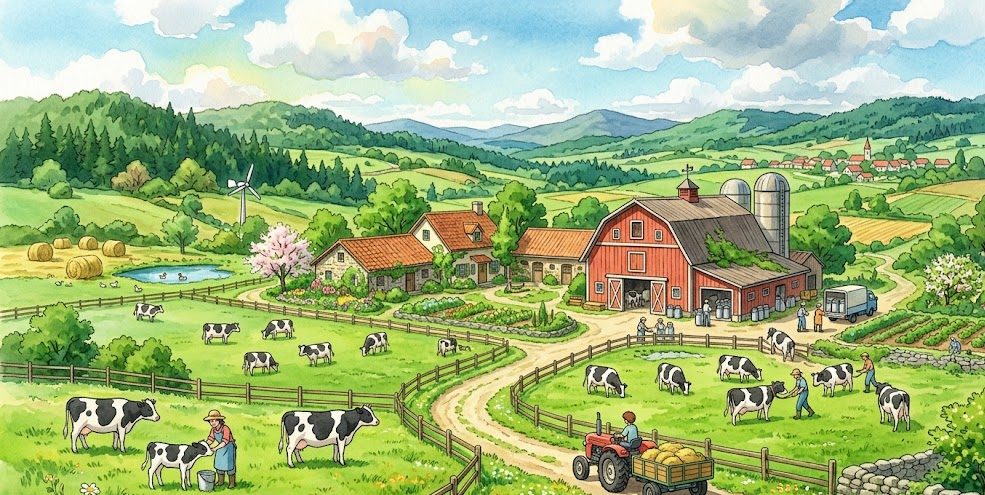
The demand for milk and dairy products is a constant force in the global food economy. From the morning splash of milk in coffee to cheese, butter, and yogurt, dairy is a core dietary staple across diverse cultures. Because of this everyday necessity, starting a dairy farm remains one of the most reliable and recession-resistant ventures in agribusiness.
However, running a truly profitable dairy farm involves much more than just buying a few cows and selling raw milk. Modern dairy farming is a sophisticated business that requires a balance of animal husbandry, strict financial planning, waste management, and smart market positioning. High feed costs and fluctuating milk prices mean that margins can be thin if operations are not optimized. This complete guide breaks down the essential steps to launching a successful dairy farming business that protects animal welfare while securing long-term profitability.
Market Research and Business Planning: Your Foundation
Before investing capital into land or livestock, you must understand your local dairy ecosystem. A successful dairy farm starts with clear market research and a well-structured business plan.
First, identify your primary buyers. Will you sell raw milk to large commercial dairy cooperatives, supply local artisanal sweet shops, or process the milk on-site to sell premium boutique products directly to consumers? Your distribution channel dictates your entire operational setup.
Your business plan should detail your initial setup costs—including land leasing, barn construction, milking machinery, and livestock procurement. It must also map out recurring operational expenses, specifically high-quality feed, veterinary care, utilities, and labor. Understanding your break-even point per liter of milk produced is the single most important metric for keeping your business financially viable during market fluctuations.
Selecting the Right Breeds for Maximum Yield
Your choice of cattle breeds directly impacts your daily milk volume and overall profit margins. Different breeds offer distinct advantages depending on your regional climate and production goals.
+-----------------------------------------------------------------+
|                    SELECTING YOUR DAIRY LIVESTOCK               |
+-----------------------------------------------------------------+
|  [High-Volume Breeds] --> Holstein Friesian (Top liquid yield)  |
|  [High-Fat Breeds]    --> Jersey (Premium fat & protein content)|
|  [Climate-Resilient]  --> Crossbreds / Indigenous (Heat hardy) |
+-----------------------------------------------------------------+
High-Volume Producers
If your business model focuses purely on selling massive volumes of liquid milk to processing plants, Holstein Friesian (HF) cows are the industry standard. Originating in Europe, these distinctive black-and-white cattle produce the highest average volume of milk per lactation cycle compared to any other breed. However, they require high-quality feed management and are sensitive to extreme tropical heat.
High-Fat and Protein Producers
If you plan to produce premium dairy goods like cheese, butter, or ghee, Jersey cows are an exceptional choice. While they produce less total liquid volume than Holsteins, their milk contains a significantly higher percentage of milk fat and milk protein. Jerseys are also smaller, eat less feed, adapt much better to warm climates, and have excellent structural longevity.
Regional and Climate-Resilient Alternatives
For growers operating in regions prone to extreme summer temperatures and high humidity, investing in crossbred varieties or highly resilient indigenous dairy cattle is a practical strategy. Crossbreeding high-yield European breeds with hardy local stock results in hybrid vigor—producing offspring that maintain respectable milk yields while displaying natural resistance to tropical diseases and heat stress.
Housing and Infrastructure Management
Comfortable, stress-free animals are naturally more productive. Proper barn design and hygienic infrastructure directly correlate with high daily milk yields and lower veterinary costs.
+------------------------+      +------------------------+      +------------------------+
|   Poor Barn Design     | ---> |   Elevated Stress      | ---> |  Dropped Milk Yield    |
| Low air, hard floors,  |      | Higher cortisol levels |      | Stalled production and |
|   and high humidity    |      |  invites hoof disease  |      | constant vet expenses  |
+------------------------+      +------------------------+      +------------------------+
Ventilation and Temperature Regulation
Heat stress is a quiet profit killer in dairy farming. When ambient temperatures climb too high, a cow’s feed intake drops sharply, causing an immediate decline in milk production. Ensure your housing features high ceilings, open sides for continuous natural airflow, and heavy-duty industrial fans. In arid zones, installing automated misting systems helps keep the herd cool and comfortable during peak afternoon heat.
Flooring and Clean Bedding
Cows spend a significant portion of their day lying down to ruminate and rest. Hard, slippery concrete floors cause severe joint injuries and invite hoof rot.
Line your resting bays with thick rubber mats or a generous layer of clean, dry bedding material like straw, wood shavings, or clean sand. Keep the walking paths free of standing manure and water to prevent the spread of hoof-borne infections.
Scientific Nutrition: The Economics of Feed
Feed represents nearly 60% to 70% of the total recurring operational cost on a dairy farm. Managing your herd’s nutrition scientifically is the fastest way to improve your baseline profitability.
A high-yielding dairy cow requires a carefully balanced Total Mixed Ration (TMR) that combines roughage, concentrates, vitamins, and minerals.
- Dry Matter and Roughage: High-quality green fodder (like alfalfa, Napier grass, or maize silage) forms the bulk of the diet, keeping the cow’s complex digestive system functioning smoothly.
- Concentrates: Energy-dense grains, oil cakes, and bran are added to provide the pure caloric intake needed to sustain high milk synthesis.
To lower your feed costs, consider establishing dedicated fodder cultivation plots on your own land. Growing your own high-protein grasses and processing silage—fermented, high-moisture fodder stored in airtight pits—ensures a reliable, low-cost food supply during dry seasons when green grass is scarce.
Essential Health Protocols and Disease Prevention
A single disease outbreak can devastate your herd and halt your cash flow overnight. Implementing a strict, preventative biosecurity and health protocol is non-negotiable.
Preventative Vaccination Schedules
Work alongside a trusted local livestock veterinarian to design a comprehensive vaccination calendar customized to your geography. Ensure the entire herd is systematically immunized against major infectious diseases, such as Foot-and-Mouth Disease (FMD), Brucellosis, and Hemorrhagic Septicemia.
Maintaining Low Somatic Cell Counts (Mastitis Control)
Mastitis—an inflammatory infection of the udder tissue caused by bacteria—is one of the most expensive hidden costs in the dairy industry. It degrades milk quality, reduces yield permanently, and forces you to discard milk due to antibiotic residues.
Prevent mastitis by practicing strict milking hygiene. Use a specialized antiseptic dip to clean each teat both before and after attaching the milking machinery. Ensure the milking equipment is washed, sanitized, and inspected regularly to maintain proper vacuum pressure.
Diversifying Revenue Streams for Financial Stability
Relying solely on raw liquid milk sales leaves your business vulnerable to price drops in the wholesale market. Smart dairy entrepreneurs build resilience by creating multiple revenue streams.
| Revenue Stream | Operational Focus | Financial Advantage |
|---|---|---|
| Value-Added Processing | Processing raw milk into curd, cheese, paneer, or flavored yogurt. | Commands a 40% to 100% price premium over raw wholesale milk. |
| Breeding Stock Sales | Selling verified, high-quality pregnant heifers or calves to other farms. | Capitalizes on your herd’s superior genetics for high-value lump sums. |
| Organic Waste Monetization | Processing cow manure into rich vermicompost or bottled liquid organic fertilizer. | Converts a heavy waste management liability into an asset for local farms. |
Conclusion: Driving Long-Term Dairy Success
Starting a profitable dairy farming business is an intensive, long-term commitment that requires equal parts dedication and structural discipline. Success in this industry is rarely about a single massive adjustment; it is built on the daily execution of small, critical habits—maintaining flawless milking hygiene, balancing nutritional inputs, keeping cattle cool, and monitoring financial metrics.
By choosing the right breed for your specific market, securing your own fodder supply to offset feed inflation, and diversifying into value-added products, you can insulate your agribusiness against economic downturns. With a solid system in place, your dairy farm can evolve from a simple rural lifestyle into a highly sophisticated, predictable, and sustainable commercial asset.