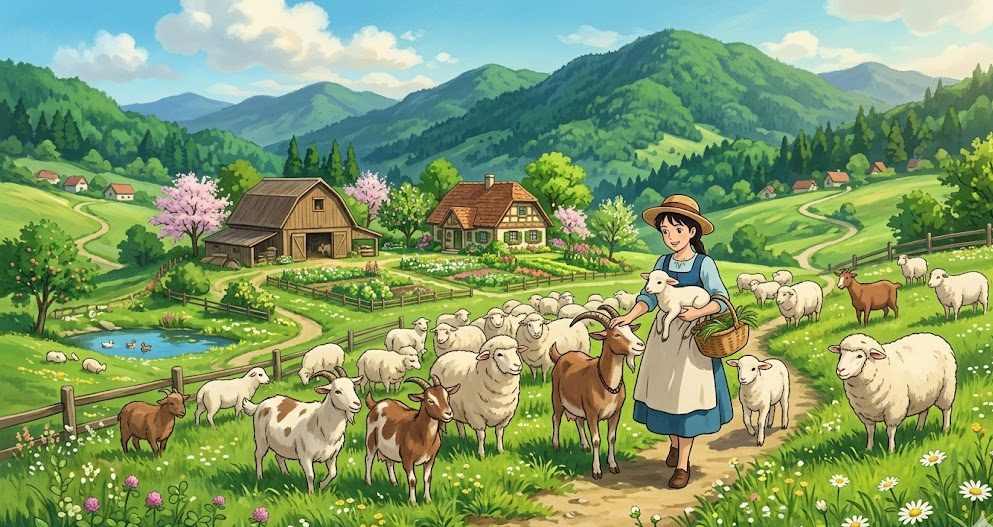
For centuries, small ruminants like sheep and goats have been foundational to rural economies across the globe. Often referred to as the “living banks” of small farmers, these versatile animals offer a unique combination of quick financial returns, low initial capital investment, and exceptional resilience against changing climatic conditions.
As global demand for lean red meat, healthy dairy alternatives, organic wool, and premium leather continues to surge, livestock rearing has evolved from a traditional subsistence activity into a highly lucrative commercial enterprise.
However, running a truly profitable sheep and goat farming business requires moving past traditional, hands-off grazing methods. Relying entirely on luck or outdated husbandry practices leads to low kidding rates, heavy parasite burdens, and unnecessary mortality losses.
To maximize your financial returns, you must approach small ruminant farming as a professional business—one built on scientific breeding, precision nutrition, strategic housing, and proactive health management.
Whether you have a small plot of land or a large pastoral acreage, this comprehensive guide provides a practical blueprint to establish, scale, and manage a highly profitable sheep and goat farming enterprise.
Why Choose Sheep and Goat Farming? The Economic Advantages
From an entrepreneurial standpoint, small ruminants offer several unique advantages over larger livestock like dairy cattle or beef buffaloes.
- Low Upfront Capital: Purchasing starter stock for sheep and goats is significantly cheaper than buying large cattle. This allows beginners to start small and scale their herds organically using their own profits.
- High Fecundity and Quick Turnaround: Goats and sheep reach reproductive maturity rapidly (often within 8 to 12 months). Goats, in particular, frequently give birth to twins or triplets, allowing your total herd size—and your biological asset base—to double or triple in a single season.
- Versatile Feeding Habits: Goats are natural browsers, meaning they prefer eating hardy shrubs, thorny bushes, and tree leaves that cattle completely ignore. Sheep are excellent grazers that utilize low-quality grasses efficiently. This versatility keeps your daily feeding expenses incredibly low.
- Multiple Revenue Streams: A single animal asset can generate income through meat sales, milk production, premium fiber (wool/mohair), organic manure compost, and breeding stock sales.
Choosing the Right Breed: Meat, Milk, or Fiber?
Your geographic location, local climate, and target market demand will dictate which breeds you should introduce to your farm. Choosing an unadapted breed is one of the fastest ways to lose an investment.
Top Commercial Goat Breeds
- Boer Goats: Originating from South Africa, the Boer goat is the undisputed global king of meat production. They possess rapid growth rates, excellent muscle conformation, and a docile temperament.
- Saanen, Alpine, and Jamnapari: If your primary focus is a commercial dairy operation, these breeds excel at milk production, yielding high volumes of nutritious, easily digestible dairy products.
- Kiko and Kalahari Red: Known for extreme hardiness, these breeds thrive in harsh, arid landscapes with minimal human intervention, making them excellent choices for low-input farm models.
Top Commercial Sheep Breeds
- Dorper: A highly popular, hair-based meat sheep that doesn’t require shearing. They excel in arid regions, grow incredibly fast, and possess excellent parasite resistance.
- Suffolk and Merino: Suffolk is highly prized for large-frame meat production, while the Merino breed remains the global gold standard for harvesting ultra-fine, premium quality wool.
Designing a Smart Housing and Shelter System
Small ruminants are incredibly hardy, but they have one major environmental weakness: damp, wet, and poorly ventilated environments. Dampness is a direct playground for hoof rot and pneumonia, both of which can devastate your herd numbers quickly.
The Raised Slotted-Floor Housing Model
For commercial semi-intensive or intensive farming, constructing a raised platform house (typically 3 to 4 feet off the ground) using wooden slats or heavy-duty plastic mesh is highly recommended.
This layout allows animal urine and dung to drop directly through the floor slots onto the ground below. The animals remain clean, dry, and completely isolated from dangerous ammonia gases and soil-borne pathogens.
Space Requirements Matrix
To prevent structural stress and fighting within the herd, ensure your housing layout meets these minimum space requirements:
| Animal Category | Floor Space Required (Indoor Shed) | Open Paddock Space Required |
|---|---|---|
| Adult Female (Ewe / Doe) | 10 to 12 Sq. Ft. | 20 to 25 Sq. Ft. |
| Adult Male (Ram / Buck) | 15 to 20 Sq. Ft. | 40 to 50 Sq. Ft. |
| Kids / Lambs (Young Stock) | 4 to 6 Sq. Ft. | 10 to 12 Sq. Ft. |
| Pregnant / Lactating Females | 15 Sq. Ft. (Isolated Pen) | 30 Sq. Ft. |
Step-by-Step Operational Management Timeline
To guarantee consistent cash flow and high animal survival rates, your farm management must track a disciplined seasonal cycle. Follow this sequential operational strategy to optimize your herd production.
1
Flushing the Herd and Male Preparation
Pre-Breeding Phase
1.Flushing the Herd and Male Preparation:Pre-Breeding Phase.
Two to three weeks before introducing your males (rams/bucks) to the females, implement a practice called flushing. Increase the nutritional value of the female diet by feeding them high-protein concentrates or lush green pastures. This sudden nutritional boost triggers higher ovulation rates, maximizing your chances of twins and triplets. Simultaneously, check your breeding males for optimal physical health and libido.
2
Advanced Pregnancy Care and Variable Feeding
Gestation Period
2.Advanced Pregnancy Care and Variable Feeding:Gestation Period.
The gestation period for both sheep and goats lasts roughly 150 days. During the final 6 weeks of pregnancy, the fetuses grow rapidly, compressing the female’s internal stomach capacity. Transition them to high-density, easily digestible feed layouts rich in calcium and energy to prevent metabolic issues like pregnancy toxemia.
3
Sanitary Delivery and Colostrum Tracking
Kidding / Lambing Phase
3.Sanitary Delivery and Colostrum Tracking:Kidding / Lambing Phase.
Move pregnant females into clean, dry, individual kidding pens lined with fresh straw. Once the offspring are born, immediately ensure they nurse and consume colostrum (the mother’s first thick yellow milk) within the first 1 to 2 hours of life. Colostrum is packed with vital antibodies that serve as the baby’s temporary immune system; skipping this window results in weak, highly vulnerable offspring.
4
Strategic Weaning and Weight Optimization
Growth & Market Phase
4.Strategic Weaning and Weight Optimization:Growth & Market Phase.
Wean lambs and kids off milk at around 60 to 90 days of age. Transition the young stock onto high-quality leguminous fodders (like alfalfa or berseem clover) paired with a structured creep-feed grain mix. Monitor their daily weight gain closely; your goal is to push them to an optimal market weight of 30 to 35 kilograms within 6 to 8 months, capturing peak seasonal holiday market prices.
Proactive Health Management: Preventing the Profit Killers
In the livestock sector, a reactive approach to health will destroy your profitability. The cost of a vaccine or a routine dewormer is a fraction of the cost of losing a mature animal.
The FAMACHA System and Internal Parasite Control
Internal worms (specifically the Barber’s Pole worm or Haemonchus contortus) are the number one killers of sheep and goats globally. Instead of dosing your entire herd blindly with chemical dewormers—which creates dangerous drug resistance—use the FAMACHA card system.
By checking the color of the inner eyelid of your animals, you can evaluate their level of anemia. Deworm only the specific animals showing pale white or light pink eyelids. This practice preserves your medicine’s efficacy and saves your business thousands in unnecessary input costs.
Critical Vaccination Protocols
Ensure your entire herd is systematically vaccinated against major endemic diseases based on your local veterinary department schedules. Never compromise on protecting your stock against:
- PPR (Peste des Petits Ruminants): A highly contagious, devastating viral disease affecting small ruminants.
- Enterotoxemia (Overeating Disease): Triggered by sudden changes in rich feed diets.
- Foot and Mouth Disease (FMD) & Goat Pox: Severe issues that disrupt physical movement and animal productivity.
Common Marketing Mistakes to Avoid
The best animal producer will fail if they do not understand how to sell their product strategically. Avoid these three common marketing traps:
Pitfall 1: Relying Entirely on Unregulated Middlemen Many farmers make the mistake of waiting for local brokers to visit their farm gates. These brokers often offer flat, undervalued rates per animal based on visual guesswork. Instead, invest in a digital weighing scale and establish direct relationships with local butchers, wholesale meat processors, or urban consumers, selling your animals strictly based on live-weight calculations.
Pitfall 2: Ignoring Religious and Cultural Holiday Calendars The market demand and price points for premium sheep and goats spike astronomically during major cultural festivals, such as Eid-al-Adha, Christmas, and local wedding seasons. Plan your breeding schedules precisely 8 to 10 months ahead of these high-demand dates so your young stock hits peak market size and appearance exactly when buyers are willing to pay maximum premium prices.
Pitfall 3: Failing to Keep Accurate Farm Records If you don’t track which female consistently gives birth to twins, which male produces the fastest-growing kids, or how much money you spend on feed bags, you are operating in the dark. Keep clear records of animal tags, parentage lines, vaccination dates, and feed costs to constantly refine your operation’s efficiency.
FAQs: Frequently Asked Questions
1. Can sheep and goats be raised together in the same field?
Yes, absolutely. In fact, co-grazing sheep and goats is an excellent way to maximize pasture utilization. Because goats prefer browsing high tree branches and woody brush, while sheep prefer grazing low ground grasses, they rarely compete directly for the same food sources, allowing you to maximize your total animal numbers per acre.
2. How many goats or sheep can I keep on one acre of land?
On a traditional, open pasture-grazing model, a well-managed acre of fertile land can comfortably support 4 to 6 adult small ruminants. However, if you adopt an intensive stall-fed system (where you cut green fodder from your fields and carry it directly to a raised house), you can easily maintain 20 to 30 animals per acre.
3. How often do goats and sheep breed in a year?
The biological cycle allows for roughly three kiddings or lambings every two years (an average of one delivery every 8 months). Attempting to breed your females faster than this doesn’t give their bodies sufficient time to physically recover, leading to weak offspring and a shorter reproductive life span for your breeding stock.
4. What should be included in a standard commercial concentrate feed mix?
A balanced, low-cost home-brewed concentrate mix typically consists of 40% crushed maize (corn) or barley for raw energy, 20% wheat bran or rice bran for essential fiber, 30% oil cake (like mustard cake or soybean meal) for high protein, 8% molasses for palatability, and 2% mineral mixtures and common salt to maintain structural health.
5. Is goat milk farming more profitable than meat farming?
Goat dairy farming can be exceptionally profitable, but it is highly dependent on your immediate geographic location. If you live near an urban hub with health-conscious consumers, high-end organic grocery stores, or patients seeking alternative dairy choices, goat milk can be sold at a massive premium. However, if you live in a remote area without a temperature-controlled cold chain, focusing on live meat animal sales is far safer and more practical.
Conclusion
Building a highly profitable sheep and goat farming enterprise doesn’t happen by accident. It is the natural result of treating your livestock as precious biological assets that require structured care, precise optimization, and clever market placement.
By shifting away from primitive open-range guesswork and implementing clean raised housing layouts, disciplined flushing diets, and a strict health validation routine, you take complete control of your farm’s bottom line.
Keep your inputs local and affordable, protect your young stock with proper early colostrum access, and time your sales to match high-value cultural calendars. Stay patient during your first reproductive cycle, build your herd numbers thoughtfully, and transform your small ruminant venture into a steady, reliable source of long-term sustainable wealth.