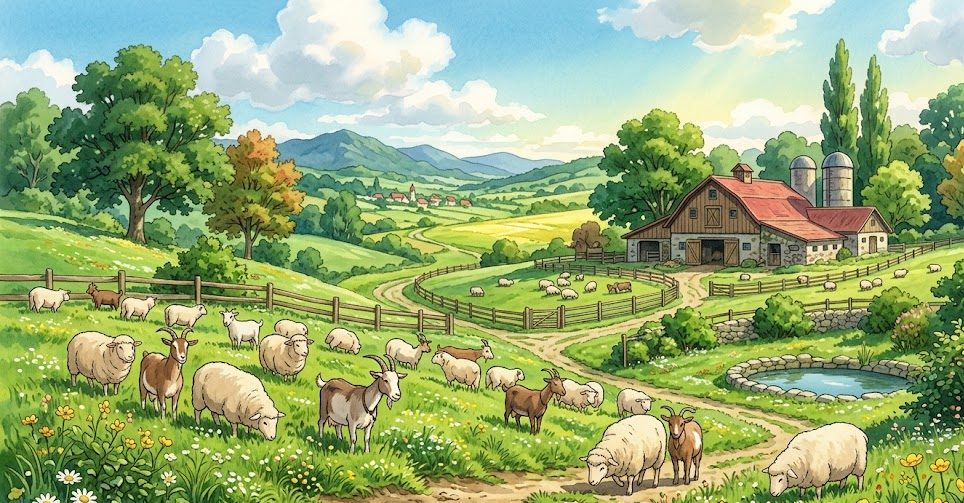
When most people think of commercial livestock farming, their minds immediately jump to large cattle ranches or massive dairy operations. While those traditional businesses can be highly lucrative, they also demand immense upfront investments, huge tracts of grazing land, and expensive heavy infrastructure. For independent farmers, homesteaders, or rural entrepreneurs looking for a more accessible entry point into livestock, there is a better alternative.
Raising small ruminants—specifically sheep and goat farming—is one of the most profitable, versatile, and sustainable livestock ventures you can start today.
Goats and sheep are remarkably resilient animals. They adapt easily to diverse climates, require far less land than cattle, and eat a wide variety of local vegetation. Best of all, they offer multiple streams of income through meat, milk, cheese, and high-quality fiber like wool or cashmere. Whether you have a few acres of backyard pasture or an established homestead, using the right management techniques will help you raise a healthy herd and build a thriving agricultural business.
1. Choosing the Right Breed for Your Business Goals
The first step toward a profitable operation is deciding exactly what you want your farm to produce. Goats and sheep are generally categorized by their primary purpose: meat, dairy, or fiber. Mixing up these purposes by buying the wrong breed is a common beginner mistake that can severely cut into your profit margins.
Top Goat Breeds to Consider
- For Meat (Boer Goats): Originating from South Africa, Boer goats are the undisputed kings of the meat market. They possess large, muscular frames, grow exceptionally fast, and have a highly docile temperament, making them very easy to handle.
- For Dairy (Saanen and Alpine): If your goal is to sell artisanal goat milk, yogurt, or gourmet cheese, look for Saanen or Alpine breeds. These high-producing dairy goats can yield up to a gallon of milk per day under ideal conditions.
Top Sheep Breeds to Consider
- For Meat (Dorper and Katahdin): If you don’t want to deal with the labor-intensive chore of shearing wool, “hair sheep” like Dorper or Katahdin are fantastic options. They naturally shed their coats, grow muscular bodies rapidly on simple grass diets, and are highly resistant to common parasites.
- For Wool (Merino): For farms focused on premium textiles, Merino sheep produce ultra-fine, soft wool that commands top dollar in the global clothing and fiber industries.
2. Implementing Smart Grazing Systems
Feeding is your single largest recurring expense in livestock farming. Relying entirely on store-bought commercial grain sacks or baled alfalfa will quickly drain your bank account. To maximize your profits, you must learn to leverage your natural pastures through Rotational Grazing.
+-----------------------------------------------------------------------+
|                       THE ROTATIONAL GRAZING LOOP                     |
+-----------------------------------------------------------------------+
|  [Paddock 1: Animals Grazing]  -->  [Paddock 2: Grass Regrowing]       |
|               ^                                   |                   |
|               |                                   v                   |
|  [Paddock 4: Completely Healed] <-- [Paddock 3: Parasites Dying Off]  |
+-----------------------------------------------------------------------+
The Power of Rotational Paddocks
Instead of letting your herd wander across your entire acreage all year long—which leads to overgrazing, trampled grass, and muddy dead zones—divide your pasture into smaller sections called paddocks using simple solar-powered electric fencing.
Move your herd to a fresh paddock every few days. While the animals happily munch down the fresh forage in Paddock A, the grass in Paddocks B, C, and D gets a chance to rest, capture sunlight, and regrow deep roots.
Breaking the Parasite Cycle
Internal parasites (like the deadly barber’s pole worm) are the biggest threat to sheep and goat health. These worms lay eggs that drop onto the pasture via animal manure. By rotating your herd out of a paddock and keeping them away for at least 30 days, the emerging worm larvae on the grass will naturally starve and die off before your animals ever return, keeping your herd healthy without relying heavily on expensive chemical dewormers.
3. High-Quality Shelter and Predator Protection
Goats and sheep are hardy, but they absolutely despise damp, drafty, and stressful living conditions. A poorly built shelter invites respiratory illnesses like pneumonia, which can wipe out an entire seasonal kidding or lambing crop in days.
Designing a Clean, Dry Barn
Your livestock shelter doesn’t need to be fancy or expensive, but it must be completely functional. Ensure it provides:
- Excellent Ventilation: High windows or open eaves keep fresh air moving, which naturally clears out harmful ammonia fumes from animal urine.
- Elevated, Dry Flooring: Use a thick layer of dry wood shavings or clean straw bedding. Clean the bedding regularly to prevent hoof rot, a painful bacterial infection caused by animals standing in wet mud and manure.
Investing in Guardian Animals
Because sheep and goats are prey animals, local predators like coyotes, stray dogs, and foxes pose a constant threat to your bottom line. Losing just a few premium lambs or kids can destroy your annual profits. Investing in a proven Livestock Guardian Dog (like a Great Pyrenees or Anatolian Shepherd) or a guard donkey is a highly effective, natural solution. These animals live directly with the herd full-time, keeping predators far away from your property boundaries.
4. Routine Health Care and Herd Management
A profitable livestock farm values prevention over treatment. Spending a few minutes each week on basic herd health checks will save you thousands of dollars in emergency veterinarian bills later on.
- Hoof Trimming: Goat and sheep hooves grow continuously, much like human fingernails. Inspect and trim their hooves every 6 to 8 weeks using sharp shears to prevent lameness and infections.
- The FAMACHA System: Instead of blindly deworming your entire herd—which causes parasites to become immune to the medicine—use the visual FAMACHA chart. Gently pull down the lower eyelid of each animal. A bright red color indicates a healthy, blood-rich system. A pale pink or stark white color signals anemia caused by severe internal parasites, meaning that specific animal needs immediate treatment.
Conclusion
Sheep and goat farming is a highly rewarding, practical agriculture venture that can transform a modest piece of land into a reliable, diverse source of income. By selecting the correct breed for your local market, mastering rotational grazing to keep feed costs low, building dry shelters, and staying on top of routine hoof and parasite checks, you can scale a highly profitable livestock business. Start with a small, manageable herd, learn their behaviors, and build your agricultural asset step-by-step.
Frequently Asked Questions (FAQs)
1. Can you successfully raise sheep and goats together in the same field?
Yes, absolutely. In fact, raising them together is a brilliant farming technique known as co-grazing. Sheep are grazers (they prefer eating grass close to the ground), while goats are browsers (they prefer eating tall weeds, brush, briars, and leaves). Together, they clean up a pasture perfectly without competing for the exact same food source.
2. How much land do I need to start sheep or goat farming?
As a general rule of thumb, a well-managed, fertile acre of land can comfortably support roughly 4 to 6 adult sheep or goats using rotational grazing methods. If your land has plenty of dense brush and weeds, goats will thrive even better.
3. How often do sheep need to be shorn for wool?
Traditional wool-producing sheep breeds need to be shorn exactly once a year, typically in the early spring before the hot summer weather arrives. Hair sheep breeds do not require any shearing at all, as they shed their coats naturally.
4. Do goats really eat anything, including garbage?
No, this is a popular myth. Goats are actually highly fastidious eaters. While they are incredibly curious and will use their sensitive lips to nibble on things like cardboard boxes or tin cans to investigate them, they require clean, high-quality, nutrient-dense forage and clean water to stay healthy and productive.
5. At what age can sheep and goats begin breeding?
Most young female sheep (ewes) and goats (does) reach sexual maturity and can be safely bred between 7 to 9 months of age, provided they have reached roughly 60% to 70% of their expected adult body weight. Breeding them too early can stunt their growth and lead to delivery complications.