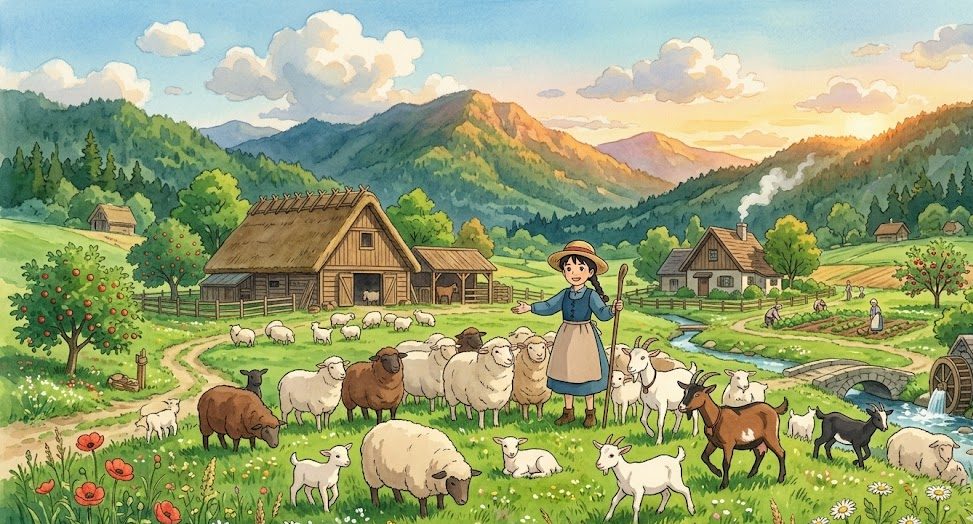
Sheep and goat farming are among the most resilient and versatile enterprises in the agricultural world. Often referred to as “small ruminants,” these animals are perfectly suited for small-scale landholdings where cattle might be impractical. They convert low-quality forage into high-value protein (meat), fiber (wool/mohair), and dairy, making them an excellent choice for farmers looking to maximize revenue on limited acreage.
However, moving from “having a few animals” to “running a high-yield herd” requires a fundamental shift in strategy. It is not just about letting them graze; it is about active, data-driven herd management. Here is your blueprint for success.
1. Choosing the Right Breed for Your Market
The biggest mistake beginners make is choosing a breed based on aesthetics rather than market demand. Before you buy your first animal, you must define your goal.
- Meat Producers: If your goal is meat, look for fast-growing, heavy-muscled breeds. For sheep, think Dorper or Hampshire; for goats, the Boer is the industry standard for growth rates.
- Dairy Producers: If you are focusing on milk, look for high-yield dairy breeds like Saanen or Alpine (for goats) and East Friesian (for sheep).
- Dual-Purpose: If you are a beginner, dual-purpose breeds often provide the best “safety net,” allowing you to pivot between meat and milk/fiber markets depending on local demand.
2. Rotational Grazing: The Key to Herd Health
The most significant threat to a sheep or goat herd is internal parasites. Unlike cattle, which are less susceptible to the specific worm species that plague small ruminants, sheep and goats are incredibly vulnerable to them.
- The Strategy: Divide your pasture into smaller paddocks. Keep the herd in one paddock for 3–5 days, then move them to the next.
- The Impact: This is “nature’s dewormer.” By moving the herd frequently, you ensure they are always grazing on fresh, uncontaminated grass. You move the animals away from their own manure before the parasite larvae can climb up the grass blades and reinfect them. It also allows your grass a recovery period, which significantly boosts your forage production over the season.
3. Nutritional Management: Beyond the Grass
Many beginners assume that sheep and goats can live on grass alone. While they can survive, they won’t thrive—and they certainly won’t produce high-yield milk or heavy kids/lambs—without supplemental support.
- Mineral Balance: Small ruminants have a very specific mineral requirement, particularly for copper (sheep are sensitive to it, while goats require it). Use a mineral lick or loose mineral mix designed specifically for your species. A mineral deficiency is often the hidden cause of “failure to thrive” in a herd.
- Flushing: During the breeding season, provide “flushing” nutrition—a small boost in high-energy feed (grains or high-quality alfalfa) just before breeding. This can significantly increase your twinning rate (the percentage of mothers who have two offspring instead of one), which is the single most effective way to boost your farm’s productivity.
4. Proactive Healthcare and Biosecurity
In the world of small ruminants, “prevention” is your best employee. By the time you notice an animal is sick, the disease has likely already spread to the rest of the herd.
- The 5-Point Plan:
- Vaccination: Partner with a local vet to create a seasonal vaccination schedule against local threats like Enterotoxemia (Overeating Disease).
- Fecal Egg Counts: Don’t deworm “just in case.” Perform regular fecal tests to see if they have parasites, and what kind. This prevents the development of drug-resistant parasites.
- Hoof Management: Wet conditions lead to foot rot. Inspect hooves regularly and trim them when necessary to keep the animals mobile and healthy.
- Body Condition Scoring: Learn to feel the spine and ribs of your animals to determine their “Body Condition Score” (BCS). This tells you if an animal is losing weight before it becomes visibly thin.
- Quarantine: Never bring a new animal directly into your main herd. Isolate them for at least 3 weeks to ensure they aren’t carrying contagious diseases like Caseous Lymphadenitis (CL) or Foot and Mouth Disease.
5. Managing the Breeding Cycle
The “yield” of your farm is determined by your birthing (lambing/kidding) cycle.
- The Goal: Aim for a “compressed” breeding season. You want all your females to deliver their offspring within a tight 4-to-6-week window.
- The Advantage: A compressed season makes your farm management significantly easier. It means all your young animals are the same age, which simplifies vaccination, weaning, and market timing. It also allows you to focus all your labor on the birthing period, rather than being “on call” for 6 months of the year.
Marketing Your Product: The Value-Add Shift
To reach a high-yield profit level, you must think like an entrepreneur, not just a farmer.
- Target Niche Markets: Small ruminant meat is a staple in many ethnic markets. Understand the specific holidays or cultural traditions where demand for lamb or goat peaks, and time your production to hit those windows.
- Direct-to-Consumer: If you are selling meat, look into state-certified mobile butchering or farm-gate sales. The middleman—the butcher or the auction house—takes a large percentage of your profit. By selling directly to families or local restaurants, you capture the “retail” price rather than the “wholesale” price.
- Educate Your Customers: Many people aren’t sure how to cook goat or lamb. Create simple recipe cards or digital newsletters to share with your customers. When you educate your market, you create demand for the cuts of meat that might otherwise be harder to sell.
The Path to Sustainability
Sheep and goat farming is a business of patience. The first year is about building infrastructure—fencing (the most important investment you’ll make!), shelter, and herd immunity. By the second and third year, as your herd numbers grow and your pasture management systems mature, your farm will become a self-sustaining asset.
Successful small ruminant farming is a blend of biology and business. You are managing a biological machine that turns sunlight into protein. When you treat the land, the health of the animal, and the marketing of your final product with equal rigor, you move from “keeping animals” to “running a profitable enterprise.”