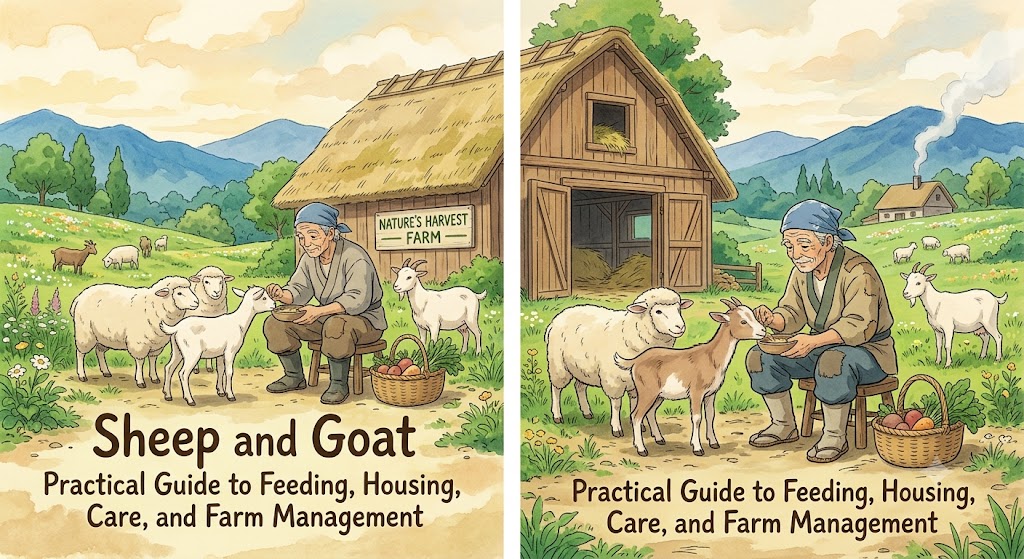
Sheep and goats can fit into a wide range of farming systems, from small family holdings to specialized commercial operations. They can make use of pasture, forage, browse, and other suitable feeds, while their relatively flexible management requirements make them useful livestock for many farms.
However, successful sheep and goat farming still requires careful planning. Good results depend on appropriate nutrition, clean water, suitable housing, parasite control, breeding management, routine observation, and responsible handling.
Although sheep and goats have several similarities, they should not be treated as exactly the same animal. Their feeding behavior, housing preferences, breed characteristics, and management requirements can differ. A practical farm plan should therefore account for the specific species and production goal.
Decide What the Farm Is Designed to Produce
Before purchasing animals, farmers should establish a clear production objective.
Sheep and goats may be raised for:
- Meat
- Milk
- Fiber or wool
- Breeding stock
- Land and vegetation management
- A combination of these purposes
The objective affects the choice of breed, feeding system, housing, breeding schedule, and marketing plan.
For example, a meat-focused farm may place greater emphasis on growth rates and finishing animals, while a dairy goat operation requires consistent attention to lactation, milking hygiene, and nutrition.
Starting with a clear goal helps prevent unnecessary spending on animals or equipment that do not fit the farm.
Choose Animals Carefully
Breed selection should match the local environment and the farm’s purpose.
Some breeds perform well in particular climates or production systems, but a breed that works well in one location may not automatically be the best choice somewhere else.
When purchasing sheep or goats, farmers can look at:
- General body condition
- Alertness and normal movement
- Feet and legs
- Coat or fleece condition
- Age
- Reproductive history
- Production records where available
- Vaccination and treatment history
- Source of the animals
Avoid selecting animals based only on appearance.
A healthy, well-adapted animal with a suitable production history may be more useful to a farm than an animal chosen simply because it looks large or impressive.
Build Suitable Housing
Sheep and goats need protection from severe weather, adequate resting space, and a safe environment.
Housing does not always need to be expensive. A well-designed shelter can be more useful than a costly building with poor ventilation or drainage.
Important features include:
Dry resting areas: Wet and muddy conditions should be minimized.
Ventilation: Fresh air helps reduce excessive humidity and unpleasant gases.
Protection from weather: Shelter should provide suitable protection from heavy rain, strong winds, excessive heat, or cold conditions.
Safe fencing: Fencing should prevent escapes and reduce injury risks.
Easy cleaning: The building should allow manure and bedding to be managed efficiently.
Separate areas: It can be useful to have areas for sick animals, mothers with young animals, or newly purchased livestock.
Goats are particularly good climbers and can be surprisingly effective at finding weak points in fences. Secure fencing is therefore an important investment.
Feeding Sheep and Goats Properly
Nutrition is one of the most important parts of livestock management.
Sheep and goats require adequate energy, protein, minerals, vitamins, fiber, and water. Their exact requirements change according to age, body condition, pregnancy, lactation, growth, and production goals.
Their natural feeding behavior can also differ.
Goats often browse leaves, shrubs, and higher vegetation, while sheep generally make greater use of grasses and shorter vegetation. This difference can sometimes be useful when managing mixed grazing systems.
Suitable feeds may include:
- Pasture
- Hay
- Silage where appropriate
- Browse
- Forage crops
- Grains or concentrates when needed
- Mineral supplements
The quality and quantity of feed should be evaluated rather than assuming that an animal has enough nutrition simply because it is grazing.
Avoid Sudden Changes in Diet
Sheep and goats have digestive systems that can be affected by abrupt dietary changes.
If animals are moving from dry feed to lush pasture, or if a concentrate feed is being introduced, changes should generally be made gradually.
Farmers should pay attention to:
- Appetite
- Manure consistency
- Body condition
- Rumination
- General activity
- Bloating or digestive abnormalities
When a significant feeding change is planned, advice from a livestock nutrition professional or veterinarian can help ensure that the transition is appropriate.
Make Clean Water Easily Available
Water is essential for every stage of sheep and goat production.
Animals should have regular access to clean drinking water, with additional attention during hot weather, pregnancy, lactation, and periods of increased activity.
Water troughs should be checked frequently for:
- Mud
- Manure
- Algae
- Feed contamination
- Blockages
- Leaks
Water availability should also be considered when animals are grazing away from the main housing area.
A good pasture is of limited value if animals cannot access sufficient drinking water.
Manage Grazing Areas Carefully
Grazing can reduce feed costs and provide animals with natural opportunities to move and forage.
However, continuous grazing of the same area can place pressure on pasture resources and may increase exposure to certain parasites.
Rotational or planned grazing can help farmers manage vegetation and pasture use more effectively.
A basic rotation system may involve:
- Dividing available grazing land into suitable sections.
- Allowing animals to graze one section.
- Moving them before the area becomes excessively depleted.
- Allowing the previously grazed section to recover.
- Monitoring vegetation growth and animal condition.
The appropriate rotation period depends on rainfall, pasture type, soil, climate, stocking rate, and season.
Grazing management should also prevent animals from being forced to consume poor-quality vegetation simply because no alternative is available.
Pay Attention to Body Condition
Body condition is a useful way to assess whether sheep and goats are maintaining an appropriate level of nutrition.
Farmers should regularly look at animals rather than relying only on feed quantities.
Very thin animals may require closer nutritional and health assessment. Excessively heavy animals can also experience management and reproductive problems.
Body condition should be considered alongside:
- Age
- Pregnancy
- Lactation
- Breed
- Production purpose
- Recent illness
- Feed availability
Regular observation makes it easier to identify animals that need individual attention.
Parasite Management Is a Major Consideration
Internal parasites can be a significant challenge in sheep and goats, especially in grazing systems.
Possible effects include:
- Poor growth
- Weight loss
- Weakness
- Reduced production
- Anemia in some parasite infections
- Poor body condition
External parasites can also cause irritation and damage to the skin or fleece.
Parasite control should be based on monitoring and a planned management strategy rather than automatically treating every animal on a fixed schedule without considering the situation.
Useful practices may include:
- Monitoring body condition
- Observing signs of illness
- Managing grazing areas
- Avoiding excessive stocking pressure
- Using appropriate diagnostic methods
- Keeping treatment records
- Following veterinary recommendations
- Considering drug resistance
Repeated use of the same parasite-control product can contribute to resistance, so treatment decisions should be made carefully.
Hoof Care Should Not Be Ignored
Healthy feet are essential because sheep and goats need to walk for feeding, grazing, breeding, and normal social activity.
Overgrown hooves can affect movement and may create opportunities for injury or infection.
Farmers should regularly inspect feet and look for:
- Limping
- Reluctance to walk
- Swelling
- Unusual hoof shape
- Injury
- Dirt or other material trapped around the hoof
Hoof trimming requirements depend on the individual animal and management system. Farmers should learn appropriate trimming techniques or seek professional assistance when necessary.
Give Extra Attention to Pregnant Animals
Pregnancy changes the nutritional and management needs of sheep and goats.
As pregnancy progresses, available space inside the abdomen becomes more limited, while nutritional requirements can increase.
Pregnant animals should therefore receive appropriate feed and be monitored for changes in body condition.
They should also have access to a clean and reasonably quiet environment, particularly as they approach delivery.
The exact nutritional program depends on the species, number of fetuses, body condition, feed quality, and production system.
Preparing for Lambing and Kidding
The period around birth is one of the most important times for livestock management.
Before lambing or kidding, farmers should prepare a clean, dry, safe area where mothers and newborn animals can be monitored.
After birth, farmers should confirm that the newborn is breathing normally and receives adequate colostrum promptly.
Colostrum provides important antibodies and nutrients during the early stage of life.
Farmers should also observe whether the mother is accepting and caring for the newborn.
Newborn lambs and kids are vulnerable to cold, wet conditions, inadequate nutrition, and infection, so early observation is particularly important.
If a birth appears difficult or the mother or newborn shows signs of distress, veterinary assistance may be necessary.
Caring for Young Lambs and Kids
Young animals require careful management because early-life problems can affect later performance.
Important areas include:
- Colostrum intake
- Clean housing
- Adequate nutrition
- Warmth when necessary
- Clean water when age-appropriate
- Appropriate vaccination programs
- Parasite monitoring
- Regular observation
Young animals should be checked frequently for changes in appetite, activity, breathing, manure, and general condition.
A weak or unusually inactive newborn should not simply be assumed to be tired. Prompt assessment can sometimes prevent a small problem from becoming more serious.
Manage Breeding With Records
Good reproductive management can make a substantial difference to farm efficiency.
Farmers should keep track of:
- Breeding dates
- Male-to-female groups
- Pregnancy information
- Birth dates
- Number of offspring
- Difficult births
- Mothering performance
- Previous reproductive performance
These records can help farmers identify productive breeding animals and make better decisions when selecting animals for the future.
Avoid breeding decisions based only on size or appearance. Health, fertility, adaptability, growth, and production performance can all be important characteristics.
Keep Rams and Bucks Healthy
Male breeding animals can have a major influence on the performance of a flock or herd.
Before the breeding season, farmers should evaluate the male animals’ general health, body condition, feet, mobility, and reproductive suitability.
A breeding male that becomes ill or is unable to mate effectively can affect the entire breeding schedule.
The number of females assigned to each male should also be appropriate for the animals, breeding system, age, and management conditions.
Use Separate Areas for Different Groups
Keeping every animal together may appear simpler, but separate management can make a farm more efficient.
Useful groups may include:
- Adult females
- Pregnant animals
- Nursing mothers
- Young animals
- Breeding males
- Newly purchased animals
- Sick or injured animals
Separate areas make it easier to provide different feeds and monitor individual groups.
They can also help reduce unnecessary contact when a new or sick animal requires isolation.
Maintain Good Farm Hygiene
Cleanliness is particularly important around feeding, watering, and birthing areas.
Farmers should regularly manage manure, wet bedding, spoiled feed, and other waste.
Feeders and water containers should be inspected and cleaned according to the farm’s routine.
Good hygiene does not mean that every surface must be constantly disinfected. The goal is to control contamination while maintaining a practical system that can be followed consistently.
Handle Sheep and Goats Calmly
Animals can become stressed when they are chased, crowded, or handled roughly.
Calm handling reduces unnecessary stress and can also make work safer for farmers.
Useful practices include:
- Moving animals at a steady pace
- Avoiding excessive noise
- Using suitable gates and holding areas
- Avoiding unnecessary force
- Giving animals enough space to move
- Separating animals carefully when required
A well-designed handling system can save time because animals become easier to move and inspect.
Protect the Farm From Disease Risks
Biosecurity is important even on small livestock farms.
Farmers should think about how disease could enter through:
- New animals
- Visitors
- Shared equipment
- Vehicles
- Other livestock
- Contaminated footwear
- Markets or livestock events
New animals should be assessed carefully before being mixed with an established group. Depending on the farm and local disease risks, a period of separation may be appropriate.
Vaccination and other preventive-health measures should be developed with veterinary guidance and according to local disease conditions.
Keep Simple but Useful Records
Good records help farmers understand whether the operation is improving.
A simple livestock record might include:
| Information | Use |
|---|---|
| Animal ID | Identifies individual animals |
| Breed | Supports breeding decisions |
| Birth date | Tracks age |
| Parent information | Helps manage breeding |
| Weight | Monitors growth |
| Breeding date | Estimates expected birth |
| Birth records | Tracks reproductive performance |
| Vaccination | Supports preventive care |
| Treatments | Maintains health history |
| Parasite management | Tracks control measures |
| Sales | Helps evaluate farm returns |
Records do not need to be complicated. A notebook, spreadsheet, or farm-management application can work depending on the size of the operation.
Seasonal Management Makes a Difference
The needs of sheep and goats can change throughout the year.
During hot weather, farmers should focus on shade, water, ventilation, and access to suitable grazing conditions.
During cold or wet weather, dry shelter and protection from harsh conditions become more important.
Pasture quality can also change significantly between seasons, meaning that supplementary feed may be needed when grazing cannot provide enough nutrition.
Planning before seasonal changes is generally easier than reacting after problems develop.
A Simple Weekly Farm Review
Once a week, farmers can step back from the daily routine and review the whole operation.
Ask:
Are animals maintaining good body condition?
Is feed quality consistent?
Are water systems working properly?
Are grazing areas recovering adequately?
Are there repeated cases of lameness or illness?
Are parasites becoming a recurring problem?
Are young animals growing normally?
Are breeding records up to date?
Are fences and housing still secure?
Are treatment and vaccination records complete?
This type of review can reveal patterns that are easy to miss during busy daily work.
Common Sheep and Goat Farming Mistakes
Keeping too many animals for the available land
Overstocking can reduce pasture quality and increase pressure on feed and parasite management.
Ignoring poor body condition
Thin animals should be investigated rather than simply given more feed without identifying the underlying cause.
Treating parasites without a plan
Frequent, unnecessary treatment can contribute to resistance.
Poor fencing
Goats in particular can test weak fencing repeatedly, leading to escapes and potential injury.
Neglecting hoof care
Mobility problems can reduce grazing, feeding, and breeding performance.
Buying animals without health information
The cheapest animal may not be the cheapest choice after considering health and management risks.
Poor record keeping
Without records, breeding, health, growth, and financial decisions become more difficult.
Sheep and Goat Farm Management Checklist
Before ending the day’s work, farmers can quickly review:
- Are all animals accounted for?
- Is clean water available?
- Is feed sufficient and stored properly?
- Are grazing areas in reasonable condition?
- Are animals showing normal behavior?
- Are any animals unusually thin or inactive?
- Are there signs of lameness?
- Are young animals feeding normally?
- Are pregnant animals receiving appropriate care?
- Are housing and fences secure?
- Are sick or newly purchased animals separated when necessary?
- Are important health and breeding records updated?
Final Thoughts
Sheep and goat farming can be managed successfully on many different types of farms, but productive livestock systems are built on consistency rather than shortcuts.
Good nutrition, clean water, secure housing, careful grazing management, parasite monitoring, hoof care, breeding records, and regular health observations all contribute to a stronger operation.
Farmers should also remember that sheep and goats have different characteristics and should not always be managed identically. The right system depends on the species, breed, climate, available land, production goal, and local resources.
Starting with a manageable number of healthy, well-adapted animals can make it easier to establish reliable routines. As the farm grows, better records, improved handling facilities, pasture planning, and appropriate technology can help increase efficiency.
The ultimate goal is not simply to keep more animals. It is to maintain healthy livestock, use farm resources responsibly, and build a management system that can remain productive over the long term.