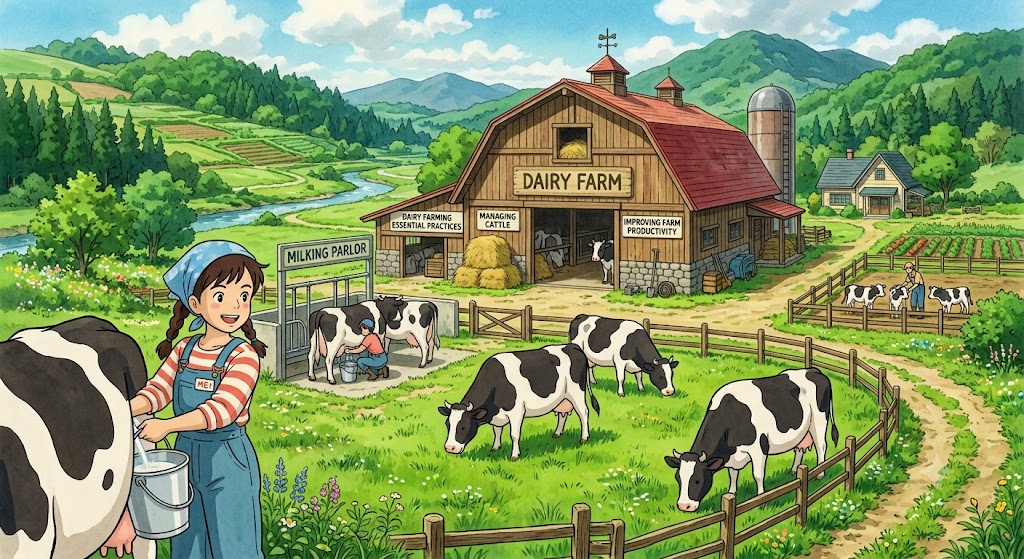
Dairy farming combines animal care, nutrition, housing, milking, hygiene, record keeping, and daily farm management. A productive dairy operation is not simply about keeping more cattle. It depends on creating conditions in which cows can remain healthy, comfortable, well-fed, and consistently managed.
Whether a farm has a small family herd or a larger commercial dairy operation, the basic principles remain similar. Cattle need suitable feed and clean water, comfortable resting areas, good hygiene, careful observation, and appropriate preventive healthcare.
At the same time, farmers need reliable records and routines so they can understand what is happening across the herd. Small improvements in several areas can add up to better efficiency and more predictable farm performance.
1. Start With the Right Herd Management System
Every dairy farm benefits from having a clear routine.
Cattle should not be managed as one identical group because their needs can differ according to age, pregnancy, lactation stage, body condition, and health status.
A farm may have:
- Lactating cows
- Dry cows
- Pregnant cows
- Heifers
- Calves
- Breeding animals
Each group may require different feeding, housing, monitoring, and management.
Separating animals according to their needs can make feeding and observation easier and may help farmers use resources more efficiently.
For example, a high-producing lactating cow has different nutritional requirements from a dry cow that is preparing for its next lactation.
2. Feed Quality Has a Direct Role in Dairy Performance
Nutrition is one of the central parts of dairy management.
Milk production requires substantial amounts of energy, protein, minerals, vitamins, and water. If the diet does not meet an animal’s requirements, production, body condition, reproduction, and overall health may be affected.
A practical dairy feeding program usually combines appropriate forage with other feeds according to the animal’s needs.
Common feed resources may include:
- Pasture
- Hay
- Silage
- Straw
- Grains
- Protein sources
- Mineral supplements
- Other locally appropriate feed ingredients
The exact ration should be developed according to the cattle, available feeds, production level, and professional nutritional guidance.
Avoid sudden feed changes
Cattle’s digestive systems adapt to their diet. Sudden changes in feed quantity or composition can create digestive problems.
When changing a ration, gradual adjustment is generally preferable.
Farmers should also monitor feed quality. Feed that has become moldy, spoiled, contaminated, or excessively wet should not simply be mixed into the ration to avoid waste.
3. Water Is One of the Most Important Dairy Inputs
A dairy cow’s water requirements can be substantial, particularly during periods of high milk production and hot weather.
Clean drinking water should be available regularly, with enough access for the number of cattle using each watering point.
Farmers should inspect:
- Water troughs
- Automatic drinkers
- Pipes
- Pumps
- Storage tanks
- Water cleanliness
A water system can appear functional while still providing inadequate access if the flow rate is too low or several animals are competing for limited space.
During hot weather, monitoring water access becomes even more important.
4. Comfortable Housing Supports Better Herd Management
Cows spend many hours each day resting. Housing should therefore provide a safe and comfortable environment where animals can lie down, stand, move, feed, and drink without unnecessary difficulty.
Important housing considerations include:
Ventilation: Fresh air helps manage heat and humidity inside buildings.
Drainage: Wet areas should be controlled to maintain cleaner and safer conditions.
Flooring: Surfaces should provide suitable traction without creating unnecessary injury risks.
Resting areas: Cows should have adequate space and appropriate bedding or resting surfaces.
Shade: Protection from excessive sunlight can become particularly important during hot weather.
Cleanliness: Manure should be managed regularly to reduce contamination and maintain a healthier environment.
Housing design should also consider the local climate. A dairy building suitable for a cool climate may require significant adaptation in a hot environment.
5. Heat Management Is Especially Important
Heat stress can become a major challenge for dairy farms during hot periods.
Signs that cattle may be experiencing heat stress can include increased breathing rate, reduced activity, changes in feeding behavior, crowding around water sources, and reduced production.
Practical heat-management measures can include:
- Providing shade
- Improving airflow
- Maintaining reliable water access
- Avoiding unnecessary handling during the hottest periods
- Using suitable cooling systems where appropriate
- Keeping resting areas comfortable
Large dairy operations may use fans, sprinklers, or other cooling systems depending on their facilities and climate.
Small farms can also make meaningful improvements by providing shade, ventilation, and adequate water.
6. Maintain a Consistent Milking Routine
Milking is one of the most important daily operations on a dairy farm.
A consistent routine can help reduce unnecessary stress and support milk hygiene.
Before milking, the equipment and milking area should be clean and ready. Cows should be handled calmly rather than rushed or frightened.
The udder and teats should be checked for visible dirt or abnormalities. Appropriate cleaning and preparation procedures should be followed according to the farm’s milking system.
After milking, equipment should be cleaned and maintained according to the manufacturer’s instructions.
A consistent milking schedule also makes it easier to monitor changes in milk production.
7. Milk Hygiene Should Be a Priority
Producing milk is only part of dairy farming. Maintaining its quality from the cow to storage is equally important.
Milk can become contaminated through dirty equipment, unclean surfaces, poor hand hygiene, contaminated water, or inappropriate storage.
Good hygiene practices include:
- Keeping the milking area clean
- Maintaining clean equipment
- Washing hands appropriately
- Following proper udder-preparation procedures
- Keeping storage containers clean
- Cooling milk promptly when required
- Following local food-safety requirements
Milk from animals under certain treatments may also need to be withheld for the required withdrawal period according to the relevant product label and veterinary instructions.
Farmers should never assume that milk from a treated animal is automatically suitable for sale.
8. Monitor Udder Health Regularly
Udder health deserves consistent attention in dairy management.
Changes in milk appearance, swelling, heat, tenderness, or abnormal behavior during milking can indicate that an animal needs closer attention.
Farmers should become familiar with what is normal for each animal and investigate noticeable changes.
Good hygiene, proper milking procedures, clean resting areas, and appropriate veterinary care all form part of udder-health management.
When mastitis or another udder problem is suspected, professional veterinary guidance can help determine the appropriate diagnosis and treatment.
9. Care for Calves From the Beginning
The future productivity of a dairy herd partly depends on how young animals are managed.
Newborn calves require careful attention to early nutrition, hygiene, housing, and health.
Colostrum is particularly important immediately after birth because it provides antibodies and nutrients that support early life.
Farmers should follow appropriate veterinary and livestock-management guidance regarding the timing and quantity of colostrum.
Calf housing should be:
- Clean
- Dry
- Well ventilated
- Safe
- Protected from severe weather
- Easy to monitor
Young calves should also be observed regularly for changes in appetite, behavior, manure, breathing, and general condition.
10. Breeding Management Should Be Organized
Reproduction has a major influence on dairy-farm efficiency.
Farmers need to know which cows are pregnant, which are ready for breeding, and which animals may require additional reproductive attention.
Useful records can include:
- Heat or estrus observations
- Breeding dates
- Pregnancy information
- Calving dates
- Previous reproductive performance
- Health events around calving
Good records help farmers plan feeding, housing, drying-off, calving preparation, and future breeding decisions.
If reproductive problems become frequent, a veterinarian or qualified reproduction specialist can help identify possible causes.
11. Prepare Carefully for Calving
The period around calving deserves extra attention.
A suitable calving area should be clean, dry, safe, and easy to monitor.
Farmers should observe cows approaching calving for changes in behavior and physical signs. However, unnecessary interference should be avoided.
After calving, both the cow and calf should be monitored carefully.
Farmers should pay attention to:
- Appetite
- Water intake
- General behavior
- Calf activity
- Udder condition
- Milk production
- Signs of difficulty or illness
If labor appears abnormal or an animal is in distress, veterinary assistance may be necessary.
12. Keep Cattle Identification and Records Organized
Good records can turn dairy management from guesswork into a measurable process.
Each animal should have reliable identification, whether through an ear tag, electronic identification system, or another suitable method.
Useful information can include:
| Record | Why It Matters |
|---|---|
| Animal ID | Identifies individual cattle |
| Birth date | Helps determine age |
| Breeding dates | Supports reproductive management |
| Calving dates | Helps plan herd routines |
| Milk production | Tracks performance |
| Feed changes | Helps identify management effects |
| Vaccination records | Supports preventive care |
| Treatment records | Tracks health history |
| Body condition | Helps evaluate nutritional management |
| Pregnancy status | Supports herd planning |
Even a simple spreadsheet can be valuable for a small dairy farm.
13. Monitor Body Condition Instead of Looking Only at Milk
Milk production is an important measurement, but it should not be the only one.
Body condition can provide additional information about whether an animal is maintaining an appropriate nutritional balance.
A cow that is losing excessive body condition may require closer evaluation, particularly during periods of high production or around calving.
Body-condition scoring systems can be learned and used consistently, although farmers should seek professional guidance if they are unfamiliar with the technique.
The objective is not simply to make cattle heavier. It is to maintain an appropriate condition for health, reproduction, and production.
14. Reduce Unnecessary Stress During Handling
Calm cattle handling can improve safety for both animals and workers.
Cattle can become frightened by loud noises, sudden movements, overcrowding, unfamiliar environments, or rough handling.
Good handling practices include:
- Moving cattle calmly
- Avoiding unnecessary shouting
- Maintaining safe working distances
- Using suitable handling facilities
- Avoiding excessive pressure
- Allowing animals enough time to move
A calm handling system can also make routine tasks such as vaccination, weighing, hoof care, and veterinary examinations easier.
15. Plan Preventive Health Care
A dairy farm should have a preventive-health plan appropriate for its location and herd.
This may include vaccination, parasite management, reproductive monitoring, hoof care, nutrition review, and regular veterinary assessment.
The correct program depends on local disease risks and farm conditions.
Farmers should keep accurate treatment records and follow medication labels, veterinary instructions, withdrawal periods, and applicable regulations.
Using more medication is not automatically better. Responsible treatment means using the appropriate product, dose, route, and duration when there is a genuine need.
16. Improve Productivity by Measuring the Right Things
Farm productivity improves when farmers understand where resources are being used and where problems occur.
Useful measurements can include:
- Milk production per cow
- Feed consumption
- Calving interval
- Pregnancy rate
- Calf survival
- Culling rate
- Veterinary expenses
- Feed costs
- Milk quality
- Labor requirements
The goal is not to chase one number at the expense of animal health.
For example, increasing production while animals experience poor body condition, repeated illness, or excessive stress would not represent balanced farm management.
Sustainable productivity comes from combining animal welfare, health, efficient resource use, and consistent production.
A Simple Daily Dairy Farm Routine
A practical daily schedule might look like this:
Morning
- Check cattle before feeding.
- Observe appetite and behavior.
- Inspect water availability.
- Feed according to the farm ration.
- Prepare the milking area.
- Milk using the established hygiene routine.
- Check unusual animals separately.
Midday
- Monitor water access.
- Check heat conditions.
- Observe resting behavior.
- Inspect calves and vulnerable animals.
- Maintain ventilation and cooling measures where necessary.
Evening
- Repeat health observations.
- Complete the next feeding routine.
- Milk according to schedule.
- Check housing and water.
- Record unusual events or production changes.
The exact routine will depend on herd size, housing system, labor availability, and milking schedule.
Common Dairy Farming Problems to Avoid
Several management mistakes can gradually reduce farm efficiency.
Neglecting water systems
A broken pump or dirty trough can quickly become a herd-wide problem.
Overlooking small health changes
Reduced appetite, unusual behavior, or declining milk production may deserve investigation.
Poor feed storage
Moisture, pests, and contamination can reduce feed quality and create unnecessary losses.
Inconsistent milking practices
Changing procedures frequently can make hygiene and production monitoring more difficult.
Ignoring heat stress
Hot conditions can affect feed intake, comfort, reproduction, and milk production.
Keeping weak records
Without reliable records, it becomes difficult to identify recurring health or productivity problems.
Focusing only on production
Milk volume matters, but animal health, fertility, longevity, and welfare are also important parts of a successful dairy operation.
Dairy Farm Productivity Checklist
Before considering a dairy management system complete, farmers can regularly ask:
- Do all cattle have reliable access to clean water?
- Is feed stored properly?
- Are diets appropriate for different groups?
- Are cows comfortable when resting?
- Is ventilation adequate?
- Is manure managed regularly?
- Are milking areas and equipment properly maintained?
- Are calves receiving appropriate early care?
- Are reproductive records updated?
- Are health treatments recorded?
- Are milk-quality requirements being followed?
- Are heat-management measures ready before hot weather arrives?
- Are unusual changes investigated promptly?
- Is farm performance reviewed using reliable records?
Final Thoughts
Successful dairy farming is built through hundreds of small management decisions made consistently. Nutrition, water, housing, milking hygiene, calf care, reproductive management, animal health, and record keeping all work together.
Farmers do not necessarily need complicated technology to improve their operation. A clean water system, organized records, consistent feeding and milking routines, comfortable housing, and regular animal observation can provide a strong foundation.
Technology can then be added where it genuinely improves efficiency. Electronic identification, automated feeding systems, milk monitoring, climate-control equipment, and farm-management software may be useful for some operations, particularly as herd size increases.
The most important principle is to balance productivity with animal health and responsible management. A dairy farm that consistently cares for its cattle, monitors performance, maintains hygiene, and responds to problems early is better positioned to build a reliable and sustainable operation over time.