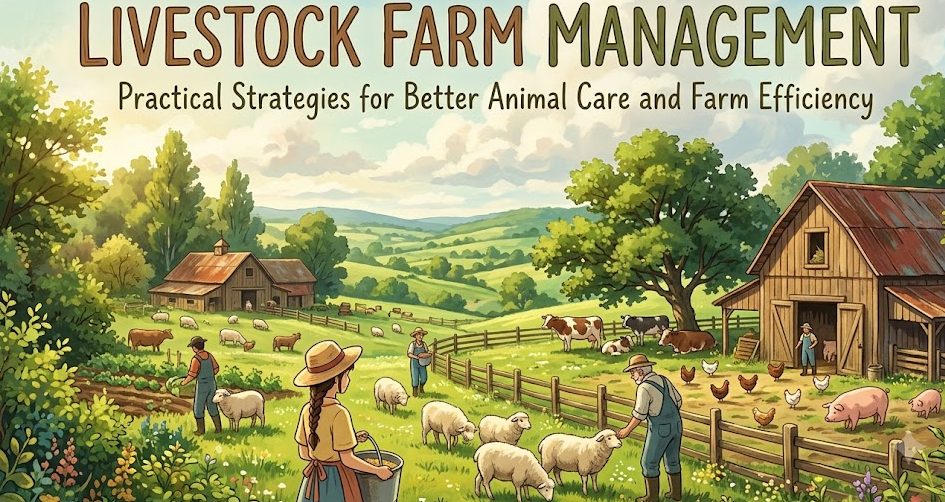
Running a livestock farm involves much more than feeding animals and maintaining their shelter. A well-managed farm depends on a combination of animal care, resource planning, sanitation, record keeping, labor management, and smart use of land and equipment. When these areas work together, farmers can create a healthier environment for livestock while making daily operations more organized and efficient.
Livestock farms in the United States vary widely. Some specialize in cattle, while others raise sheep, goats, pigs, poultry, or several species together. Farm size, climate, available pasture, market goals, and labor resources can all influence management decisions. However, the basic principle remains the same: good management means making consistent decisions before small problems become expensive ones.
Start With a Clear Farm Management System
The first step is to understand exactly what the farm is trying to accomplish.
A livestock operation may focus on meat production, milk, breeding animals, eggs, fiber, direct-to-consumer sales, or a combination of these goals. Management practices should support the farm’s primary purpose.
For example, a breeding operation may place greater emphasis on reproductive records and young-animal management, while a meat operation may focus more heavily on growth, feed efficiency, and market timing.
Farmers should establish practical goals such as:
- Maintaining healthy livestock
- Reducing unnecessary feed waste
- Improving pasture utilization
- Keeping housing clean and functional
- Managing labor efficiently
- Tracking farm expenses
- Reducing avoidable losses
- Improving production consistency
Clear goals make it easier to decide where time and money should be invested.
Build a Strong Daily Observation Routine
One of the simplest management tools on a livestock farm is careful observation.
Animals often show changes in behavior before a problem becomes obvious. Farmers and workers should become familiar with normal eating, drinking, movement, social behavior, and activity levels within their herd or flock.
A daily observation routine can include checking:
- Appetite and feeding behavior
- Water consumption
- Movement and posture
- General activity
- Interaction with other animals
- Housing conditions
- Fencing
- Bedding or litter
- Feed availability
- Unusual behavior
The purpose is not to diagnose every problem personally. Instead, regular observation helps identify situations that may require closer attention or professional assistance.
Consistency is important. A five-minute inspection performed every day can be more valuable than an occasional long inspection after something has already gone wrong.
Make Feed Management More Organized
Feed is often one of the largest operating expenses on a livestock farm, so managing it carefully can have a major impact on efficiency.
The right feeding program depends on species, age, production stage, body condition, forage availability, and farm goals. Young animals, breeding animals, growing animals, and mature livestock may have different nutritional requirements.
Farmers should pay attention not only to what animals are eating but also to how feed is stored and distributed.
Good feed management includes:
- Protecting feed from moisture
- Keeping storage areas clean
- Limiting exposure to pests
- Reducing spilled feed
- Monitoring inventory
- Using appropriate storage containers
- Avoiding unnecessary overfeeding
- Reviewing feed use regularly
Feed records can reveal changes that are difficult to notice otherwise. If feed consumption suddenly increases without a corresponding change in animal numbers or production, the farm may need to investigate the reason.
Treat Water as a Core Farm Resource
Clean and accessible water is essential for livestock management.
Water systems should be checked regularly rather than assuming they are working correctly. Automatic waterers, pipes, tanks, troughs, and pumps can develop leaks, blockages, or other problems.
During hot weather, water demand can increase significantly. In cold regions, freezing can create additional challenges during winter.
A practical water-management routine should include:
- Checking water availability each day.
- Inspecting tanks and troughs for contamination.
- Looking for leaks or damaged equipment.
- Cleaning water containers when necessary.
- Preparing for freezing conditions.
- Maintaining backup options where practical.
Reliable water access is both an animal-care issue and a farm-efficiency issue.
Design Housing Around Livestock Needs
Good housing should provide protection without creating unnecessary stress or maintenance work.
The appropriate setup depends on the species and local climate. A cattle operation may use barns, shelters, open lots, or pasture-based systems, while smaller livestock may use sheds, fenced paddocks, or specialized housing.
Important housing considerations include:
- Adequate space
- Good ventilation
- Protection from severe weather
- Dry resting areas
- Safe flooring
- Easy cleaning
- Reliable fencing
- Proper drainage
- Easy access for feeding and observation
Ventilation deserves particular attention in enclosed buildings. Poor airflow can increase moisture and create an uncomfortable environment.
At the same time, ventilation should not create unnecessary drafts or expose animals to harsh weather.
The best housing design is often the one that provides appropriate protection while making routine cleaning, feeding, inspection, and maintenance easier.
Manage Pastures Like a Valuable Farm Asset
For farms that use grazing systems, pasture management can directly affect both animal nutrition and land productivity.
Allowing livestock to remain continuously in the same area can place excessive pressure on vegetation and soil. Rotational grazing can help farmers manage available forage by moving animals between different areas according to pasture conditions.
A practical grazing strategy may involve:
- Dividing pasture into manageable sections
- Monitoring forage height and condition
- Moving animals when necessary
- Allowing recovery periods
- Protecting heavily used areas
- Maintaining access to water
- Adjusting stocking pressure according to seasonal conditions
Pasture management should be flexible. Weather, rainfall, drought, and forage growth can change throughout the year.
Farmers should avoid following a calendar blindly. The condition of the pasture and animals should guide decisions.
Keep Farm Facilities Clean and Functional
Cleanliness is closely connected to efficient livestock management.
This does not mean every part of a farm needs to look perfect at all times. Instead, farmers should focus on areas that directly affect animals, feed, water, equipment, and worker safety.
Regular maintenance may include:
- Removing accumulated waste
- Replacing damaged bedding
- Cleaning feeding equipment
- Cleaning water containers
- Repairing broken gates
- Checking fencing
- Maintaining drainage
- Removing unnecessary obstacles
A small repair that takes ten minutes today can sometimes prevent a much larger problem later.
Creating a maintenance checklist makes these tasks easier to track.
Use Preventive Health Management
Livestock management should emphasize prevention rather than waiting for problems to become severe.
A farm’s preventive approach may include appropriate vaccination programs, parasite-management strategies, biosecurity procedures, nutrition management, sanitation, and routine observation.
Specific health programs should be developed with qualified veterinary professionals because requirements vary by animal species, location, farm system, and disease risks.
Farmers should also maintain records of important events such as:
- Vaccinations
- Veterinary visits
- Breeding
- Births
- Treatments
- Deaths
- Animal identification
- Weight or growth observations
Good records make it easier to identify patterns and communicate useful information to a veterinarian or livestock specialist.
Improve Biosecurity With Simple Habits
Biosecurity does not have to mean an expensive high-tech system.
Many effective practices involve controlling unnecessary movement between animals, equipment, and farms.
Farm operators can consider:
- Limiting unnecessary visitors
- Keeping equipment clean
- Separating new animals when appropriate
- Avoiding shared equipment when practical
- Maintaining clean footwear and clothing
- Monitoring animals after introduction
- Keeping livestock areas organized
New animals can introduce risks into an established herd or flock, so farms should have a clear procedure for receiving and managing them.
Biosecurity plans should be practical enough that workers can follow them consistently.
Make Breeding and Animal Records Useful
Record keeping becomes much more valuable when information is actually used to make decisions.
For breeding operations, farmers may track identification numbers, breeding dates, expected birth periods, offspring information, and relevant performance observations.
For growing animals, records may include weight measurements, feed use, growth progress, and market information.
Digital spreadsheets and livestock-management software can simplify this process, but even a well-organized paper system can work for smaller operations.
The key is consistency.
A simple record collected every week is usually more useful than a complicated system that nobody maintains.
Manage Labor More Efficiently
Labor can become one of the biggest challenges as a farm grows.
Farmers should identify which tasks must happen every day and which can be grouped together.
For example, feeding, water inspection, animal observation, and basic facility checks can often be organized into a consistent daily route.
A written routine helps workers understand:
- What needs to be done
- When it should happen
- Who is responsible
- What problems should be reported
- Which tasks require special equipment
Clear responsibilities reduce confusion and help prevent important jobs from being overlooked.
Training is equally important. Workers should understand safe animal handling, equipment use, sanitation procedures, and emergency protocols.
Reduce Waste Across the Farm
Efficiency is not only about producing more. It is also about wasting less.
Waste can occur through:
- Spoiled feed
- Leaking water
- Damaged fencing
- Poor pasture utilization
- Excess bedding
- Unused supplies
- Unplanned purchases
- Equipment downtime
Farmers can conduct a monthly waste review by asking a simple question:
Where are we spending money or resources without receiving useful value in return?
The answers can reveal opportunities for improvement.
Sometimes the solution is as simple as moving feed storage to a better location or repairing a leaking water line.
Use Technology Where It Solves a Real Problem
Modern livestock farms have access to a growing range of technologies.
Depending on the operation, farmers may use digital identification systems, electronic weighing equipment, automated feeders, water monitoring systems, cameras, environmental sensors, farm-management software, and mobile record-keeping tools.
Technology should not be adopted simply because it is new.
Before purchasing equipment, farmers should ask:
- What problem will this solve?
- How often will it be used?
- Will it save labor?
- Can the farm maintain it?
- What happens if the system stops working?
- Is the expected benefit worth the cost?
A simple technology that solves a recurring problem can be more valuable than an expensive system with features the farm rarely uses.
Prepare for Seasonal Changes
Livestock management changes throughout the year.
Summer may require greater attention to heat, shade, ventilation, and water availability. Winter can create challenges involving freezing water, shelter, bedding, and difficult working conditions.
Spring may bring pasture growth and breeding activities, while autumn can involve preparation for winter and changes in feed availability.
Instead of reacting to seasonal problems, farmers can prepare several weeks ahead.
A seasonal checklist might include:
Before summer: inspect water systems, shade, ventilation, and heat-management equipment.
Before winter: prepare shelters, check water systems, inspect equipment, and organize bedding and feed supplies.
Before grazing season: inspect fences, pasture conditions, gates, and water access.
Before major breeding periods: organize animal records, facilities, supplies, and professional support.
Preparation reduces emergency work during busy periods.
Track Farm Economics, Not Just Animal Performance
A farm can have healthy animals and still struggle financially if costs are poorly managed.
Farmers should track major expenses such as:
- Feed
- Veterinary services
- Labor
- Fuel
- Utilities
- Equipment
- Repairs
- Bedding
- Fencing
- Transportation
- Insurance
- Marketing
Revenue should also be tracked by livestock category or production activity when possible.
This helps identify which parts of the operation are performing well and which may need changes.
Profitability should be evaluated over time rather than based on a single good or bad month.
Create a Simple Farm Review System
At the end of each month or production cycle, farmers can review the operation using five questions:
1. What worked well?
Identify practices that saved time, reduced waste, or improved animal management.
2. What created problems?
Look for recurring issues rather than isolated mistakes.
3. What cost more than expected?
Review feed, repairs, labor, and other expenses.
4. What can be improved next month?
Choose a small number of practical changes.
5. What should be prepared for next season?
Planning ahead can prevent many avoidable problems.
This approach turns farm management into an ongoing improvement process.
A Practical Livestock Management Framework
A well-organized livestock operation can be managed around six basic areas:
Observe: Know the normal condition and behavior of the animals.
Provide: Maintain appropriate feed, water, shelter, and space.
Prevent: Use sanitation, biosecurity, preventive care, and maintenance.
Record: Track important animal, production, and financial information.
Review: Look for waste, recurring problems, and opportunities.
Improve: Make practical changes and measure whether they actually help.
This framework works across many types of livestock farms because it focuses on management principles rather than one specific animal species.
Final Thoughts
Effective livestock farm management is built through consistent daily decisions rather than one major improvement. Healthy animals, reliable infrastructure, organized records, efficient feeding, good pasture management, and careful financial planning all contribute to a stronger farm operation.
Farmers do not need to adopt every new technology or completely redesign their operation at once. A better approach is to identify the areas creating the most problems and improve them one at a time.
A well-managed livestock farm is not simply a place where animals are raised. It is a working system in which animals, land, labor, equipment, resources, and finances are managed together. When these pieces are coordinated, farmers can create more organized operations that are easier to monitor, maintain, and improve over time.