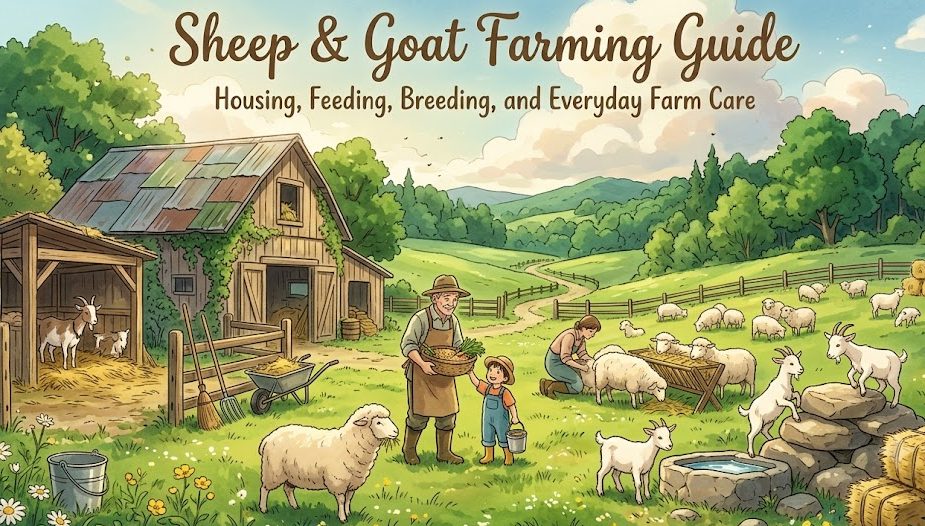
Sheep and goats can fit well into a wide range of farming systems, from small family farms to larger commercial livestock operations. They can provide meat, milk, fiber, breeding stock, and other farm products while also making use of pasture, forage, and land that may not be ideal for some other types of agriculture.
Although sheep and goats have several similarities, they are not identical. Their feeding behavior, housing preferences, health concerns, handling requirements, and production goals can differ. Successful management therefore begins with understanding the animals being raised rather than treating both species exactly the same.
For farms in the United States, local climate, pasture conditions, available land, market demand, breed characteristics, and production goals all influence the best management approach.
A well-run sheep or goat operation usually combines good housing, appropriate nutrition, reliable water, planned breeding, pasture management, health monitoring, and consistent daily care.
Decide What the Farm Is Producing
Before purchasing animals, farmers should establish a clear production goal.
Common sheep and goat enterprises include:
- Meat production
- Milk production
- Wool or fiber
- Breeding stock
- Show animals
- Pasture-based production
- Mixed livestock farming
The goal influences breed selection, feeding, housing, equipment, labor, and marketing.
For example, a farm producing meat may prioritize growth rate, reproductive performance, and feed efficiency. A fiber-focused operation may place greater emphasis on fleece characteristics, while a dairy operation requires management systems designed around milk production and hygiene.
Starting with a clear goal prevents farmers from purchasing animals that do not match the farm’s resources or market.
Choosing Between Sheep and Goats
Sheep and goats can both make use of pasture and forage, but their grazing behavior differs.
Sheep generally prefer grasses and other low-growing vegetation. Goats are more likely to browse shrubs, leaves, and woody plants.
This difference can be useful when planning pasture.
A farm with mixed vegetation may find that goats and sheep can use different parts of the available forage. However, mixed-species grazing should still be planned carefully around nutrition, parasites, fencing, and animal compatibility.
Breed selection is also important. Some breeds are better suited to particular climates, production goals, or management systems.
Housing That Keeps Animals Safe
Sheep and goats do not necessarily require elaborate buildings, but they do need protection from severe weather, predators, and unsafe conditions.
A suitable shelter should provide:
- Protection from rain and snow
- Shade during hot weather
- Dry resting areas
- Good airflow
- Safe flooring
- Adequate space
- Easy access for cleaning
- Protection from predators
Goats are particularly known for climbing and testing boundaries, so fencing and gates should be designed accordingly.
Sheep may require additional attention to dry conditions because prolonged wetness can contribute to problems involving the skin, fleece, and feet.
Housing should also allow farmers to safely separate animals when necessary.
Fencing Is a Major Investment
Good fencing can make sheep and goat farming much easier.
A weak fence can lead to escaped animals, damaged crops, increased labor, and greater exposure to roads or predators.
Farmers should consider:
- Fence height
- Mesh spacing
- Gate security
- Terrain
- Predator pressure
- Animal age
- Breed behavior
Goats may be particularly challenging because they can climb, push, or squeeze through areas that appear secure.
Electric fencing can be useful in some pasture systems when installed and managed appropriately.
Before purchasing animals, farmers should inspect the entire perimeter rather than assuming existing fencing will be adequate.
Build the Feeding System Around Forage
Sheep and goats can obtain a significant portion of their nutrition from pasture and forage when the available plants are suitable and managed properly.
The quality of forage can change throughout the year.
Farmers should evaluate:
- Grass quality
- Browse availability
- Pasture maturity
- Drought conditions
- Seasonal growth
- Hay quality
- Mineral availability
Hay may be necessary when pasture growth is limited.
Supplemental feed can also be useful during periods of higher nutritional demand, but feeding decisions should be based on the animals’ actual needs rather than simply providing large amounts of grain.
Provide Clean Water Every Day
Reliable water is essential for sheep and goats.
Water requirements can change with temperature, diet, body size, pregnancy, lactation, and activity.
Water systems should be checked regularly for:
- Cleanliness
- Leaks
- Frozen lines
- Blockages
- Mud contamination
- Easy animal access
During hot weather, water availability becomes especially important.
Water troughs should be positioned where animals can access them without excessive crowding.
Understand Minerals and Nutrition
Sheep and goats require minerals, but their mineral requirements are not always identical.
One particularly important consideration is copper. Sheep are more sensitive to excessive copper intake than goats, so farmers should not automatically use the same mineral program for both species.
Mineral supplements should be selected according to species and professional nutrition guidance.
A balanced feeding program should consider:
- Energy
- Protein
- Fiber
- Minerals
- Vitamins
- Water
The animal’s age and production stage also matter.
Growing animals, pregnant females, lactating animals, breeding males, and mature animals can have different nutritional requirements.
Manage Pasture Instead of Simply Adding More Animals
Pasture is one of the farm’s most valuable resources.
Overgrazing can reduce plant recovery, expose soil, increase erosion, and decrease future forage production.
Rotational grazing can help farmers manage pasture use by moving animals between grazing areas.
A simple rotational system might involve:
- Dividing pasture into several sections.
- Allowing animals to graze one section.
- Moving them before the area becomes heavily overgrazed.
- Allowing the used section time to recover.
- Rotating animals through the remaining areas.
The exact rotation depends on pasture growth, rainfall, soil, animal numbers, and season.
Good pasture management is more about observation than following a fixed number of grazing days.
Breeding Should Be Planned
Breeding management affects the future of the entire flock or herd.
Before breeding, farmers should evaluate:
- Body condition
- Age
- Health
- Structural soundness
- Reproductive history
- Breed characteristics
- Production records
Females should be in appropriate condition before breeding rather than being severely underconditioned or excessively overfed.
Breeding males should also be healthy and physically sound.
A planned breeding season can make kidding and lambing more organized and can help farmers coordinate nutrition, housing, labor, and marketing.
Prepare for Lambing and Kidding
The period around birth requires careful management.
Clean and suitable areas should be available for females that are close to giving birth.
Farmers should monitor animals for changes in behavior and signs of labor.
After birth, newborns need appropriate care, including timely access to colostrum.
The mother and newborn should be observed to ensure that nursing is occurring and that the young animal remains active.
Farmers should have a plan for situations in which a newborn is weak, rejected by the mother, unable to nurse, or otherwise appears abnormal.
Veterinary assistance should be sought when a serious problem is suspected.
Young Animal Management
Lambs and kids require consistent monitoring during their early growth period.
Important areas include:
- Nutrition
- Water
- Warmth
- Clean bedding
- Protection from predators
- Growth
- Social behavior
- Signs of illness
Young animals that are growing poorly should be evaluated rather than simply given additional feed without identifying the underlying problem.
Keeping birth and growth records can help farmers identify which animals are developing normally and which may require additional attention.
Everyday Health Monitoring
Farmers should observe sheep and goats every day.
Look for:
- Changes in appetite
- Reduced movement
- Isolation from the group
- Coughing or breathing changes
- Diarrhea
- Weight loss
- Unusual posture
- Limping
- Skin problems
- Changes in manure
- Swelling or injuries
Healthy animals generally have consistent behavior and activity.
A farmer who knows the normal behavior of the flock or herd is more likely to recognize when something changes.
Parasite Management Requires Planning
Internal parasites can be an important concern in sheep and goat production, particularly in pasture-based systems.
However, treating animals repeatedly without monitoring can contribute to resistance and unnecessary treatment.
A better strategy combines:
- Pasture management
- Regular observation
- Appropriate testing
- Targeted treatment
- Good nutrition
- Maintaining healthy body condition
External parasites such as lice, mites, or ticks can also affect animals depending on the environment.
A veterinarian or livestock professional can help establish a parasite-management program appropriate for the farm.
Hoof Care Matters
Foot health can have a direct impact on animal movement, feeding, and overall performance.
Farmers should regularly observe animals for:
- Limping
- Swollen feet
- Overgrown hooves
- Unusual walking
- Animals spending more time lying down
Hooves may need trimming depending on the breed, environment, and amount of natural wear.
Wet and muddy conditions can increase foot-related challenges, making drainage and pasture management important parts of prevention.
Managing Heat and Cold
Sheep and goats can handle a range of temperatures when properly managed, but extreme weather can create stress.
During hot weather:
- Provide shade
- Maintain reliable water
- Ensure adequate airflow
- Avoid unnecessary handling during the hottest periods
- Monitor vulnerable animals closely
During cold or wet weather:
- Provide dry shelter
- Reduce exposure to strong wind
- Maintain suitable bedding
- Ensure water remains available
- Monitor body condition
Young animals and animals in poor condition may be more vulnerable to severe weather.
Keep Predators in Mind
Predator management is an important part of sheep and goat farming.
Potential threats vary by location and may include coyotes, dogs, foxes, birds of prey, and other wildlife.
Farmers can reduce risk through:
- Secure fencing
- Proper night housing
- Predator-aware pasture placement
- Livestock guardian animals where appropriate
- Regular fence inspections
- Removing attractants around animal areas
The appropriate strategy depends heavily on the local environment and predator population.
Keep Records That Support Better Decisions
Good records turn daily observations into useful farm information.
Farmers can track:
- Animal identification
- Birth dates
- Parentage
- Breeding dates
- Lambing or kidding
- Weight
- Health treatments
- Vaccinations
- Parasite management
- Feed changes
- Pasture use
- Deaths or losses
- Sale dates
- Production results
These records can help identify productive animals and make future breeding decisions more informed.
They can also reveal problems such as repeated health issues in a particular group or poor performance under certain pasture conditions.
A Simple Daily Management Routine
A practical routine can keep the farm organized.
Morning
Check animals, water, fencing, pasture, shelter, and any animals requiring special attention.
During the Day
Monitor grazing behavior, weather conditions, water availability, and young animals.
Evening
Check that animals are safely contained and that water and shelter remain accessible.
Weekly
Inspect fencing, housing, feed storage, mineral supplies, pasture condition, and animal body condition.
Seasonally
Review breeding plans, pasture availability, hay supplies, parasite-management strategies, and weather preparation.
The routine can be adjusted according to the farm’s size and production system.
Improve Efficiency Without Overcomplicating the Farm
Efficient sheep and goat farming does not necessarily mean using expensive technology.
Simple improvements can have significant value.
For example:
- Place feed storage close to feeding areas.
- Design gates for easy animal movement.
- Keep basic handling equipment accessible.
- Organize records digitally or in a notebook.
- Repair fencing before it becomes an emergency.
- Maintain water systems regularly.
- Separate animals according to age or production stage when appropriate.
- Plan feed supplies before winter or drought periods.
Reducing unnecessary walking, repeated handling, feed waste, and emergency repairs can save both time and money.
Final Thoughts
Sheep and goat farming can be a flexible part of a diversified agricultural operation when the animals are matched with the farm’s land, climate, resources, and production goals.
The foundation is straightforward: provide suitable housing, quality forage and nutrition, clean water, secure fencing, appropriate breeding management, regular health observation, and good pasture care.
Although sheep and goats share many management principles, farmers should remember that their nutritional and management requirements are not identical. Species-specific feeding, mineral programs, health plans, and veterinary guidance are important.
For U.S. farms, local climate, pasture conditions, predator pressure, breed selection, and market opportunities should all be considered before building a production system.
With consistent daily care and good records, farmers can gradually improve flock or herd performance while creating a more organized and sustainable sheep or goat operation.