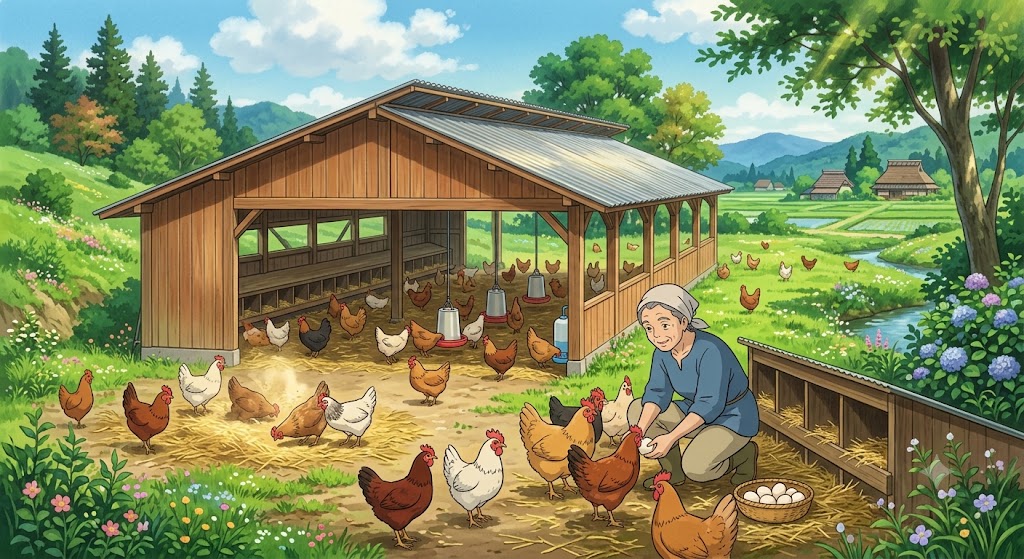
Modern poultry farming focuses on raising healthy birds while improving egg and meat production through better housing, nutrition, hygiene, disease prevention, record-keeping, and technology. Whether a farmer manages a small backyard flock or a commercial poultry unit, success depends on consistent daily care and proper planning.
Poultry birds grow quickly and can provide regular income, but they are also sensitive to poor ventilation, contaminated water, overcrowding, heat stress, and disease. Small management mistakes can reduce growth, egg production, feed efficiency, and bird survival.
A well-managed poultry farm creates a clean and comfortable environment, provides balanced feed, maintains biosecurity, and monitors birds carefully. These practices help reduce losses and improve the overall quality of eggs and meat.
Choose the Right Poultry Type
Before starting a poultry farm, farmers should decide whether they want to produce eggs, meat, or both.
Layer Birds
Layer breeds are selected mainly for egg production. They require balanced nutrition, proper lighting, clean nesting areas, and regular health monitoring.
Good layer management can support steady egg production over a long period.
Broiler Birds
Broilers are raised mainly for meat. They grow quickly and require high-quality feed, suitable temperature, enough floor space, and strong disease prevention.
Poor feed quality or overcrowding can reduce weight gain and increase mortality.
Dual-Purpose Birds
Dual-purpose breeds can provide both eggs and meat. They may not produce as many eggs as specialised layers or grow as quickly as commercial broilers, but they can be suitable for small farms and mixed farming systems.
Farmers should choose breeds according to climate, available space, feed supply, local demand, and production goals.
Build a Safe and Comfortable Poultry House
Housing protects birds from rain, extreme temperatures, predators, pests, and disease.
A good poultry house should be:
- Dry and well-drained
- Easy to clean
- Properly ventilated
- Protected from strong winds
- Safe from rodents and predators
- Large enough to prevent overcrowding
- Located away from stagnant water and waste areas
The floor may be made of concrete or another washable material. In deep-litter systems, clean bedding such as rice husk, wood shavings, or chopped straw can be used.
Wet litter should be removed quickly because it encourages harmful bacteria, bad odours, flies, and foot problems.
Maintain Proper Ventilation
Fresh air is essential for healthy poultry.
Birds release heat, moisture, carbon dioxide, and ammonia inside the house. Poor ventilation can cause breathing problems, slow growth, reduced egg production, and higher disease risk.
Ventilation should remove stale air without creating strong drafts directly over young chicks.
Farmers should regularly check for:
- Strong ammonia smell
- Excess humidity
- Wet bedding
- Condensation
- Dust accumulation
- Birds breathing with open beaks
Fans, windows, roof vents, curtains, or automated ventilation systems may be used depending on farm size and climate.
Control Temperature Carefully
Temperature has a major effect on poultry health and productivity.
Young chicks cannot control their body temperature properly. They need a warm brooding area during the first few weeks.
If chicks are too cold, they gather closely around the heat source. If they are too hot, they move away, spread their wings, and breathe rapidly.
The temperature should be reduced gradually as the chicks grow.
Adult birds also suffer during extreme heat. Heat stress can reduce feed intake, egg size, shell quality, growth, and fertility.
Farmers can reduce heat stress by:
- Improving airflow
- Providing cool drinking water
- Reducing overcrowding
- Using roof insulation
- Providing shade
- Feeding during cooler hours
- Using misting or cooling systems where suitable
Provide Balanced Poultry Feed
Feed is usually the largest cost in poultry farming. It also has the strongest influence on growth, egg production, and bird health.
Poultry feed should contain the correct balance of:
- Protein
- Carbohydrates
- Fats
- Vitamins
- Minerals
- Amino acids
- Calcium
- Phosphorus
Chicks, growers, broilers, and layers have different nutritional needs. Farmers should use feed designed for the bird’s age and production stage.
Layer birds need adequate calcium for strong eggshells, while broilers require sufficient protein and energy for muscle development.
Sudden feed changes should be avoided. A new feed should be introduced gradually to prevent digestive problems and reduced consumption.
Store Feed Correctly
Even high-quality feed can become unsafe if it is stored poorly.
Feed should be kept in a clean, dry, and ventilated storage room. Bags should be placed on raised pallets rather than directly on the floor.
The storage area should be protected from:
- Rain and moisture
- Rodents
- Insects
- Direct sunlight
- Chemical contamination
- Mould growth
Older feed should be used before newer stock. Farmers should not use feed that smells unusual, appears mouldy, or has been damaged by pests.
Mouldy feed may contain harmful toxins that reduce growth, weaken immunity, and affect egg production.
Supply Clean Drinking Water
Water is essential for digestion, temperature control, nutrient absorption, and egg formation.
Birds should have access to fresh and clean water at all times. Water containers and pipelines should be cleaned regularly to prevent the growth of algae and harmful microorganisms.
During hot weather, birds drink more water. Farmers should ensure that the supply does not run out during the day.
Drinking systems should be placed at a suitable height to reduce contamination from litter and droppings.
Water quality should be tested if there are concerns about salts, bacteria, chemicals, or an unusual smell.
Avoid Overcrowding
Overcrowding is a common cause of poor poultry performance.
When too many birds are kept in a small space, they experience greater competition for feed, water, air, and resting areas.
Overcrowding may lead to:
- Heat stress
- Feather pecking
- Cannibalism
- Rapid disease spread
- Wet litter
- Slow growth
- Reduced egg production
- Higher mortality
Farmers should follow recommended stocking densities for the selected bird type and housing system.
Enough feeders and drinkers should also be provided so weaker birds can access food and water.
Follow Strong Biosecurity Practices
Biosecurity refers to the steps taken to prevent diseases from entering or spreading within a poultry farm.
Visitors, vehicles, wild birds, rodents, equipment, and newly purchased birds can carry harmful organisms.
Useful biosecurity measures include:
- Restricting unnecessary visitors
- Using separate footwear inside poultry houses
- Installing footbaths at entrances
- Cleaning tools and equipment
- Controlling rodents and insects
- Keeping wild birds away
- Isolating new birds
- Removing dead birds immediately
- Avoiding equipment sharing between farms
Different age groups should be kept separately whenever possible. Mixing young and adult birds increases disease risk.
Follow a Vaccination Programme
Vaccination protects poultry from several serious diseases.
The exact schedule depends on local disease risks, bird type, age, vaccine availability, and veterinary recommendations.
Vaccines should be stored, handled, and administered correctly. Incorrect temperature, expired vaccines, or poor application can reduce protection.
Vaccination does not replace hygiene and biosecurity. Birds may still become sick if housing, water, litter, or feed management is poor.
Farmers should maintain vaccination records for every flock.
Inspect Birds Every Day
Daily observation helps farmers identify problems before they become severe.
Healthy birds are generally active, alert, interested in feed and water, and have smooth feathers.
Warning signs may include:
- Reduced appetite
- Sudden drop in egg production
- Coughing or sneezing
- Diarrhoea
- Swollen eyes
- Weakness
- Unusual droppings
- Lameness
- Feather loss
- Sudden deaths
Sick birds should be isolated from the flock. A veterinarian or poultry expert should be contacted when disease is suspected.
Farmers should avoid using antibiotics without professional guidance. Incorrect use can create drug resistance and leave unwanted residues in meat or eggs.
Manage Lighting for Better Production
Lighting affects feeding activity, growth, sexual maturity, and egg production.
Layer birds require a consistent lighting schedule. Sudden changes in light duration or intensity may reduce egg production.
Broilers also benefit from a planned light-and-dark cycle. Continuous bright light can increase stress and reduce rest.
Natural light may be enough in some small-scale systems, while commercial farms may use artificial lighting and timers.
Lights should be distributed evenly so birds can access feeders and drinkers without creating crowded areas.
Improve Egg Production and Quality
Efficient egg production requires healthy layer birds, correct nutrition, sufficient water, comfortable housing, and suitable lighting.
Nesting boxes should be clean, dry, and placed in a quiet section of the poultry house.
Eggs should be collected several times a day to reduce breakage, dirt, and bacterial contamination.
Farmers should check egg quality regularly. Thin or weak shells may result from nutritional deficiencies, disease, heat stress, age, or poor calcium absorption.
Clean eggs should be stored in a cool area and protected from direct sunlight and strong odours.
Improve Broiler Growth and Meat Quality
Broiler farming depends on efficient growth and good feed conversion.
Farmers should begin with healthy chicks from a reliable hatchery. Chicks should be active, uniform in size, and free from visible defects.
Broilers need:
- Quality starter and grower feed
- Clean water
- Correct temperature
- Good ventilation
- Dry litter
- Adequate space
- Disease protection
Bird weight should be checked regularly. Slow or uneven growth may indicate feed problems, disease, poor water access, or overcrowding.
Stress before transport and slaughter should be minimised to protect meat quality and animal welfare.
Use Technology Where Practical
Modern poultry equipment can improve efficiency and reduce labour.
Useful technologies include:
- Automatic feeders
- Nipple drinking systems
- Temperature sensors
- Humidity monitors
- Ventilation controllers
- Backup power systems
- Digital weighing scales
- Egg collection systems
- Farm management software
Small farmers do not need to install every system immediately. Simple tools such as thermometers, timers, weighing scales, and digital records can provide valuable improvements.
Technology should support good management, not replace regular observation.
Manage Poultry Waste Responsibly
Poultry manure and used litter contain valuable nutrients, but they can also create odour, flies, water pollution, and disease risks if handled poorly.
Waste can be composted and used as organic fertiliser after proper treatment.
Composting helps reduce pathogens, moisture, and unpleasant smells. The compost should be kept away from poultry houses and water sources.
Dead birds should never be thrown into open fields or drains. They should be disposed of using locally approved methods such as controlled burial, composting, or authorised collection.
Keep Detailed Farm Records
Records help farmers understand production costs and flock performance.
Important records include:
- Number of birds
- Chick purchase cost
- Feed consumption
- Water use
- Vaccination dates
- Medicine expenses
- Daily egg production
- Bird weights
- Mortality
- Labour costs
- Egg and meat sales
Farmers can use these records to calculate feed efficiency, egg production rate, mortality percentage, and profit.
A notebook, spreadsheet, or poultry management application can be used depending on farm size.
Develop a Reliable Marketing Plan
Farmers should identify potential buyers before starting large-scale production.
Possible customers include:
- Local households
- Retail shops
- Hotels
- Restaurants
- Supermarkets
- Egg wholesalers
- Meat processors
- Online buyers
Customers generally prefer clean eggs, healthy birds, consistent supply, fair pricing, and hygienic packaging.
Farmers may improve income by selling graded eggs, processed chicken, manure compost, chicks, or other value-added products where regulations allow.
Common Poultry Farming Mistakes
Many poultry losses result from avoidable management errors.
Common mistakes include:
- Buying poor-quality chicks
- Overcrowding
- Using unbalanced feed
- Allowing dirty water
- Ignoring wet litter
- Poor ventilation
- Skipping vaccination
- Mixing different age groups
- Delaying treatment
- Starting without a market plan
Beginners should start with a manageable flock size and gain experience before expanding.
Conclusion
Modern poultry farming combines proper housing, balanced nutrition, clean water, strong biosecurity, vaccination, lighting, temperature control, and regular monitoring.
Healthy birds convert feed more efficiently, grow faster, produce more eggs, and experience fewer disease problems. Good management also improves meat quality, egg safety, and farm profitability.
Farmers should focus on prevention rather than waiting for serious problems to appear. Clean housing, quality chicks, reliable feed, careful record-keeping, and early disease detection create a strong foundation for success.
By adopting practical modern methods and expanding gradually, poultry farmers can build an efficient, productive, and sustainable egg or meat business.
Frequently Asked Questions
1. Which poultry farming type is best for beginners?
Small-scale layer, broiler, or dual-purpose farming can all be suitable. The best choice depends on local demand, available capital, experience, and farm space.
2. What is the most important requirement for healthy poultry?
Clean water, balanced feed, suitable housing, proper temperature, vaccination, and strong biosecurity are all essential.
3. How can farmers improve egg production?
Farmers can improve egg production through balanced layer feed, adequate calcium, clean water, consistent lighting, comfortable housing, and disease prevention.
4. Why is ventilation important in poultry farming?
Ventilation removes excess heat, moisture, ammonia, dust, and carbon dioxide while supplying fresh air to the birds.
5. How can poultry diseases be prevented?
Diseases can be reduced through vaccination, daily cleaning, visitor control, rodent management, quality feed, clean water, and isolation of sick or newly purchased birds.