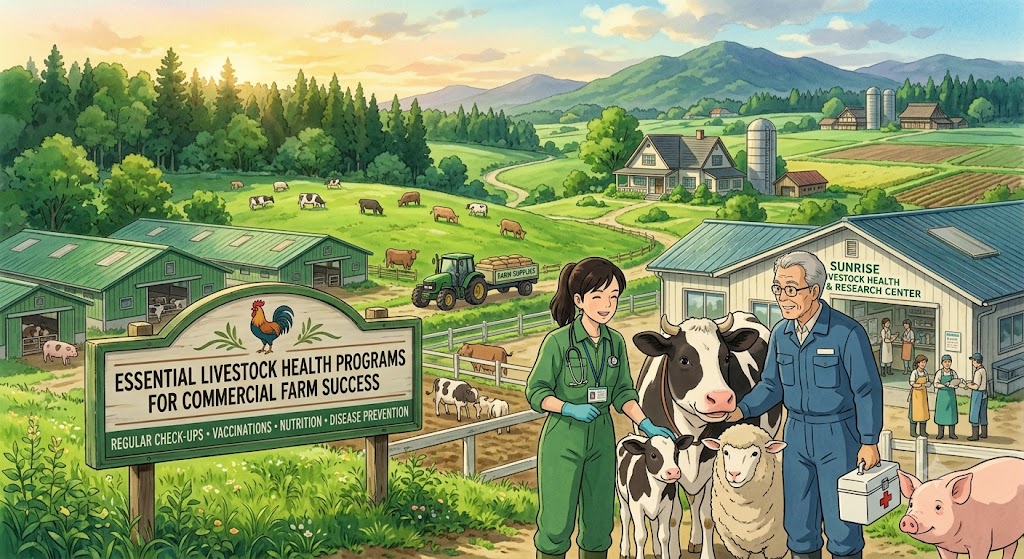
Livestock health is one of the most important factors influencing the profitability and sustainability of commercial farming operations. Healthy animals grow more efficiently, produce higher-quality products, reproduce successfully, and require fewer medical interventions. In contrast, disease outbreaks, poor nutrition, inadequate biosecurity, and weak management practices can lead to significant financial losses and reduced farm performance.
As modern livestock production becomes increasingly specialized and competitive, farmers must implement comprehensive health programs that focus on disease prevention, animal welfare, nutrition, and ongoing monitoring. Effective livestock health management not only protects animal populations but also supports long-term business growth and operational stability.
This guide explores the essential livestock health programs that contribute to commercial farm success.
Why Livestock Health Management Matters
Animal health directly affects every aspect of livestock production.
Healthy animals generally provide:
- Better growth rates
- Improved feed conversion efficiency
- Higher reproductive performance
- Increased milk production
- Better meat quality
- Reduced mortality rates
Poor health management can result in:
- Disease outbreaks
- Production losses
- Increased veterinary expenses
- Reduced profitability
Preventive health programs are often more cost-effective than treating diseases after they occur.
Developing a Comprehensive Herd Health Plan
Every commercial livestock operation should have a structured health management program.
A successful health plan typically includes:
- Vaccination schedules
- Disease monitoring
- Biosecurity measures
- Nutritional management
- Parasite control
- Reproductive health management
- Record keeping
Working with qualified veterinary professionals helps ensure that health programs are appropriate for specific production systems.
Vaccination Programs
Vaccination is one of the most effective tools for preventing infectious diseases.
Vaccines help protect animals from:
- Viral diseases
- Bacterial infections
- Respiratory illnesses
- Reproductive disorders
A well-designed vaccination program can:
- Reduce disease incidence
- Improve herd immunity
- Minimize production losses
- Lower treatment costs
Vaccination schedules should be tailored to local disease risks and livestock species.
Biosecurity Measures
Biosecurity focuses on preventing disease introduction and spread within livestock operations.
Key biosecurity practices include:
Controlled Farm Access
Limit unnecessary visitors and vehicle traffic.
Quarantine Procedures
Isolate newly purchased animals before introducing them to the herd.
Equipment Sanitation
Clean and disinfect equipment regularly.
Animal Movement Control
Monitor and manage livestock movement carefully.
Strong biosecurity programs reduce the risk of costly disease outbreaks.
Regular Health Monitoring
Routine observation allows farmers to identify health issues before they become severe.
Important indicators include:
- Feed intake
- Water consumption
- Body condition
- Growth rates
- Behavior changes
- Respiratory symptoms
Early detection often improves treatment success and reduces economic losses.
Consistent monitoring should be part of daily farm management activities.
Nutritional Management Programs
Proper nutrition forms the foundation of livestock health.
Balanced diets support:
- Growth
- Reproduction
- Immune function
- Product quality
Nutritional programs should provide:
- Energy
- Protein
- Vitamins
- Minerals
- Adequate water
Feed quality directly influences animal performance and overall profitability.
Regular feed evaluation helps ensure nutritional requirements are being met.
Water Quality Management
Clean water is essential for healthy livestock.
Poor water quality can contribute to:
- Disease transmission
- Reduced feed intake
- Poor growth performance
- Lower production levels
Farmers should regularly evaluate:
- Water cleanliness
- Availability
- Contamination risks
Reliable access to fresh water supports optimal animal health and productivity.
Parasite Control Programs
Internal and external parasites can significantly reduce livestock performance.
Common parasites include:
Internal Parasites
- Roundworms
- Tapeworms
- Liver flukes
External Parasites
- Ticks
- Lice
- Mites
- Flies
Effective parasite management may involve:
- Strategic deworming
- Pasture rotation
- Environmental sanitation
- Regular health assessments
Controlling parasites improves animal welfare and production efficiency.
Reproductive Health Management
Strong reproductive performance is essential for commercial livestock operations.
Reproductive health programs focus on:
- Breeding management
- Pregnancy monitoring
- Calving or lambing support
- Fertility evaluation
Benefits include:
- Higher conception rates
- Improved offspring survival
- Increased production efficiency
Successful reproduction contributes directly to farm profitability.
Proper Housing and Environmental Management
Livestock housing significantly affects animal health and welfare.
Good housing should provide:
- Adequate ventilation
- Proper drainage
- Comfortable bedding
- Temperature control
- Sufficient space
Poor housing conditions can increase stress and disease susceptibility.
Maintaining clean and comfortable environments supports healthier animals.
Stress Reduction Strategies
Stress negatively affects livestock performance and immune function.
Common stressors include:
- Overcrowding
- Extreme temperatures
- Transportation
- Poor handling practices
- Nutritional deficiencies
Farmers can reduce stress by:
- Maintaining proper stocking densities
- Using low-stress handling techniques
- Providing consistent care routines
Reduced stress often results in improved productivity and animal welfare.
Disease Surveillance Programs
Disease surveillance helps identify health threats before they spread throughout the herd.
Surveillance activities may include:
- Routine health checks
- Diagnostic testing
- Veterinary consultations
- Production performance monitoring
Ongoing surveillance supports proactive disease management and risk reduction.
Record Keeping and Data Management
Accurate records are critical for effective livestock health programs.
Important information to track includes:
- Vaccinations
- Treatments
- Birth records
- Mortality rates
- Breeding performance
- Growth data
Good records help farmers identify trends and make informed management decisions.
Data-driven management improves operational efficiency and long-term success.
Employee Training and Education
Farm workers play an important role in maintaining livestock health.
Training programs should cover:
- Disease recognition
- Animal handling
- Biosecurity protocols
- Feeding procedures
- Emergency response plans
Well-trained staff contribute to more effective health management and improved farm performance.
Emergency Health Preparedness
Commercial farms should prepare for unexpected health challenges.
Emergency plans may address:
- Disease outbreaks
- Natural disasters
- Feed shortages
- Water supply disruptions
Preparedness helps minimize disruptions and protect livestock populations during emergencies.
Animal Welfare and Ethical Management
Animal welfare is increasingly important in modern agriculture.
Good welfare practices include:
- Humane handling
- Proper nutrition
- Comfortable housing
- Timely medical care
Strong welfare standards often improve production outcomes while meeting consumer expectations.
Technology in Livestock Health Management
Modern technologies are enhancing animal health programs.
Examples include:
- Electronic identification systems
- Automated monitoring devices
- Health tracking software
- Wearable livestock sensors
These tools provide valuable data that supports more efficient and accurate management.
Technology adoption continues to improve livestock production systems worldwide.
Building a Successful Livestock Health Program
An effective commercial livestock health program should include:
- Vaccination protocols
- Biosecurity measures
- Nutritional management
- Parasite control
- Reproductive health monitoring
- Disease surveillance
- Accurate record keeping
Combining these components creates a comprehensive approach to herd health management.
Economic Benefits of Strong Health Programs
Well-managed livestock health programs often result in:
- Higher productivity
- Reduced veterinary expenses
- Improved feed efficiency
- Better product quality
- Lower mortality rates
- Increased profitability
Preventive health investments frequently generate substantial long-term returns.
Conclusion
Livestock health programs are essential for the success of modern commercial farming operations. By focusing on disease prevention, biosecurity, nutrition, reproductive management, welfare, and ongoing monitoring, farmers can protect animal health while maximizing productivity and profitability.
Healthy livestock are the foundation of successful animal agriculture. Farmers who implement comprehensive health programs are better positioned to reduce risks, improve production efficiency, and achieve sustainable long-term growth in an increasingly competitive agricultural industry.