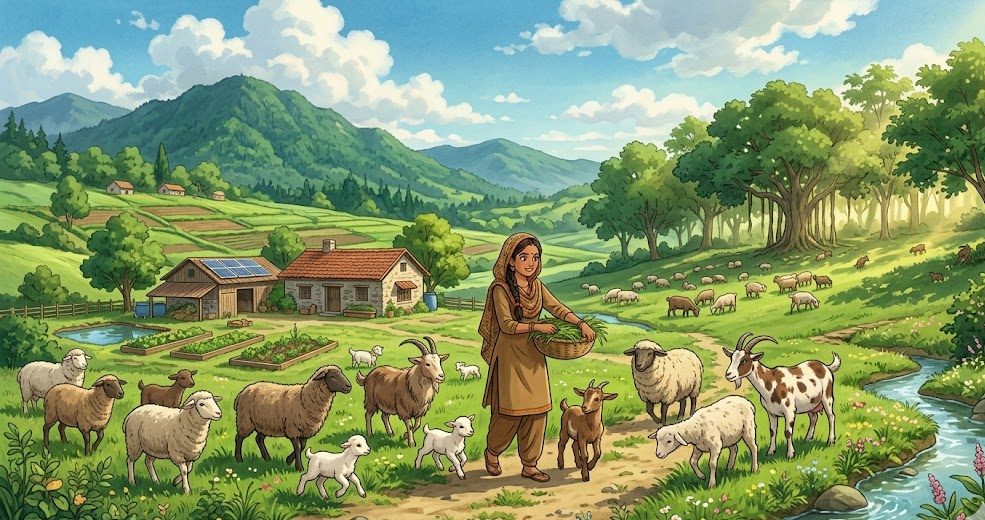
Have you ever looked at a stretch of overgrown pasture and wondered how to turn it into a profitable, thriving asset? For many modern farmers, the answer does not lie in heavy machinery or massive cattle herds. Instead, the secret to sustainable, steady agricultural income often walks on four hooves and happily grazes on weeds.
Sheep and goat farming is currently experiencing a massive revival worldwide. As consumers increasingly demand ethically raised meat, artisan dairy products, and natural fibers, these small ruminants offer an incredible financial opportunity. They require significantly less land than cattle, reproduce much faster, and fit perfectly into modern, sustainable farming models.
Whether you have a few acres of rough land or a larger commercial plot, raising small livestock can completely transform your agricultural business. This guide will walk you through the essential knowledge needed to build a healthy, profitable, and sustainable herd.
Why Choose Sheep and Goats?
Starting a livestock farm can be intimidating, especially when looking at the costs associated with traditional cattle farming. Sheep and goats drastically lower that barrier to entry. They are highly efficient foragers that actually improve the land they live on.
Goats are naturally “browsers,” meaning they prefer to eat broadleaf plants, bushes, and low-hanging tree branches. Sheep are “grazers” that prefer short grasses and clovers. Because they eat different things, you can often run them on the exact same pasture without them competing for food. As they eat, they naturally clear out invasive weeds and distribute nitrogen-rich manure, which acts as a free, organic fertilizer for your soil.
Financially, the turnaround time is a major advantage. While a cow takes years to reach market weight, sheep and goats mature quickly. A healthy doe or ewe will often give birth to twins, allowing you to double your herd size in a single breeding season.
Setting Up for Sustainable Success
Before bringing any animals onto your property, your infrastructure must be secure. Good fences make good farmers, and this is especially true for goats, which are notorious escape artists.
Do not cut corners on fencing. A high-tensile woven wire fence with a strand of electric wire at the top and bottom is usually the best defense against both escapes and outside predators.
Housing, on the other hand, does not need to be expensive or complex. Sheep and goats are incredibly hardy animals. They simply need a dry, draft-free, three-sided shelter to escape cold winds and heavy rains. Proper ventilation is actually more important than a fully enclosed barn, as stagnant air can quickly lead to respiratory issues in the herd.
Feeding and Nutrition Strategies
The biggest expense in any livestock operation is feed. Sustainable farming focuses on minimizing purchased grain and maximizing natural forage. Grain should be a supplement used during late pregnancy or deep winter, not the main course.
The most successful farmers use a system called rotational grazing. Instead of letting the herd roam the entire property all summer, they divide the pasture into smaller sections called paddocks. The animals graze one paddock intensively for a few days and are then moved to the next. This gives the grass time to recover and grow back stronger.
You must also provide free-choice loose minerals. Sheep and goats have specific mineral requirements, such as copper and selenium. Notably, sheep are highly sensitive to copper, while goats require large amounts of it. If you are raising both, you must manage their mineral supplements carefully to prevent toxicity.
Practical Tips You Can Apply Today
Managing a herd day-to-day requires observation and routine. Here are highly practical habits you can start implementing immediately to improve your farm operations:
- Keep Digital Records: Move away from paper notebooks. Use a simple mobile app or digital spreadsheet to track birth dates, vaccination schedules, and individual animal weights. Data-driven culling decisions are always more profitable than guessing.
- Prioritize Hoof Health: Trim hooves every six to eight weeks. Overgrown hooves lead to foot rot, a painful bacterial infection that severely impacts an animal’s ability to forage and gain weight.
- Ensure Clean Water: Goats and sheep are incredibly picky about their drinking water. If a water trough is dirty or filled with algae, they will refuse to drink. Clean your troughs weekly to keep the herd hydrated and healthy.
- Invest in a Guardian: Coyotes, stray dogs, and foxes can devastate a flock overnight. Investing in a bonded Livestock Guardian Dog (LGD) like a Great Pyrenees, or even a guard donkey, is the best insurance policy you can buy.
A Real-Life Example: The Tech-Assisted Herd
Consider the story of a modern farmer managing a mid-sized herd of meat goats. During his first two years, his profit margins were incredibly thin. He was spending too much money on bagged feed and losing animals to internal parasites because they were grazing the same tired pasture all year.
Realizing he needed to change his strategy, he integrated smart farming practices. He installed temporary electric fencing to create a strict rotational grazing system. He also tagged his goats and used a mobile management app to track the daily weight gain of each kid.
By tracking the data, he quickly identified which specific mother goats were consistently raising the fastest-growing, healthiest kids solely on pasture grass. He kept those genetics and sold the underperforming animals. Within two seasons, his feed costs dropped by 40%, his parasite issues practically disappeared due to the rotated pastures, and his overall farm profit increased dramatically.
Common Mistakes to Avoid
Beginners often fall into a few predictable traps that cost time and money. Avoid these common mistakes to keep your farm on the path to success.
The most frequent mistake is overstocking the land. Just because you have five acres does not mean you can support fifty goats. Overcrowding destroys the pasture, forces you to buy expensive hay year-round, and causes massive disease outbreaks. Start with a small number of animals and let the herd grow as your land’s carrying capacity improves.
Another trap is ignoring parasite management. The Barber Pole worm is the deadliest enemy of sheep and goats. It sucks blood from their stomachs, leading to severe anemia and death. Never treat your whole herd with dewormer on a set schedule, as this creates super-resistant parasites. Only treat the individual animals that actually show signs of parasite load.
Finally, avoid buying livestock at local auction barns. Auctions are often where other farmers dump their sick, infertile, or aggressive animals. Always buy your starter flock directly from a reputable breeder so you can observe the health of their entire farm.
Step-by-Step Guide to Starting Your Farm
Building a sustainable livestock business requires a logical approach. Follow these steps to outline your new venture.
Step 1: Define Your Market. Decide exactly what you are selling before you buy an animal. Is there a local demand for dairy, prime meat cuts, or breeding stock? Let the market dictate your farm structure.
Step 2: Choose the Right Breed. Match the breed to your goal. Boer or Kiko goats are excellent for meat, while Nubians excel in dairy. For sheep, Dorpers are great for meat because they shed their hair naturally and do not require shearing.
Step 3: Build the Infrastructure. Erect your heavy-duty fencing, build your simple shelters, and set up your water systems before any hooves touch the ground.
Step 4: Establish a Vet Relationship. Find a local large-animal veterinarian who has specific experience with small ruminants. Establish this connection early so you have help ready during an emergency.
Step 5: Purchase Your Starter Flock. Buy a small group of healthy, vaccinated animals from a trusted local farm. It is better to start with three excellent animals than ten mediocre ones.
Conclusion
Sheep and goat farming represents a brilliant intersection of traditional agriculture and modern, sustainable business. By focusing on the health of your soil, utilizing rotational grazing, and making smart, data-driven decisions, you can build a highly efficient farming loop that relies less on expensive chemical inputs and more on natural cycles.
The journey of raising livestock requires patience, daily observation, and a willingness to continuously learn. There will be challenging days, but the reward of looking out over a healthy, thriving herd on a piece of land that is improving year after year makes the effort entirely worthwhile. Start small, plan carefully, and watch your sustainable farm grow.
Frequently Asked Questions (FAQs)
Q: How much land do I actually need to start farming sheep or goats? A: A general rule of thumb is that one acre of high-quality pasture can support 6 to 8 adult sheep or goats. However, this varies wildly depending on your local climate, rainfall, and grass quality. In dry, arid regions, you may need several acres just to support a single animal.
Q: Is it more profitable to raise them for meat or dairy? A: Raising animals for meat is generally much easier and less labor-intensive, making it highly profitable for part-time farmers. Dairy has the potential for very high profit margins through artisan cheese and milk sales, but it requires daily milking, strict sanitary regulations, and highly specialized equipment.
Q: Can sheep and goats live in the same pasture? A: Yes, they make excellent pasture mates. Because they prefer to eat different types of vegetation, grazing them together actually maximizes the efficiency of your land and helps keep invasive weeds and brush under strict control.
Q: What is the biggest health threat I need to prepare for? A: Internal parasites, specifically the Barber Pole worm, are the leading cause of death in small ruminants. Learning how to perform simple physical checks (like checking the color of their inner eyelids for anemia) and practicing rotational grazing are your best defenses against this threat.
Q: Do I really need to shear sheep if I am just raising them for meat? A: If you raise traditional wool sheep, yes, you must shear them annually for their health, even if the wool market is poor. However, many modern farmers avoid this entirely by raising “hair sheep,” such as the Dorper or Katahdin breeds. These sheep naturally shed their coats in the spring, completely eliminating the need for shearing.