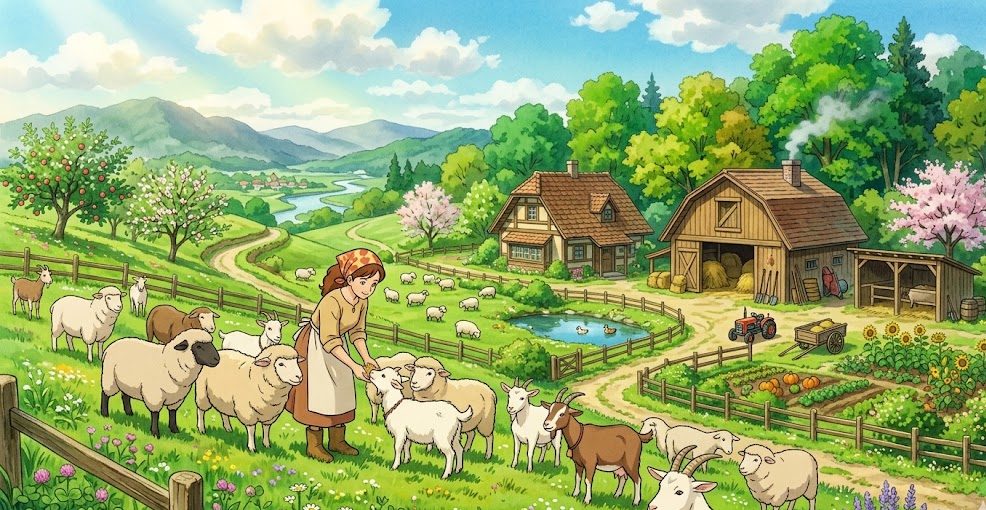
The global agricultural landscape is shifting, and small ruminant farming—specifically sheep and goat rearing—is quickly emerging as one of the most resilient and profitable sectors in livestock management. With the global demand for lean meat, organic dairy, and premium natural fibers hitting record highs, livestock entrepreneurs are finding immense value in these smaller animals. Unlike dairy cattle, which require massive upfront capital, vast tracts of land, and heavy infrastructure, sheep and goats offer a highly accessible entry point into commercial livestock production.
These animals are incredibly versatile, adapt beautifully to harsh climates, and boast excellent reproductive rates. However, turning a backyard hobby into a highly profitable commercial enterprise requires more than just buying a few animals and letting them graze. It demands a structured approach combining proper breed selection, scientific housing, optimized nutrition, and rigorous disease management.
Whether you are looking to diversify an existing agricultural operation or start a brand-new commercial farm, this comprehensive guide provides the blueprint to maximize your return on investment.
Why Choose Sheep and Goat Farming?
From an economic perspective, small ruminants offer distinct biological and financial advantages that make them highly attractive for modern agrobusinesses.
First, they have a lower initial investment requirement. You can house and feed approximately ten goats or sheep on the exact same amount of land and resources required for a single dairy cow. Second, they have a very rapid turnover rate. Goats and sheep reach sexual maturity early and have short gestation periods (roughly 150 days). With proper management, many breeds regularly produce twins or triplets, allowing your herd size to grow exponentially within just a few seasons.
Additionally, these animals are natural multi-purpose assets. A single farm can establish multiple revenue streams simultaneously, selling meat (chevon and mutton), milk, manure for organic soil management, and high-value fiber like wool or cashmere.
Selecting the Right Breeds for Your Market
Your entire business model hinges on selecting the right genetic stock. Before buying your first animals, you must clearly define your primary commercial objective based on your local market demand.
Best Goat Breeds for Meat and Dairy
If your primary focus is meat production, the Boar (Boer) goat remains the undisputed global gold standard due to its exceptional growth rate, heavy muscling, and excellent carcass yield. Other fantastic meat options include the Kalahari Red and the highly resilient regional breeds like the Sirohi or Jakhrana, which thrive in arid climates.
For dairy operations, look toward specialized milk producers like the Saanen, Alpines, and Toggenburg. A high-quality Saanen doe can produce an impressive three to five liters of milk per day. If you want to tap into the premium cheese-making market, the Anglo-Nubian is highly sought after because its milk contains an exceptionally high butterfat content.
Top Sheep Breeds for Mutton and Wool
When it comes to sheep, meat producers generally choose terminal sire breeds like the Dorper, Suffolk, or Southdown. The Dorper is particularly famous among modern farmers because it is a “hair sheep,” meaning it naturally sheds its coat and doesn’t require shearing, saving massive amounts of labor overhead.
If you are targeting the textile industry, fine-wool breeds like the Merino dominate the market, commanding premium prices for their soft, high-density fleece. For dual-purpose operations where you want both steady mutton production and decent wool yields, breeds like the Corriedale or Rambouillet offer a fantastic balance.
Designing a Modern, High-Yield Housing System
Improper housing is one of the leading causes of financial loss in livestock farming, often resulting in disease outbreaks and high mortality rates among young kids and lambs. Your housing design should prioritize ventilation, dry flooring, and protection from extreme weather.
The Advantages of Elevated Slatted Flooring
The most significant innovation in modern small ruminant housing is the transition to elevated, slatted flooring systems. In this setup, the animal shed is built three to four feet off the ground using wooden, plastic, or concrete slats with small gaps between them.
This design allows urine and dung to fall directly through the floor into a collection area below. It keeps the animals’ living space perfectly dry and clean, virtually eliminating the buildup of ammonia gases. This simple architectural shift drastically reduces the incidence of respiratory infections and hoof rot—two of the biggest hidden costs on a livestock farm.
Space Requirements and Ventilation
Overcrowding leads to severe stress and slow weight gain. As a general rule of thumb, ensure each adult goat or sheep has at least 15 to 20 square feet of covered floor space, along with an attached open paddock where they can move freely during the day. Ensure the roof is high enough to facilitate natural air circulation, and position the shed to capture the prevailing winds while blocking direct, freezing winter drafts.
Advanced Nutrition and Feed Optimization
Feed constitutes up to 60% of your ongoing operational costs. To maximize your profit margins, you must move away from relying entirely on wild foraging and instead implement a structured, balanced nutritional plan.
Roughage vs. Concentrates
Sheep and goats are ruminants, meaning the vast majority of their diet must consist of high-quality roughage. Cultivate high-protein green fodders on your farm, such as alfalfa (lucerne), berseem, or Napier grass. Silage making is also a critical skill for modern farmers, allowing you to preserve green fodder during peak seasons to feed your herd during dry summer months or winters when fresh pasture is scarce.
To achieve rapid weight gain in meat animals or high yields in dairy does, you must supplement their roughage with a balanced concentrate mixture. A standard concentrate feed should contain a mix of grains (like maize or wheat bran), oil cakes (like soybean meal), and essential mineral mixtures.
The Critical Role of Mineral Blocks
Never underestimate the power of micronutrients. Placing commercial mineral salt licks or mineral blocks throughout your pens is an absolute must. Sheep and goats require a steady intake of calcium, phosphorus, and trace minerals to support bone development, milk production, and reproductive health.
Important Safety Note: If you are running a mixed farm or a pure sheep operation, ensure your mineral blocks are explicitly formulated for sheep. Sheep are highly sensitive to copper and can easily suffer from fatal copper toxicity if fed mineral mixes designed for goats or cattle.
Implementing a Strict Health and Bio-Security Protocol
In livestock farming, prevention is infinitely cheaper than treatment. A single infectious outbreak can decimate an entire herd within days. Protecting your investment requires a proactive health calendar.
De-worming Strategies
Internal parasites (worms) are the silent killers of small ruminants, causing anemia, sudden weight loss, and stunted growth. Implement a strategic de-worming schedule based on your local climate, typically rotating de-worming medications every few months to prevent the parasites from developing drug resistance.
Core Vaccination Schedule
Work closely with a local veterinarian to establish a rigorous vaccination protocol. Your animals must be protected against major endemic diseases, including:
- PPR (Peste des Petits Ruminants): A highly contagious viral disease.
- Enterotoxemia (ET): Also known as overeating disease, caused by sudden dietary shifts.
- Foot and Mouth Disease (FMD): A severe viral infection affecting cloven-hoofed animals.
- Goat Pox / Sheep Pox: Destructive skin diseases that ruin hide value.
Conclusion
Commercial sheep and goat farming represents a highly lucrative, sustainable, and scalable opportunity within the modern agricultural industry. By combining the natural biological advantages of these animals—such as their high reproductive rates and low land requirements—with modern smart farming practices, you can establish a highly resilient agribusiness.
Success in this field doesn’t happen by accident. It requires an unwavering commitment to quality genetics, dry and hygienic elevated housing, a scientifically balanced nutritional plan, and a strict, proactive health protocol. Start with a manageable herd size that matches your current infrastructure, focus heavily on mastering your local market supply chain, and scale your operations progressively as your experience and cash flow grow.