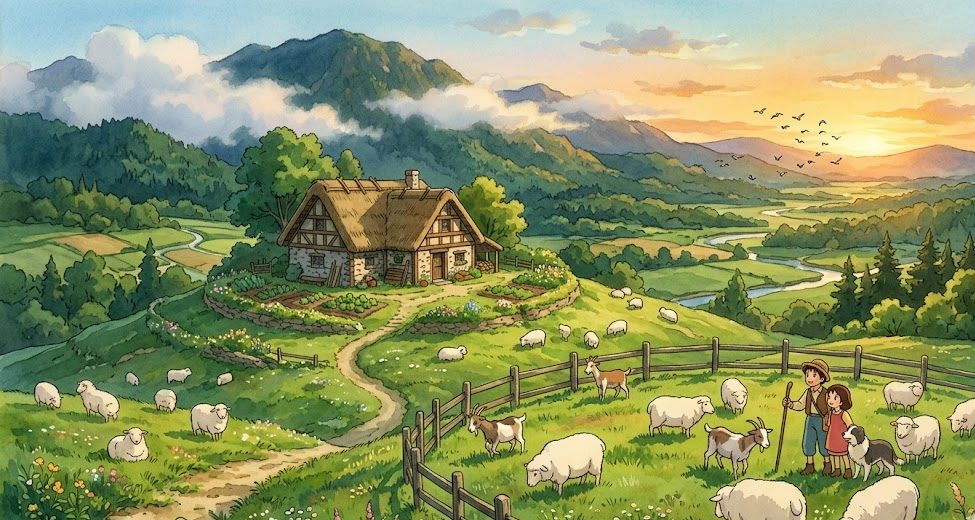
In the agricultural landscape of 2026, livestock farming has become a cornerstone for those seeking Financial Freedom through diversified, resilient assets. Often referred to as “Small-Scale Gold,” sheep and goat farming offer a unique advantage: they require less space than cattle while providing multiple high-value revenue streams, including meat, milk, wool, and fiber.
This guide provides a comprehensive “Practical Farming” blueprint to help beginners build a profitable livestock venture by combining Smart Farming innovations with Natural Farming principles.
1. Why Sheep and Goat Farming is a “Digital Goldmine”
For the modern grower, small ruminants are the ultimate “High-Yield” asset. Their versatility makes them ideal for “Micro Farming” and integrated “Closed-Loop” systems.
- High Market Demand: There is a consistent and growing global demand for organic, grass-fed mutton and chevon (goat meat).
- Rapid Multiplication: Both sheep and goats have high twinning rates and shorter gestation periods, allowing your flock to grow quickly from a small initial investment.
- Dual-Purpose Utility: You can choose breeds that focus on meat, dairy, or fiber (like Mohair or Cashmere), allowing you to pivot based on market trends.
2. Selecting Your “Smart” Livestock Breeds
Success begins with genetics. Choosing the right breed for your specific environment is a mechanical necessity for long-term productivity.
- Sheep Varieties: For meat, focus on hardy breeds like the Dorper or Suffolk. For wool, Merinos remain the gold standard.
- Goat Varieties: For dairy, Saanen or Alpine goats are high-producers. For meat, the Boer goat is the undisputed “Cash Cow” of the industry.
- Climate Resilience: In 2026, it is vital to select indigenous or cross-bred varieties that are naturally resistant to local heat and parasites.
3. Precision Nutrition and the “Zero Chemical” Strategy
Feed is your biggest operational cost. To achieve “Zero Chemical Costs,” you must turn your farm into a self-sustaining nutrition hub.
- Rotational Grazing: This is the ultimate “low-maintenance” feeding strategy. By moving animals between paddocks, you allow the grass to “recharge” naturally and break the life cycle of internal parasites.
- Hydroponic Fodder: For farmers with limited land, growing green fodder in soilless systems provides high-protein feed year-round with 90% less water.
- Natural Bio-Inputs: Supplement their diet with farm-grown azolla or fermented organic minerals to boost immunity naturally, ensuring a “Zero Chemical” final product.
4. Smart Technology for Low-Maintenance Management
Modern livestock management utilizes “Smart Technology” to ensure “Precision Yields” without the heavy labor of the past.
- IoT Health Monitoring: Smart collars or ear tags track movement, rumination, and heat cycles. These “eyes in the field” alert you to illness or birthing signs long before they are visible to the human eye.
- Automated Fencing: Solar-powered electric fencing allows for easy management of rotational grazing patterns with minimal manual effort.
- Data-Driven Decisions: Use AI-driven apps to track weight gain and feed-conversion ratios, allowing you to identify your most profitable animals for breeding.
5. Healing the Soil: The Integrated Blueprint
Sheep and goats are not just products; they are “biological engines” for healing the soil naturally.
- Closed-Loop Fertilization: Their manure is a “Blue Gold” resource, rich in nitrogen and potassium. Using it as a bio-fertilizer for your High-Value Cash Crops or “Exotic Vegetables” eliminates the need for synthetic NPK.
- Weed Management: Goats are natural explorers and will clear brush and weeds that other livestock won’t touch, preparing the land for future planting without expensive machinery.
- No-Till Synergy: Integrating small ruminants into a no-till crop system helps crush crop residues and return nutrients to the earth naturally.
6. Market Access and “Digital Goldmine” Branding
In 2026, the way you sell is as important as what you grow.
- Traceability: Use digital logs to show customers that your animals were raised in a “Zero Chemical,” ethical, and sustainable environment. Premium buyers pay more for transparency.
- Value-Added Products: Don’t just sell live animals. Boost your profit margins by selling specialized cheeses, organic wool products, or vacuum-packed premium meat cuts directly to consumers via digital platforms.
- Survival Farming Skills: Developing basic veterinary and shearing skills ensures your farm remains resilient against supply chain disruptions and external costs.
Conclusion: Your Path to Financial Freedom
Starting a sheep or goat farm is a strategic path to Financial Freedom in 2026. By combining the precision of Smart Technology with the sustainable wisdom of Natural Farming, you transform traditional animal husbandry into a high-profit “Digital Goldmine.”
Whether you are scaling a commercial “Farming Innovation Hub” or practicing intensive “Micro Farming,” the goal remains: grow more, waste less, and restore the earth. The future of profitable livestock is small, smart, and sustainable.