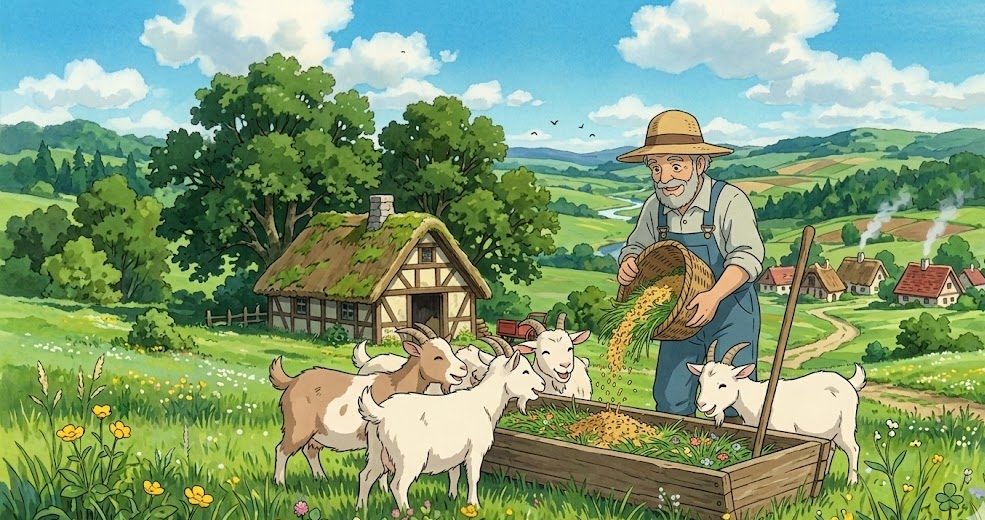
Did you know that 70% of your total goat farming expenses will likely go toward feed? Despite this massive investment, an alarming number of farmers fail to see a return because their goats grow slowly, fall ill, or lack the energy to reproduce. It is a heartbreaking reality: you can provide a mountain of food, but if the nutritional ratios are off, your goats are essentially “starving” in plain sight.
The Challenge for most keepers is the complexity of “balanced nutrition.” Goats are not just lawnmowers; they are complex ruminants with specific requirements that change based on their age, sex, and productivity. The Main Concept is the implementation of a Strategic Feeding Chart—a data-driven approach that ensures every bite contributes to muscle gain, bone density, and immune strength. This guide will provide a clear roadmap of exactly what to feed, how much to provide, and when to adjust for maximum growth and health.
Understanding Precision Nutrition: Key Concepts and Importance
To master goat feeding, one must first understand that a goat is a biological fermentation vat. Unlike humans, goats rely on a complex four-compartment stomach (the rumen, reticulum, omasum, and abomasum) to break down fibrous plant material. The rumen is the engine room, housing billions of microbes that do the heavy lifting of digestion.
Think of a goat’s digestive system like a wood-burning stove. If you only toss in fast-burning paper (simple sugars/grains), you get a flash of heat followed by a cold fire. If you use only heavy logs (coarse, dry straw), the fire never gets hot enough to be useful. Precision nutrition is about finding the perfect mix of “kindling” (energy-rich grains) and “slow-burn logs” (high-quality forage) to keep the internal engine running at peak efficiency. In modern capriculture, we no longer guess; we use feeding charts to provide the exact amount of protein, energy, and minerals needed for each stage of the goat’s life.
Why It Matters: The Top Benefits of a Feeding Chart
Adopting a structured feeding plan isn’t just about being organized; it transforms the economics of your farm. Here are the primary advantages:
- Accelerated Market Weight: By optimizing the Protein-to-Energy ratio, meat goats reach their target slaughter weight months earlier, saving you weeks of labor and feed costs.
- Enhanced Immune Resilience: Proper levels of Selenium, Zinc, and Vitamin E act as a “natural shield,” significantly reducing your dependency on expensive antibiotics and veterinary visits.
- Optimized Reproductive Success: A well-fed doe is more likely to conceive twins or triplets and has the nutritional reserves to produce high-quality colostrum for her kids.
- Waste Reduction: A feeding chart prevents “over-supplementation.” Instead of throwing expensive grain on the ground, you provide only what the animal can biologically process.
Pro Fact: Research shows that goats provided with a consistent, balanced mineral mix grow up to 20% faster than those relying solely on natural pasture.
How to Get Started: A Practical Guide for Beginners
Creating a feeding schedule can feel overwhelming, but it becomes simple when broken down into life stages. Use the following 5-step implementation plan.
1. Prioritize High-Quality Forage (The Base)
At least 60-80% of a goat’s diet should be forage. For faster growth, aim for Alfalfa or Clover hay, which are rich in protein and calcium. If you are using pasture, ensure it is not overgrazed, as this increases parasite risk.
2. Implement the “Life-Stage” Chart
Adjust your feed based on the following general guidelines:
- Kids (0-3 months): High protein (18%) to support rapid bone and muscle development.
- Growers (3-12 months): Moderate protein (14-16%) for steady weight gain.
- Adult Maintenance: Mostly forage with a small energy supplement (12% protein).
- Pregnant/Lactating Does: High energy and calcium to support milk production.
3. Introduce Concentrates Gradually
Grains (corn, barley, oats) are the “boosters.” Never let them exceed 20% of the total diet for meat goats, or you risk Acidosis (a life-threatening stomach imbalance). Start with a handful and increase slowly over 14 days.
4. Provide Free-Choice Minerals
Goats have a “nutritional wisdom” for minerals but cannot find them in most soils. Provide a loose mineral mix specifically formulated for goats (avoid sheep minerals, as they lack the Copper that goats desperately need).
5. Ensure “Hydration Station” Access
A goat cannot grow without water. Clean, fresh water must be available 24/7. In winter, slightly warm water can encourage goats to drink more, preventing urinary calculi in bucks.
Beginner’s Tip: Always feed hay before grain. This “primes” the rumen and prevents the grain from fermenting too quickly, which can cause bloating.
Overcoming Challenges and Looking into the Future
The two most common feeding hurdles are Bloat and Urinary Calculi. Bloat occurs when a goat eats too much lush green grass or grain too fast; it can be solved by controlled grazing. Urinary Calculi (kidney stones) affect males and are caused by an imbalance of Calcium and Phosphorus. The solution is ensuring a 2:1 Calcium to Phosphorus ratio in your feeding chart.
Looking toward the future, Hydroponic Fodder is the rising trend. Many farmers are now growing sprouted barley or wheat in climate-controlled trays, producing highly digestible, nutrient-dense “green feed” in just seven days. Additionally, Precision Feeding Apps are now available that allow you to scan a goat’s ID tag and receive a calculated feed dose based on its current weight and growth curve.
Conclusion
A goat is only as productive as the fuel you provide. By shifting from a “random grazing” mindset to a structured Feeding Chart strategy, you solve the mystery of slow growth and frequent illness. Remember, the goal is not just to keep goats alive, but to help them thrive. When you invest in their nutrition, they pay you back in faster growth, healthier kids, and a more profitable farm.
Your Next Step: Measure the weight of your goats today using a weight tape. Compare their current size to a standard growth chart for their breed and adjust their protein intake by 2% if they are falling behind.
Frequently Asked Questions (FAQs)
1. Can I feed my goats kitchen scraps?
Yes, but in moderation. Goats enjoy vegetable peelings, apple slices, and carrot tops. However, avoid onions, garlic, chocolate, and anything from the nightshade family (like tomato or potato leaves), as these can be toxic.
2. Why do my goats need Copper?
Unlike sheep, goats have a high biological demand for Copper. It is essential for coat health, immune function, and nervous system development. A copper-deficient goat will often have a “fishtail” (balding tail tip) or a faded coat.
3. How many times a day should I feed my goats?
For best results, feed concentrates (grains) in two equal portions—once in the morning and once in the evening. Forage (hay/pasture) should be available for them to “nibble” on throughout the day.
4. Can goats survive on grass alone?
While they can survive, they rarely reach their full potential for meat or milk on grass alone, especially if the soil is nutrient-depleted. Supplementing with minerals and occasional high-quality hay is almost always necessary for a professional operation.