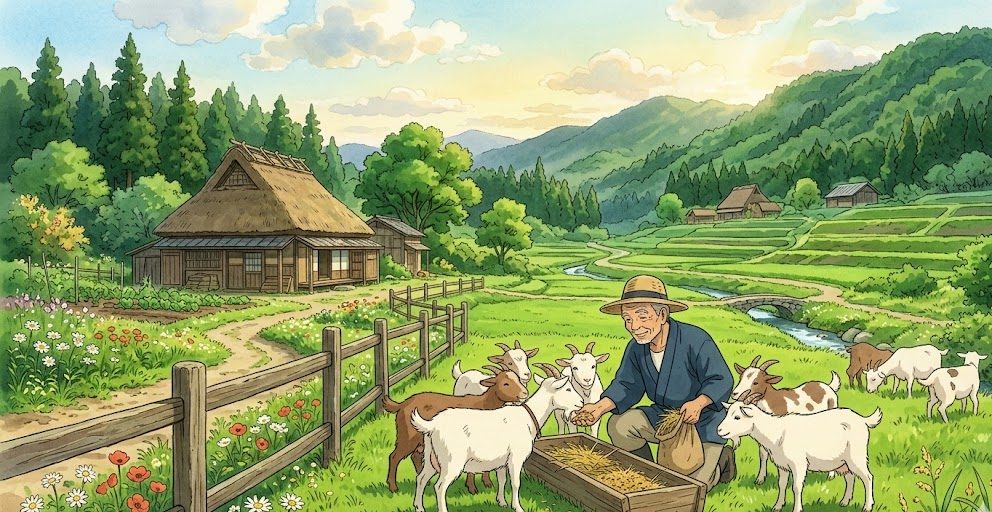
Did you know that goats are responsible for more than 60% of the red meat consumed globally, yet the supply chain is struggling to keep pace with the skyrocketing demand for organic, lean protein? For many aspiring farmers, the dream of starting a livestock venture often hits a wall of high land costs, expensive feed, and complex management requirements.
The Challenge is real: many beginners dive into farming without a clear strategy, leading to high mortality rates and financial loss. However, the Main Concept—modern, sustainable goat farming—offers a high-return, low-entry-barrier solution. It is a venture that thrives even on marginal land and provides multiple revenue streams from milk and meat to fiber and fertilizer. This guide serves as your comprehensive roadmap, covering everything from breed selection and housing to health management and market scaling in 2026.
Understanding Goat Farming: Key Concepts and Importance
Goat farming, often referred to as capriculture, is the practice of raising and breeding domestic goats for various commercial purposes. Historically, goats were one of the first animals to be domesticated, but in 2026, the industry has undergone a “smart” revolution. It is no longer just about a fence and a field; it is about precision nutrition and data-driven breeding.
Think of a goat as a “living biological converter.” Much like a high-efficiency machine, a goat takes low-quality biomass—weeds, shrubs, and brush that cattle won’t touch—and converts it into high-value products like nutrient-dense milk and premium meat. Their biological efficiency is significantly higher than larger livestock, meaning you get more output per acre of land. In the modern economy, goats are the “underdogs” of the agricultural world, providing a resilient hedge against climate volatility and shifting market demands.
Why It Matters: The Top Benefits of Goat Farming
The shift toward sustainable living and organic diets has positioned goat farming as a goldmine for small-scale entrepreneurs. Here are the primary advantages:
- Low Initial Investment: Unlike dairy cows or poultry on a mass scale, goats require significantly less space and lower upfront capital for stock and housing.
- High Prolificacy: Goats are “multi-purpose” breeders. Many breeds regularly produce twins or triplets, allowing your herd size—and your investment—to double or triple within a single year.
- Climate Resilience: Goats are incredibly hardy. They can thrive in diverse climates, from semi-arid regions to colder highlands, making them a “future-proof” livestock choice as global weather patterns shift.
- Diverse Revenue Streams: You aren’t just selling meat (chevon). You can monetize goat milk (highly sought after for lactose sensitivity), premium fibers like Mohair or Cashmere, and even high-nitrogen manure for organic gardeners.
Pro Fact: In 2026, the global market for goat milk derivatives is projected to grow by 7% annually, driven by the rising demand for specialty cheeses and hypoallergenic infant formulas.
How to Get Started: A Practical Guide for Beginners
Starting a farm requires more than just passion; it requires a systematic approach. Follow these five steps to launch your herd successfully.
1. Define Your Purpose and Select the Breed
Don’t try to do everything at once. Decide if you are farming for meat (Boer or Spanish goats), dairy (Alpine, Saanen, or Nubian), or fiber. Your choice of breed will dictate your housing and nutritional requirements.
2. Secure the Infrastructure
Goats are notorious “escape artists.” You need sturdy fencing (high-tensile wire or woven wire) and a dry, well-ventilated shelter. The shelter doesn’t need to be fancy, but it must protect them from dampness and extreme winds—the two biggest enemies of goat health.
3. Establish a Nutrition Plan
While goats are browsers, they cannot survive on “tin cans” (a common myth!). A balanced diet in 2026 includes high-quality forage, supplemental hay, and a specific mineral mix. Clean water is the most critical and often overlooked component of their diet.
4. Implement a Health Management Protocol
Prevention is cheaper than a cure. Work with a local vet to establish a vaccination schedule for common diseases like Enterotoxemia and Tetanus. Regularly monitor for internal parasites using the FAMACHA system to check for anemia.
5. Develop Your Market Strategy
Before the first kid is born, know where you will sell. Are you selling to local butchers, farmers’ markets, or through a “farm-to-table” subscription model? Branding your farm as “grass-fed” or “sustainably raised” can command a 20-30% price premium.
Beginner’s Tip: Start small with 3–5 does (females) and one buck (male). It is much easier to learn the nuances of goat behavior and health with a small group than to manage a massive herd in your first season.
Overcoming Challenges and Looking into the Future
The path to a profitable farm isn’t without hurdles. The most common challenges include parasite resistance and predation. As worms become resistant to traditional dewormers, 2026 farmers are turning to rotational grazing and herbal supplements to maintain herd health. Additionally, investing in Livestock Guardian Dogs (LGDs) like Great Pyrenees has become the gold standard for protecting herds from predators without using harmful traps.
Looking ahead, the future of goat farming is Tech-Integrated. We are seeing the rise of “Smart Collars” that track a goat’s vitals and GPS location, allowing for “virtual fencing.” Furthermore, as the world moves toward regenerative agriculture, goats are being hired out for “conservation grazing” to clear invasive species, providing a secondary service-based income for farmers.
Conclusion
Goat farming in 2026 is an intersection of ancient tradition and modern efficiency. By understanding the fundamentals, leveraging the high-value benefits of the animal, and following a disciplined implementation plan, you can transform a small plot of land into a thriving, profitable enterprise. The “challenge” of food security and sustainable meat production is a massive opportunity for the prepared beginner.
Your Next Step: Research the zoning laws in your area today to see if your land is cleared for livestock. The journey of a thousand miles—or a hundred goats—begins with a single fence post. Embrace the challenge, and you will find that goats are not just livestock; they are the future of sustainable farming.
Frequently Asked Questions (FAQs)
1. How much land do I need for goat farming?
Generally, you can raise 6 to 8 goats on one acre of good-quality pasture. However, if you use a “dry lot” system and buy in your hay, you can manage on much less space.
2. Are goats high-maintenance animals?
They require daily attention for feeding and watering, but they are generally easier to handle than cattle. The most “high-maintenance” aspect is ensuring their fencing is secure and monitoring their health for parasites.
3. Can I keep just one goat?
No. Goats are highly social herd animals. A lone goat will become depressed, loud, and stressed, which weakens its immune system. You should always start with at least two.
4. How long does it take for a goat farm to become profitable?
Typically, you can see a return on investment within 18 to 24 months. This allows time for your initial stock to breed and for the first generation of kids to reach market weight or milking age.