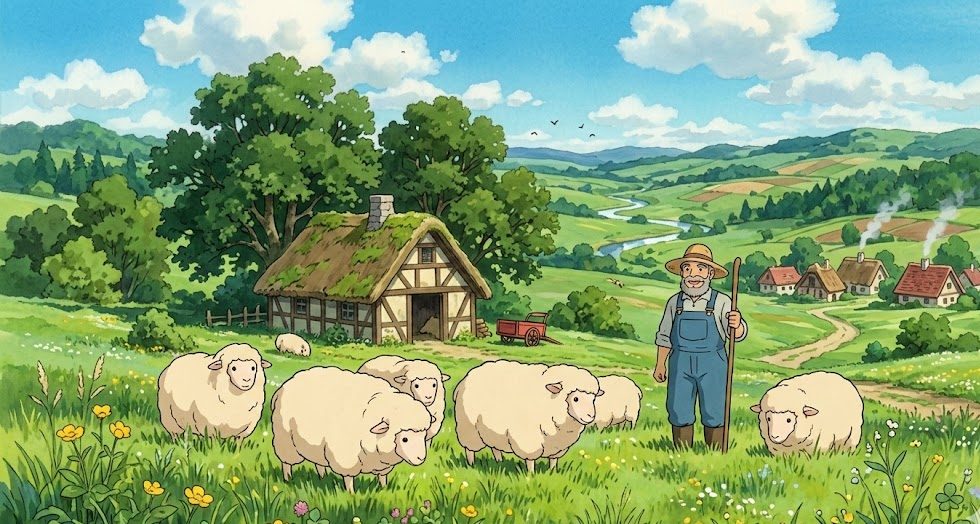
Did you know that sheep are one of the few livestock species that can provide three distinct revenue streams—meat, wool, and milk—simultaneously from a single animal? Despite this, many potential farmers hesitate, fearing that sheep are too fragile or that the startup costs are astronomical.
The Challenge for most newcomers is the “Information Gap”: knowing how to balance the initial investment with the biological needs of the flock to ensure the business doesn’t bleed money in its first year. The Main Concept is a transition from traditional grazing to a “Precision Sheep Management” model, which maximizes output while minimizing waste. This guide will provide a comprehensive roadmap for your sheep farming venture, detailing the essential setup, realistic cost projections, and the profit margins you can expect in today’s market.
Understanding Sheep Farming: Key Concepts and Importance
Sheep farming, or ovine agriculture, is the commercial raising of sheep for their various outputs. While it is one of the oldest professions in human history, the 2026 landscape is defined by efficiency and sustainability. Today, sheep farming isn’t just about owning a flock; it’s about managing a biological ecosystem.
Think of sheep farming like running a solar-powered factory. Your “machinery” (the sheep) harvests “fuel” (grass and sunlight) and converts it into high-value “products” (protein and fiber). Unlike a mechanical factory, your machines also self-replicate, meaning your capital assets grow naturally over time. Understanding the life cycle—from lambing to finishing—is the technical core of the business. Whether you are focusing on mutton (meat from older sheep), lamb (meat from young sheep), or fine wool, your management style must align with the biological blueprint of the specific breed you choose.
Why It Matters: The Top Benefits of Sheep Farming
Entering the sheep business in 2026 offers unique advantages that other livestock ventures simply cannot match. Here is why this sector is booming:
- Low Land Intensity: Sheep are “gentle” grazers. They have specialized lips that allow them to eat invasive weeds and short grass that cattle would ignore, making them perfect for reclaiming marginal or low-quality land.
- Dual or Triple Purpose Returns: You can sell the wool annually to cover maintenance costs (shearing and feed), while the sale of lambs provides your primary annual profit.
- High Prolificacy: Many modern breeds are capable of “twinning” or even “tripling.” This means a flock of 50 ewes can realistically produce 75 to 90 lambs per year, rapidly scaling your inventory.
- Eco-Friendly Branding: Sheep are integral to “Regenerative Agriculture.” Their manure is a high-quality fertilizer that improves soil health, allowing you to market your products as “carbon-neutral” or “earth-friendly” for a price premium.
Pro Fact: The global demand for sheep meat is projected to reach 18 million tons by 2030, with the fastest growth seen in organic, pasture-raised markets.
How to Get Started: A Practical Guide for Beginners
Starting a sheep farm requires a blend of capital investment and tactical planning. Here is your 5-step implementation plan:
1. Land and Infrastructure Setup
You need roughly 1 acre for every 5 to 7 sheep, depending on the quality of your pasture. Your primary infrastructure costs will involve perimeter fencing (electric or woven wire) and a simple, dry shelter for protection against extreme weather and lambing.
2. Genetic Selection
Don’t buy “mystery sheep” from an auction. Select a breed based on your market. For meat, look at Dorper or Suffolk. For wool, Merino is king. If you want a hardy, low-maintenance meat sheep that doesn’t require shearing, Hair Sheep (like the Katahdin) are excellent for beginners.
3. Financial Budgeting (The Cost)
Initial costs usually break down into:
- Stock Purchase: 60% of budget.
- Fencing/Shelter: 25% of budget.
- Health/Initial Feed: 15% of budget.
- Note: Expect an initial investment of $200–$400 per ewe depending on breed quality.
4. Health and Nutrition Management
Establish a “VCP” (Veterinarian-Client-Patient) relationship early. You will need a basic kit including dewormers, vaccines (CD&T is standard), and hoof trimmers. Nutritional success depends on Rotational Grazing—moving sheep to fresh “cells” of grass every few days to prevent overgrazing and parasite buildup.
5. Marketing and Profit Realization
Identify your “Exit Strategy.” Will you sell lambs at 60 lbs (feeder lambs) or 110 lbs (market lambs)? Direct-to-consumer sales often yield 40% higher profits than selling at a traditional livestock auction.
Beginner’s Tip: Start with “Grown Ewes” (2-3 years old) rather than “Ewe Lambs.” Older ewes have experience lambing and are much more forgiving of a beginner’s learning curve.
Overcoming Challenges and Looking into the Future
The two greatest hurdles in sheep farming are Predation and Internal Parasites. Coyotes and domestic dogs can devastate a flock overnight; the most effective solution is a combination of high-tensile electric fencing and Livestock Guardian Animals like donkeys or Great Pyrenees dogs. For parasites, the industry is moving away from blanket chemical use toward FAMACHA scoring, a visual check of the sheep’s eye color to identify and treat only the sick animals.
Looking toward the future, Precision Ovine Tech is the next big trend. We are seeing the introduction of electronic ID (EID) tags that sync with smartphone apps to track weight gain, medication history, and lineage in real-time. This data allows farmers to cull “underperformers” and keep only the most profitable genetics, significantly increasing the farm’s efficiency.
Conclusion
The sheep farming business is a resilient, profitable, and environmentally sound venture for the modern entrepreneur. By focusing on smart infrastructure, choosing the right genetics for your climate, and managing your pasture like a precious resource, you can build a sustainable income stream that grows with your flock. The days of “accidental farming” are over; the era of the professional, data-driven shepherd has arrived.
Your Next Step: Draft a simple one-page business plan listing your local land costs and identifying at least three potential buyers (butchers, wool mills, or private customers) in your 50-mile radius.
Frequently Asked Questions (FAQs)
1. How much profit can I expect per sheep?
On average, a well-managed meat sheep can net between $80 and $150 per year after expenses, depending on the number of lambs produced and local market prices.
2. Do sheep need a lot of expensive grain?
Not necessarily. Many farmers successfully run “grass-finishing” operations where sheep eat 100% forage. Grain is typically used as a supplement during late pregnancy or extreme winter months to maintain energy levels.
3. Is sheep farming easier than cattle farming?
Sheep are easier to handle due to their size and require less expensive equipment. However, they are more susceptible to predators and parasites, requiring more frequent “eyes-on” management than cattle.
4. What is the best fencing for sheep?
Woven wire (no-climb) fencing with a strand of electric wire at the top and bottom is the gold standard. It keeps the sheep in and—more importantly—keeps predators out.