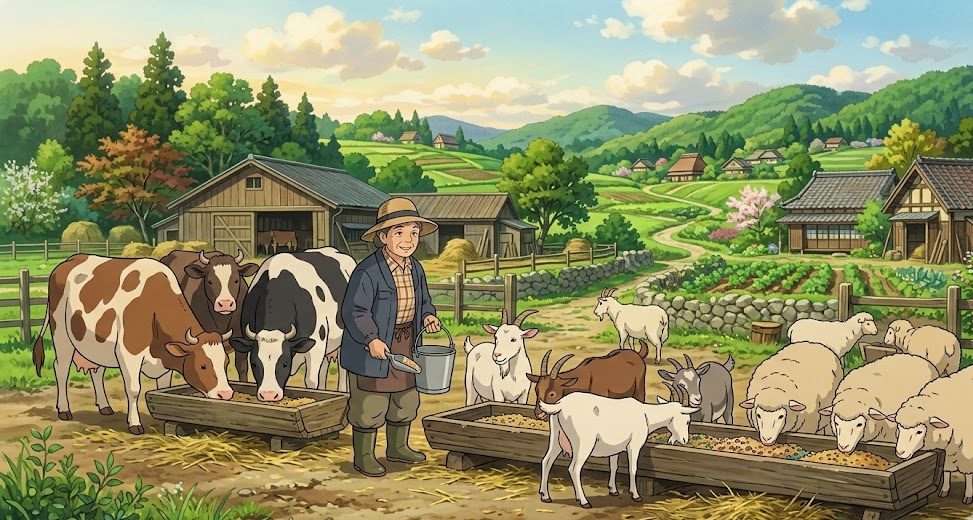
Did you know that a microscopic deficiency in a single mineral, such as Selenium, can lead to a 50% reduction in fertility rates across an entire cattle herd? It is a staggering reality for modern farmers: you can provide the highest-quality hay and the most expensive grains, yet your animals may still struggle to grow, reproduce, or fight off basic infections.
The Challenge lies in “The Hidden Hunger.” Unlike a lack of water or protein, mineral deficiencies are often invisible until the damage—stunted growth, weak calves, or sudden lameness—is already done. The Main Concept of high-performance farming in 2026 is Micronutrient Precision. By understanding the specific mineral and supplement needs of your livestock, you move from “guessing” to “governing” the biological success of your farm. This article provides a comprehensive roadmap of the essential minerals, vitamins, and supplements required to build a resilient, high-yielding livestock enterprise.
Understanding Livestock Nutrition: Key Concepts and Importance
Minerals and supplements are the metabolic spark plugs of the animal body. While carbohydrates and proteins provide the “fuel,” minerals and vitamins catalyze the chemical reactions that turn that fuel into muscle, milk, and offspring. Historically, livestock obtained these nutrients from diverse native pastures. However, modern soil depletion and high-production demands mean that today’s livestock often cannot get what they need from forage alone.
Think of an animal’s nutritional profile like a wooden barrel with uneven slats. This is known in science as “Liebig’s Law of the Minimum.” If one slat (for example, Zinc) is shorter than the others, the barrel can only hold water up to the level of that shortest slat. It doesn’t matter how tall the “Protein” or “Energy” slats are; the animal’s productivity will always leak out at the point of the shortest nutrient slat.
In 2026, the importance of supplements is heightened by our move toward Antibiotic-Free (ABF) production. Minerals like Copper and Manganese are the foundation of the immune system. A well-supplemented animal is biologically “armed” to fight off pathogens naturally, reducing your reliance on expensive veterinary drugs and ensuring your products meet the highest market standards.
Why It Matters: The Top Benefits of Precision Supplementation
Investing in a high-quality mineral program is not an added expense; it is a profit multiplier. When you bridge the nutritional gap, you unlock several key advantages:
- Superior Reproductive Performance: Proper levels of Phosphorus and Vitamin E ensure higher conception rates and easier “clean out” after calving or lambing, shortening the time between births.
- Rapid Weight Gain: Trace minerals like Iodine and Cobalt regulate the thyroid and rumen microbes, allowing animals to reach market weight 10-15% faster on the same amount of feed.
- Structural Integrity: Balanced Calcium and Magnesium prevent skeletal issues and “Grass Tetany,” ensuring that heavy-producing dairy cows and fast-growing bulls remain mobile and sound.
- Disease Resilience: Supplements rich in Antioxidants reduce the cellular stress caused by heat and transportation, keeping your “mortality rate” near zero during high-risk seasons.
Pro Fact: Clinical trials in 2026 show that livestock provided with Organic (Chelated) Minerals absorb nutrients up to 40% more efficiently than those given traditional inorganic salts.
How to Get Started: A Practical Guide for Beginners
Implementing a supplement program requires a strategic approach to prevent both deficiency and toxicity. Follow this 5-step actionable plan.
1. Conduct a “Forage Audit”
You cannot manage what you do not measure. Send a sample of your hay or pasture to a lab for mineral analysis. This reveals which “slats in your barrel” are short, allowing you to buy supplements that specifically target your local soil deficiencies.
2. Choose the Right Delivery Method
Select a method that fits your management style:
- Free-Choice Loose Minerals: Best for grazing herds; allows animals to eat what they need.
- Mineral Blocks/Licks: Convenient but can limit intake if the block is too hard.
- TMR Integration: Mixing supplements directly into the “Total Mixed Ration” is the gold standard for dairy and feedlot operations.
3. Prioritize the “Big Five” Minerals
Ensure your supplement contains these essentials:
- Calcium & Phosphorus: For bone strength and milk. (Target a 2:1 ratio).
- Magnesium: To prevent tremors and “grass staggers.”
- Salt (Sodium Chloride): The primary driver of the thirst mechanism and appetite.
- Copper: Critical for coat health and immunity.
- Selenium: Essential for muscle development and heart health.
4. Don’t Forget the “Vitamins”
While ruminants produce their own B-vitamins, they require dietary Vitamins A, D, and E. Vitamin A is especially critical if you are feeding dry hay or straw that has lost its green color.
5. Monitor the “Coat and Hoof” Indicators
Beginner’s Tip: The easiest way to spot a mineral deficiency without a blood test is to look at the hair. A “rusty” or bleached-looking coat on a dark cow, or a “fish-tail” (hair loss on the tail tip), is a classic sign of Copper deficiency.
Overcoming Challenges and Looking into the Future
The primary challenge in supplementation is Mineral Antagonism. This happens when too much of one mineral (like Iron or Sulfur) blocks the absorption of another (like Copper). To solve this, 2026 farmers are using Chelated Minerals, where the mineral is “wrapped” in an amino acid, allowing it to bypass the “blockade” in the gut and get absorbed directly.
The future of livestock health is Smart-Mineral Delivery. We are seeing the rise of GPS-enabled “Smart Licks” that track which animals are visiting the mineral station and for how long. This data is synced to the farmer’s smartphone, identifying “under-eaters” who may be at risk of falling sick. Additionally, Nutrigenomics is allowing us to create “Breed-Specific” supplements, recognizing that a Jersey cow has vastly different mineral “leakage” points than a Brahman bull.
Conclusion
Minerals and supplements are the invisible foundation of a successful livestock farm. By moving away from “generic blocks” and toward a targeted, audit-based nutritional program, you ensure that every animal on your property has the biological tools to reach its maximum potential. In 2026, the most profitable farmers are those who realize that the smallest nutrients often yield the biggest returns.
Your Next Step: Purchase a high-quality, weather-resistant mineral feeder this week. Placing your minerals in a clean, dry, and accessible location is the first step toward ensuring your herd’s “nutritional barrel” is always full.
Frequently Asked Questions (FAQs)
1. Can livestock eat too much mineral?
Yes. While rare with free-choice salt-based minerals, Mineral Toxicity (especially Selenium or Copper in sheep) can be fatal. Always follow the manufacturer’s “Recommended Daily Intake” and never feed cattle-specific minerals to sheep, as the high copper levels can kill them.
2. Why do my cows keep eating dirt (Pica)?
This behavior, known as Pica, is a classic sign of a Phosphorus or Sodium deficiency. The animal is instinctively trying to find minerals in the soil. If you see this, it is time to upgrade your mineral supplement immediately.
3. Do goats need different minerals than cattle?
Absolutely. Goats have a much higher requirement for Copper than sheep and slightly different needs than cattle. Always use a species-specific mineral to ensure the balance of trace elements matches their unique metabolism.
4. Are “Natural” salt blocks like Himalayan Pink salt enough?
While natural salt blocks provide great sodium and some trace minerals, they are usually not balanced enough to meet the needs of a high-producing dairy cow or a rapidly growing calf. Use them as a “bonus,” but keep a balanced commercial mineral available as the primary source.